Last updated November 21, 2026
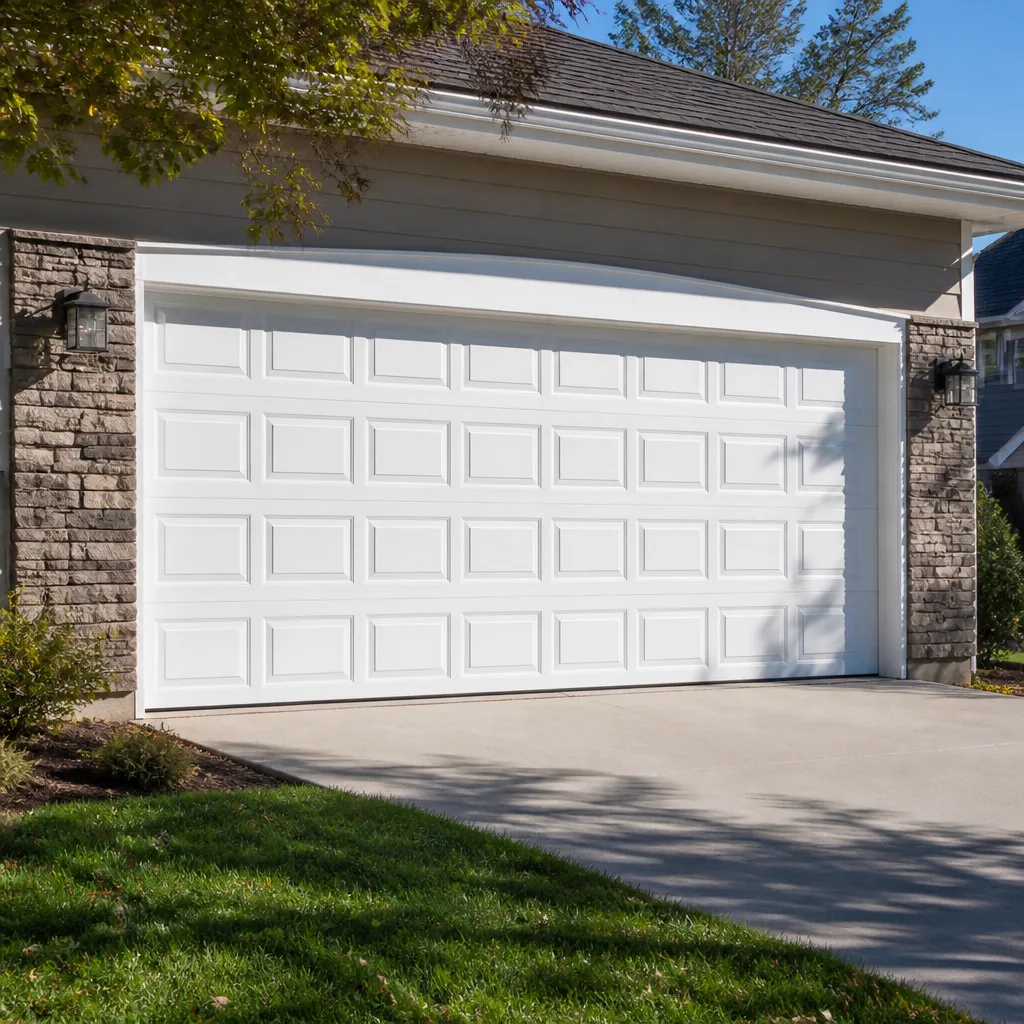 Raised-panel steel
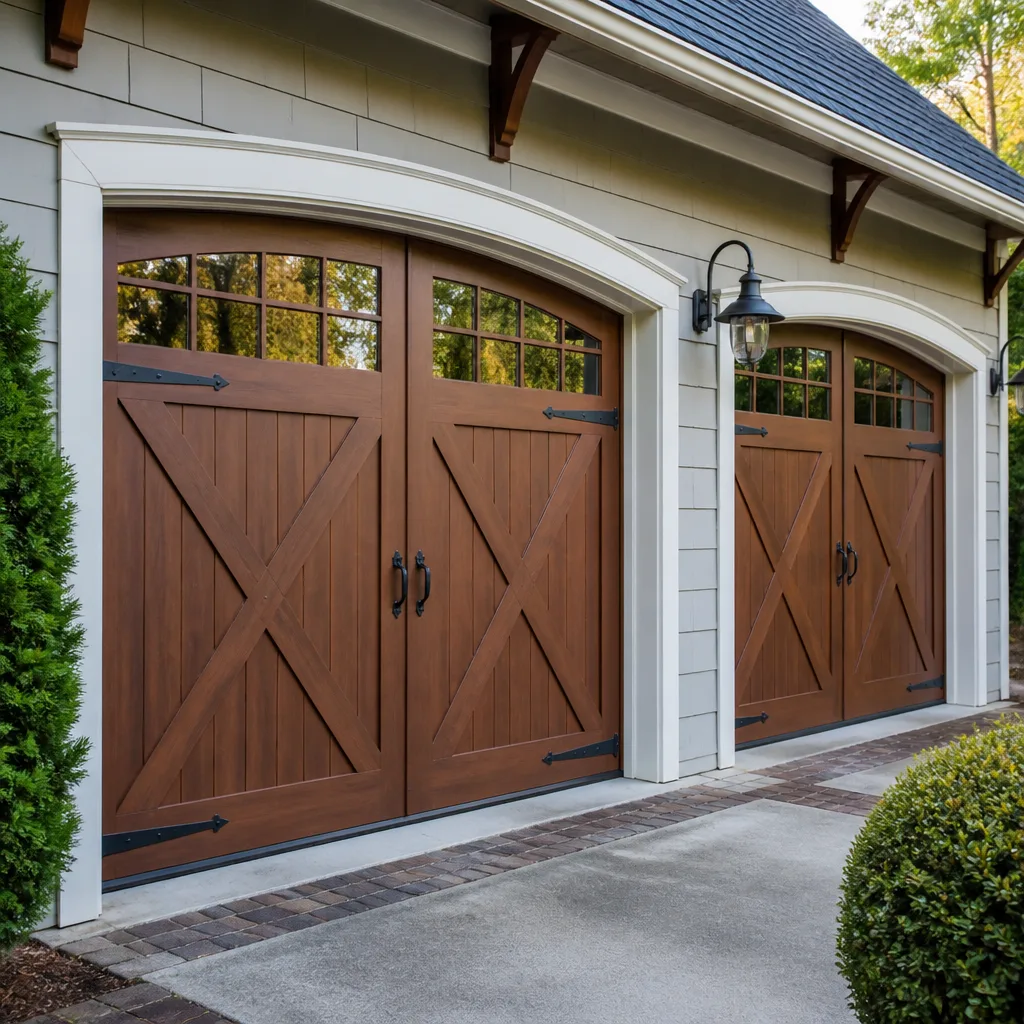 Carriage house
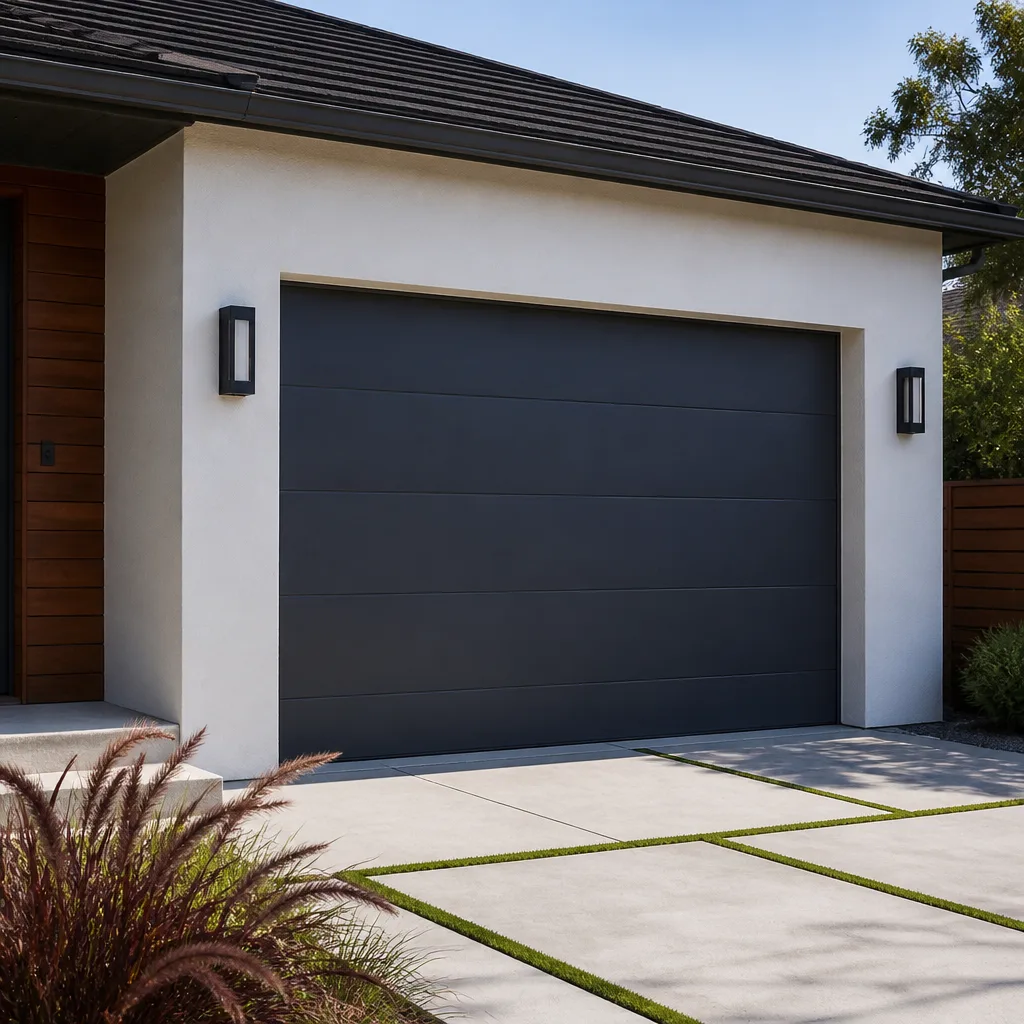 Modern flush
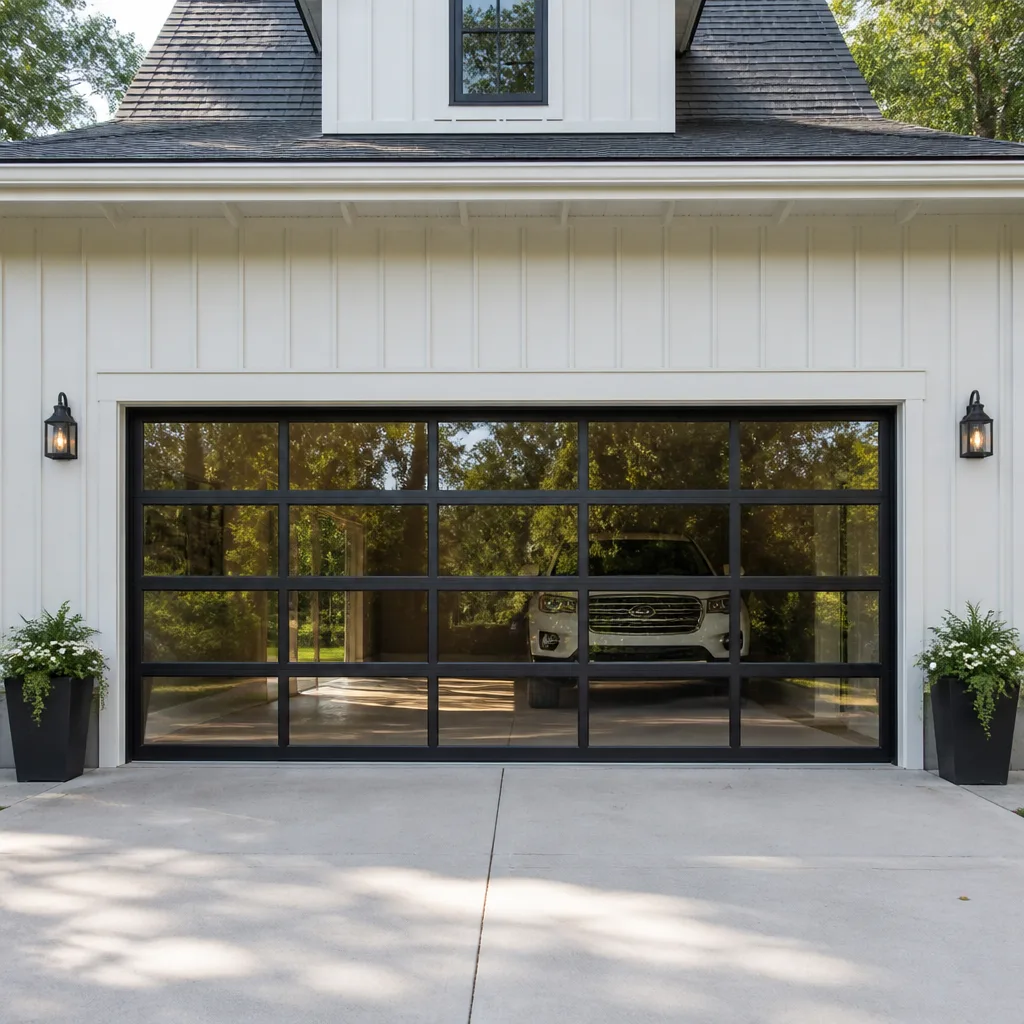 Full-view glass
 LiftMaster openers
 Chamberlain openers
Full 25-point door and opener safety check with every visit - springs, cables, rollers, tracks, and your LiftMaster or Chamberlain opener included
You get a price before we start. It does not change when the pro arrives.
Get your free estimateDIY vs Professional Garage Door: The Maple Grove Homeowner’s Decision Guide
Most garage door advice swings to one of two extremes. Either everything about a door is presented as a deadly puzzle that only a licensed wizard should touch, or a cheerful video makes a spring swap look like changing a furnace filter. Both miss the real question. A garage door is a stack of separate systems, and the decision isn’t DIY or pro for the whole thing. It’s task by task. Some jobs are genuinely yours to handle in ten minutes with a ladder and a rag. Others carry risk that no homeowner should shoulder. In this guide we break the door down into parts, tell you plainly which tasks are safe, which aren’t, and how to describe a problem to a technician so you don’t pay for a service call you could have skipped. We’ll do it through the lens of a Maple Grove home, because the climate, the housing, and the way doors here are used all shape what a door needs.
Quick Answer
Lubrication, sensor alignment, remote and keypad programming, and visual inspections are legitimate DIY tasks on a garage door. Spring work, cable work, and anything involving a bent track under load are not. Torsion and extension springs both store enormous mechanical energy and can cause serious injury in an instant, so they belong to a trained technician with the correct winding bars and the training to use them. Everything in between, from a noisy roller to a reversed safety sensor, is a judgment call you can usually make with a few checks.
Styles & brands we work with
- Raised-panel steel
- Carriage house
- Modern flush
- Full-view glass
- LiftMaster openers
- Chamberlain openers
Table of Contents
- The Split: Safe DIY vs. Real Risk
- Why Spring Work Is Its Own Category
- The Hidden Cost of a DIY Mistake
- What Makes You a Legitimate DIY Candidate
- Maple Grove Doors and the Four-Season Cycle
- How to Describe a Problem So You’re Not Upsold
- Brand Matters: Parts and Programming
- Deciding When to Call
The Split: Safe DIY vs. Real Risk
The useful way to think about a garage door is as three zones with very different rules. The first zone is the interface, the parts that talk to you: remotes, keypads, wall buttons, safety sensors, and the light on the opener. Almost everything here is safe to handle, and most of it needs nothing more than a battery, a manual, and a little patience. The second zone is the moving hardware at ground level: rollers, hinges, the bottom bracket in some cases, and the track itself. This is a middle ground where some jobs are reasonable for a careful homeowner and others are not, and the deciding factor is whether the door is under tension at the time.
The third zone is the energy system: the springs, the cables, and the drums they wind. This zone is not a DIY zone for anyone without specific training, and that includes people who are handy, mechanically inclined, and confident. We’ll explain why in the next section.
Here’s the task-by-task short version:
- Safe for most homeowners: lubricating rollers and hinges, replacing a remote battery, reprogramming a remote or keypad, wiping the safety sensor eye, aligning a safety sensor that’s been nudged, and a visual check of cables and springs for obvious damage.
- Reasonable with care: light track alignment after a hard bump from a car, tightening a loose bolt you can see moving, replacing a roller on a door that is fully open and de-tensioned by a professional first.
- Professional only: replacing or adjusting torsion springs, replacing extension springs, replacing or adjusting cables, repairing a door that has come off track, and any repair where the door won’t close evenly or looks crooked.
In Maple Grove, we talk to homeowners every week who crossed the line without knowing where it was. The good news is that the line is clearer than most guides make it seem, once you know which parts are storing energy and which are just doing mechanical work.
Why Spring Work Is Its Own Category
A torsion spring is a coil of steel held under deliberate, controlled tension. When it’s wound, it’s doing the work of lifting a door that might weigh a hundred and fifty pounds or more. When it fails or when it’s released incorrectly, all of that stored energy has to go somewhere, and it goes instantly. The short version: don’t wind, unwind, or remove springs yourself. If you take one thing from this guide, take that.
Here’s where most advice gets sloppy. People lump torsion and extension springs together, or they treat the difference as a footnote. It’s not a footnote.
Torsion Springs vs. Extension Springs
- Torsion springs sit on a horizontal shaft above the door and use a winding process with two metal bars. The bar can slip, and when it does, the energy release is violent. Torsion failure is often the loudest thing a homeowner will ever hear in a garage.
- Extension springs run along the horizontal tracks on either side and stretch rather than twist. They are, in some ways, simpler, but they still carry serious tension, and a failed one can travel. The presence of a safety containment cable does not make them a DIY job.
Neither type should be worked on without training and the correct tools. We’ve seen what a slipped winding bar can do to a hand, and the reason our trade takes spring work seriously is that the consequences are immediate. This is exactly the job trained technicians exist for, and it’s why we treat garage door spring repair as its own specialization rather than a side item on a general handyman’s list. If you suspect a broken spring, stop using the door, don’t try to force it, and call for help. A door with a shot spring is a heavy object on a hinge, not a small machine you can muscle.
One more thing worth knowing: springs are matched to a door’s weight and cycle life. A spring that looks identical to the broken one may not be the right spring, and using the wrong one wears out the opener and the door faster. Getting the match right is a reason to use a specialist in Maple Grove rather than a generalist.
The Hidden Cost of a DIY Mistake
A small repair can become an expensive one through a few predictable paths. Understanding them helps you decide where the risk actually lives, and it’s a fairer way to think about cost than a blanket rule that everything is dangerous.
Where DIY goes wrong
- Voided warranties. Many door and opener manufacturers tie warranty coverage to professional installation and service. If a homeowner bends a track or burns out a motor while trying an adjustment, a claim on a Clopay or Amarr door, or a Genie or LiftMaster opener, may fall through. That’s a real loss on a door that’s still new.
- Bent tracks. A track that’s slightly out of alignment will close fine for weeks, then catch, then bind the door and damage the rollers. A five-minute adjustment can turn into a full track replacement.
- Opener damage. A door that’s binding because of a bad roller or an off-track panel forces the opener to work harder. The opener motor or the plastic drive gear takes the strain. A cheap door repair becomes an opener replacement.
- Sensor and safety loop errors. Homeowners sometimes bypass or move a safety sensor to make the door close. It’ll close, but it’s a real safety hazard, and it can leave you with a door that stops working unpredictably.
- Wrong parts. A Craftsman opener and a LiftMaster opener can look similar but use different parts. Installing the wrong remote or the wrong gear assembly wastes money and can damage the unit.
None of this is a case for never touching your door. A $5 can of lubricant on your rollers and hinges is one of the best-returning ten minutes you can spend on your home. The point is to know which ten minutes are safe and which are not. Our view is that most of the time, a small repair you do yourself is great, and a small repair you attempt on the wrong part is worse than any service call.
What Makes You a Legitimate DIY Candidate
Some homeowners are genuinely equipped to handle the safe-to-DIY tasks, and some aren’t. The distinction is less about confidence and more about tools, patience, and knowing your own limits. If you have a step ladder, a socket set, a flashlight, and the manual for your opener, you’re already a good candidate for the interface and hardware-light tasks. If your only plan is to look up a video and wing it, stay on the safe side of the list.
Tasks that suit a homeowner
- Lubrication. A light spray on rollers, hinges, and the torsion shaft bearings (not the springs themselves) keeps things quiet. Use a product made for garage doors, not cooking spray or heavy grease.
- Safety sensor alignment. If the door closes partway and reverses, check that the two sensor eyes line up and that nothing is blocking the path. Wipe the lenses and see if the indicator light comes on.
- Remote and keypad programming. Most openers from LiftMaster, Chamberlain, Genie, and Craftsman have a learn button and a straightforward programming sequence in the manual. This is one of the safest and most satisfying DIY jobs on the list.
- Balance test and visual inspection. With the door down, pull the release handle to disconnect the opener and lift the door halfway. It should stay put. If it drifts down, the springs are getting weak and you should have the door looked at. If it springs up, the tension is too high.
- Roller replacement. This is a reasonable job if the door is fully open and the technician has de-tensioned the springs. Without that step, the door is under load and the job is not safe.
What tool and knowledge make you a candidate? A manual for your model, a set of wrenches, a level, and the judgment to stop when something feels wrong. What makes you a professional candidate? A winding bar, a spring gauge, and training. The middle ground is small.
Maple Grove Doors and the Four-Season Cycle
Maple Grove is a four-season town, and a garage door here lives a harder life than one in a mild climate. Winter brings repeated freeze-thaw cycles, road salt tracked onto the apron, and temperatures that make metal contract and rubber seals stiffen. Spring brings moisture and grit. Summer dries everything out. Fall drops leaves and debris that find their way onto tracks. All of this shapes what a door needs and what’s actually safe to do about it.
What does that mean in practice? A few things worth knowing for homes around Maple Grove:
- Seals wear faster. The rubber weatherstrip along the bottom and sides hardens and cracks with the cold. Replacing a bottom seal is a reasonable homeowner task with the right size and a little warm weather.
- Tracks get out of alignment. The freeze-thaw cycle and the ground shifting under the concrete apron can nudge tracks. A slightly misaligned track is one of the most common reasons a door starts to bind in late winter.
- Springs cycle less in winter. Cold makes springs more brittle. A worn spring is more likely to fail in the cold, which is why a lot of spring failures happen on the coldest weeks of the year. That’s a good reason to have the door inspected in the fall.
- Salt and grit on tracks. The winter salt and grit that comes home on the car ends up on the tracks. A quick wipe-down and a light lubricant on the rollers keeps the door moving smoothly.
- Snow and ice on the apron. Shoveling the snow away from the bottom seal and the bottom panel doesn’t just protect the door, it protects the seal and the paint. In a home facing north, this matters more.
If you live near the Maple Grove community center or the Arbor Lakes area, you already know how much the seasons shape a day. The door is part of that. Keeping an eye on it in the shoulder seasons is the homeowner’s best defense against a sudden failure.
How to Describe a Problem So You’re Not Upsold
Your description shapes what a technician brings and what the first visit costs. A vague call, like “my door is acting up,” leads to a diagnostic appointment where the technician has to start from scratch. A precise call gets you faster answers and often a better price. It also protects you from being upsold on a service you don’t need.
What to have ready before you call
- The brand and model of your opener. It’s on a sticker on the back of the unit. Mention whether it’s a LiftMaster, Chamberlain, Genie, or Craftsman, and if you know the model, say so.
- The door brand if you know it. Clopay, Amarr, Wayne Dalton, and Raynor doors each have their own parts and panels. A door brand helps the technician bring the right parts.
- Where the problem starts. Does the door open but not close, close but not open, go up a foot and stop, reverse immediately, or make a noise before it moves? Each of those tells a technician something different.
- What you’ve already tried. If you’ve checked the sensor, replaced a battery, or tried reprogramming, say so. That keeps the technician from repeating steps you’ve already done.
- A photo. A picture of the opener and the door, and of any visible damage, saves time and helps the technician quote more accurately.
This is where you’ll often save yourself a service call. If your remote stopped working and you’ve never reprogrammed it, that’s a five-minute fix, and any opener manual walks you through it. If you call us for garage door opener repair and it turns out to be a battery, we’d rather save you the visit. But if the door stops mid-cycle and reverses, or if it jerks and binds, that’s a real problem that needs a technician on-site. Being specific on the call is what separates the two.
Brand Matters: Parts and Programming
Garage doors and openers are not interchangeable. Different brands use different motors, different drive systems, different remote frequencies, and different parts for the same-looking assembly. That’s why we’re trained on eight of the industry’s dominant residential brands: LiftMaster, Chamberlain, Genie, Clopay, Amarr, Wayne Dalton, Craftsman, and Raynor. It isn’t a marketing line. It means a technician arrives knowing which parts are likely to fail on which model and which replacements actually fit.
Why this matters for a DIY homeowner
- Openers. A LiftMaster and a Chamberlain might share a manufacturer, but their programming steps differ. A Craftsman remote may not work with a Genie opener, and a new universal remote needs to be matched to the right frequency.
- Doors. A Clopay door and an Amarr door are built differently, and a Wayne Dalton panel is not the same as a Raynor panel. Matching a replacement panel to a door means knowing the brand and the model.
- Springs. Spring sizes are matched to door weight and cycle life, not just door width. A technician measures before ordering. If you call for garage door repair on a door with a broken spring, the right spring is chosen on site, and that’s a job for someone who’s done it many times.
What’s the takeaway? If you’re going to attempt a DIY fix, match the part to the brand and model. If you’re not sure, call. A wrong part that doesn’t fit is a waste of money, and a wrong part that fits incorrectly can cause damage. That’s the moment to bring in a specialist.
Deciding When to Call
The real question isn’t whether you’re capable. It’s whether a particular task puts a part of your home at risk that you can’t easily fix if it goes wrong. A lubricated roller, a fresh battery, a sensor wipe: no risk. A spring, a cable, an off-track door, a binding track: risk that a homeowner can’t recover from cleanly. If a task involves stored energy, or if the door is moving unevenly or unsafe in any way, that’s the line.
A quick decision tree
- Does the task involve a spring or cable? Call a technician.
- Is the door crooked, binding, or off track? Stop using it and call a technician.
- Is the problem a remote, keypad, battery, sensor, or seal? You can usually handle it.
- Is the door noisy but working? Lubricate it first. If the noise remains, have it looked at.
- Are you unsure? Call us. A short conversation is free, and we’d rather talk you through a safe fix than have you risk a dangerous one.
We keep emergency service as a core offering for exactly the situations above. When your garage door stops, we move. If a door is hanging off a track or a spring has snapped, that’s a safety hazard and a lockout at the worst possible time, and it needs a trained technician.
Common Mistakes to Avoid
- Trying to wind a torsion spring with the wrong tools. A screwdriver, a pipe, or a pair of pliers isn’t a winding bar, and a slip can mean serious injury. Call a trained professional instead.
- Assuming a door with two springs can be run on one. When one torsion spring breaks, the other is carrying double the load and will likely fail soon. Replace matched pairs together rather than one at a time.
- Forcing a binding door with the opener. If the door binds, the opener is doing the work of lifting a stuck door. You may burn out the motor or the drive gear, turning a door repair into an opener replacement.
- Moving a safety sensor out of the way to make the door close. It’ll close, but it’s a safety hazard. Sensors exist to protect anyone under the door, including kids and pets in a Maple Grove home.
- Reprogramming a remote without checking the manual. Each brand has its own sequence. A LiftMaster, Chamberlain, Genie, and Craftsman each have their own learn process, and skipping a step leaves you frustrated.
- Using the wrong lubricant. Cooking spray or heavy grease attracts grit and can damage the rollers. Use a product made for garage doors.
- Leaving winter salt on the tracks. The grit that comes home on the car ends up on the tracks and rollers, and it wears them out faster. A wipe-down at the end of the winter extends the life of the hardware.
See the difference
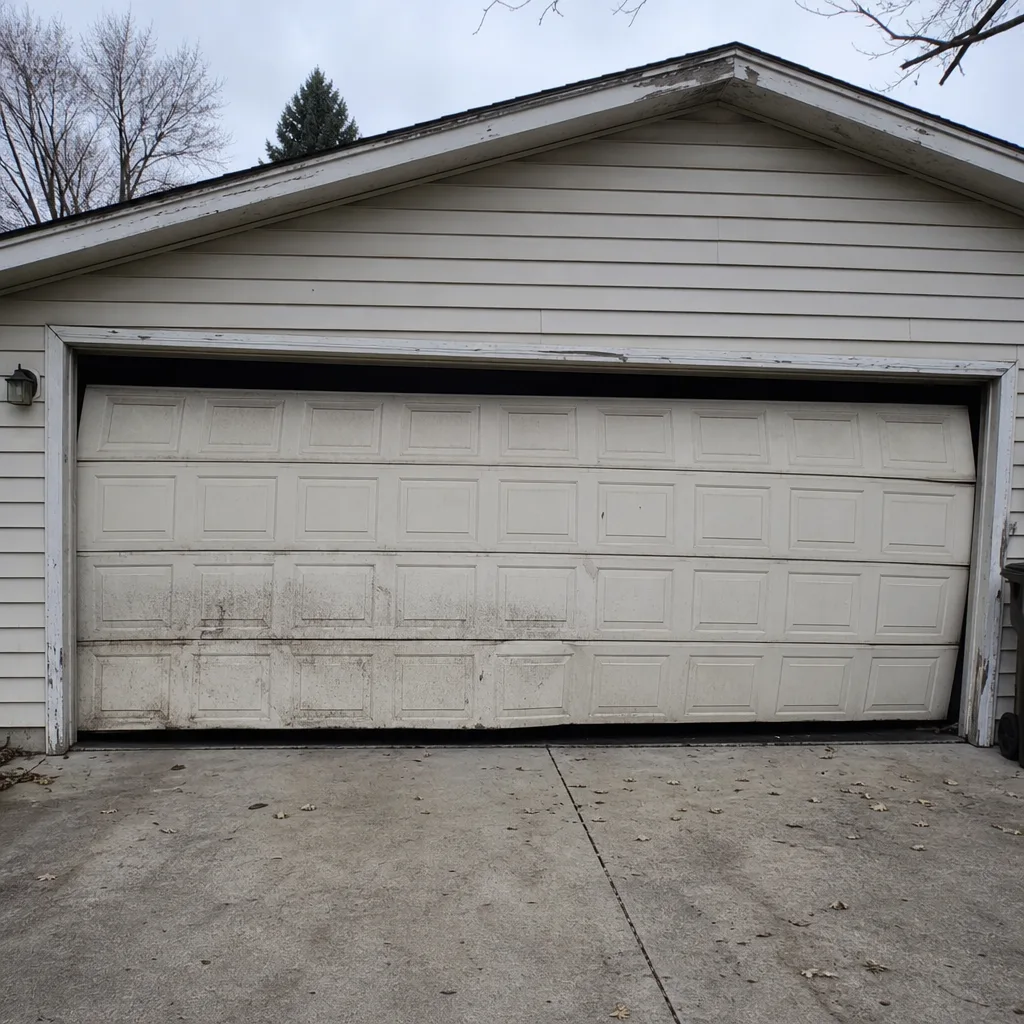 Before
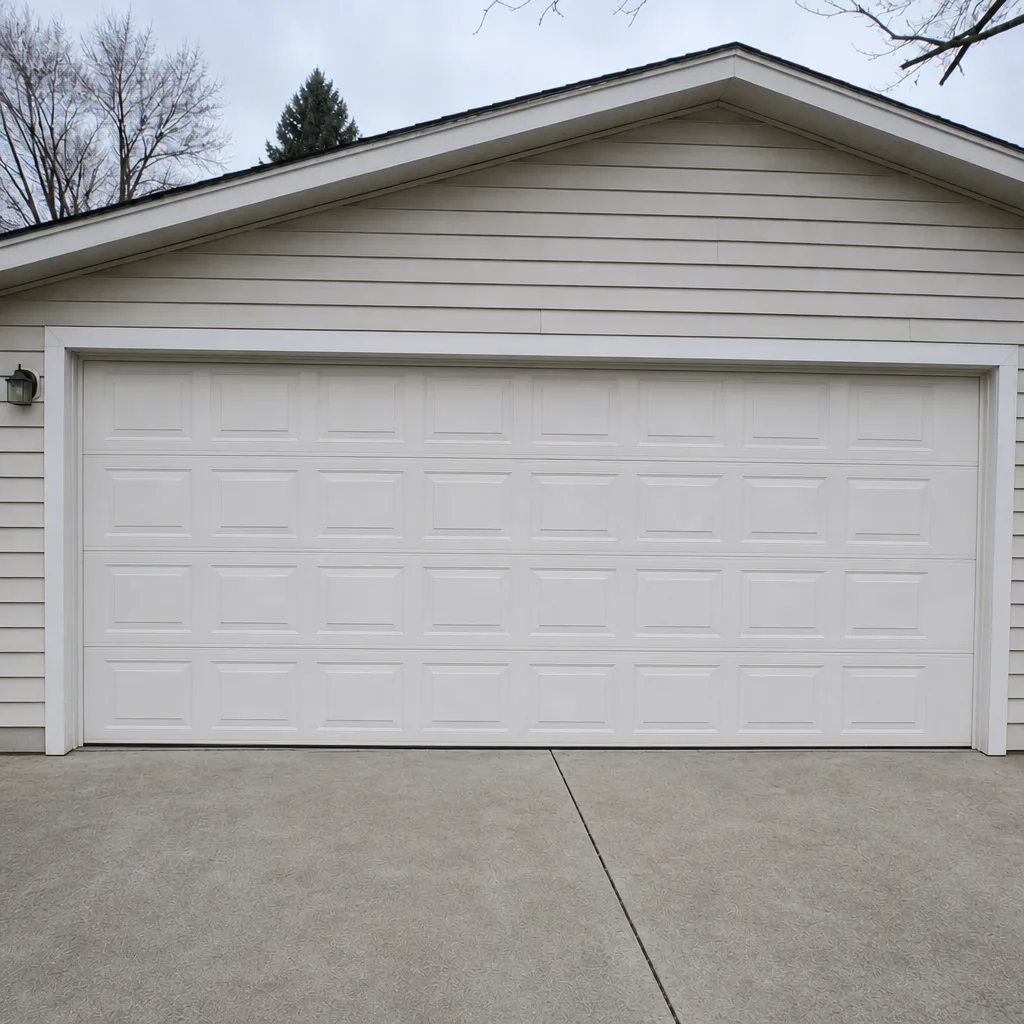 After
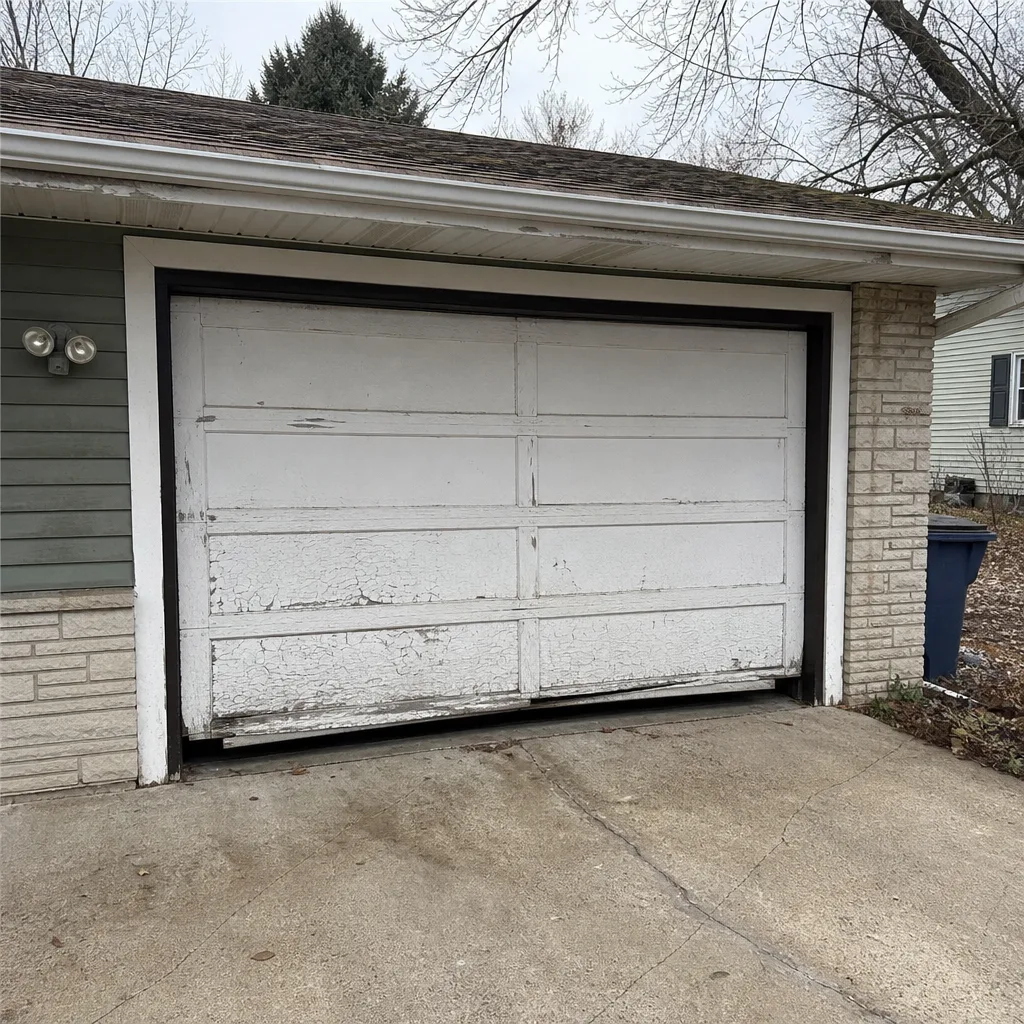 Before
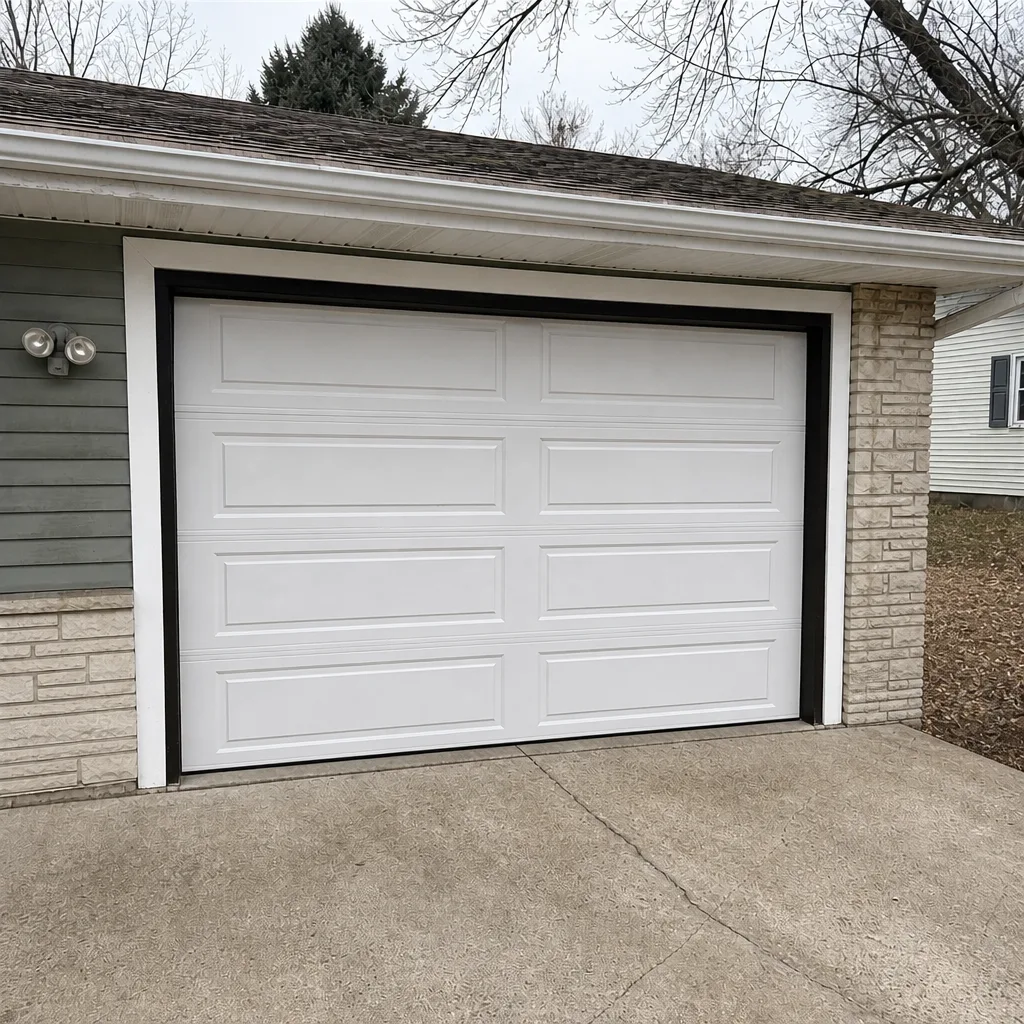 After
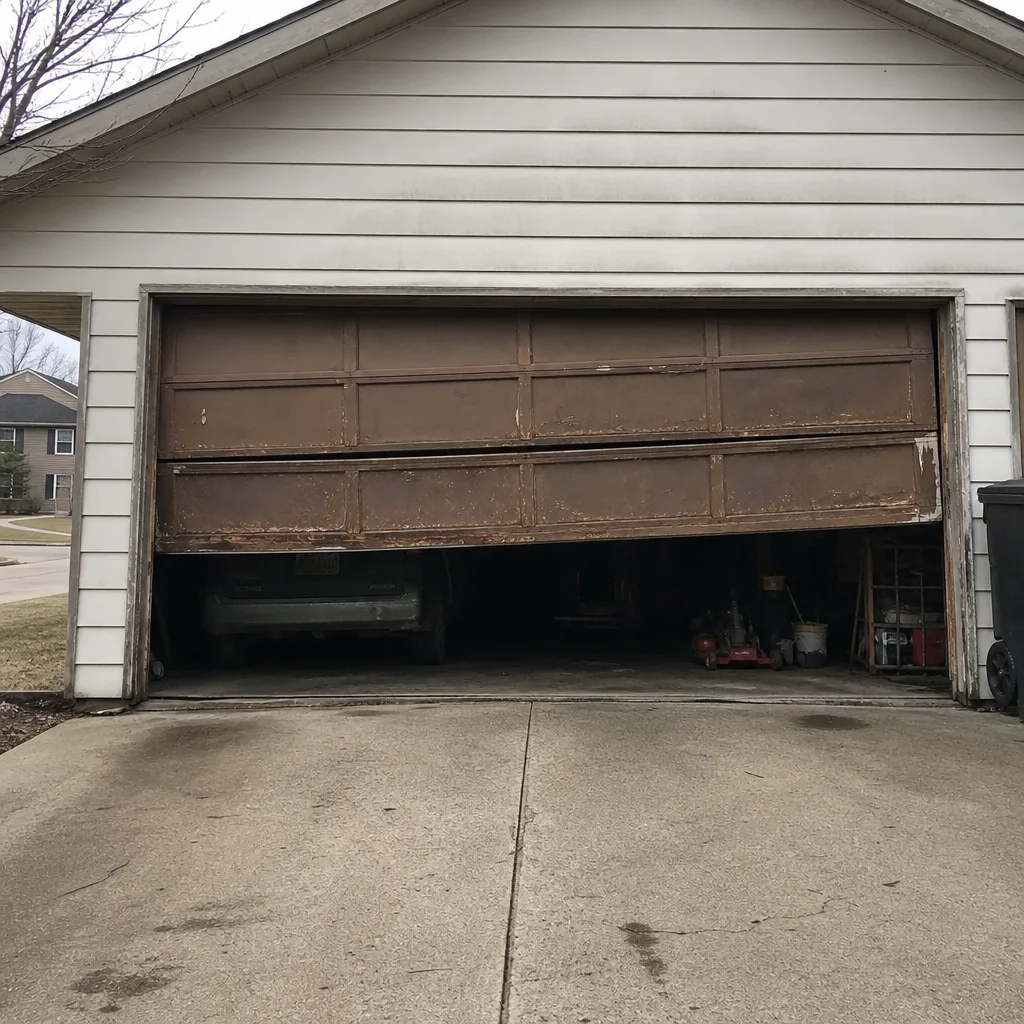 Before
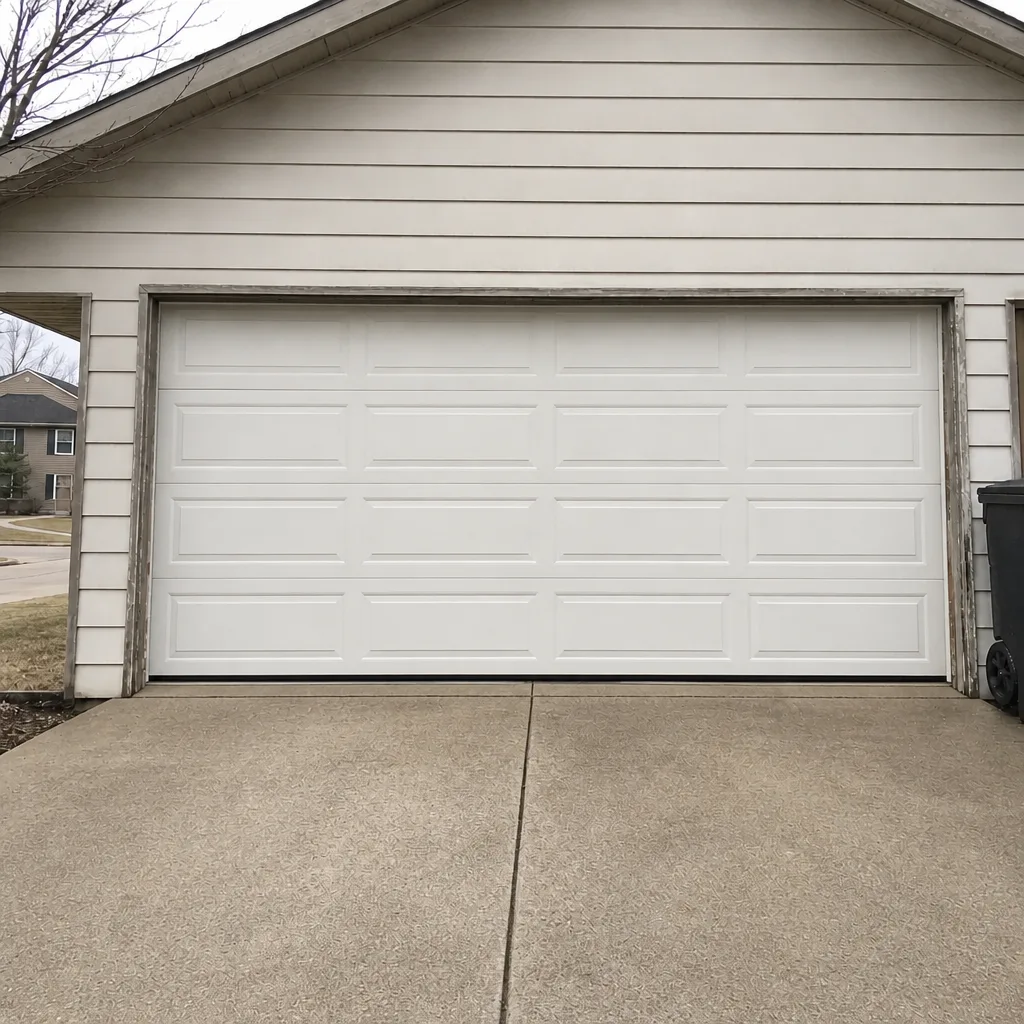 After
When to Call a Professional
Call a professional when a task involves a spring, a cable, or a door that has moved off track, and call the moment a door is crooked, binding, or won’t close evenly. Call if you’ve had a broken spring and the door is stuck open or hanging. Call if the opener runs but the door doesn’t move, or if it moves a few inches and stops. Call if a child or pet has been near a closing door, because that’s a safety check you want done correctly. And call if you’re not sure: a short conversation costs nothing, and it’s the easiest way to find out whether a job is yours to handle or ours to handle. Maple Grove Garage Door Repair Pros offers free estimates in Maple Grove. Call (833) 902-7220.
Frequently Asked Questions
No. Torsion and extension springs store enormous mechanical energy, and an unplanned release can cause serious injury in an instant. Spring work is a job for a trained technician with the correct winding bars, and it’s why we treat spring repair as a specialist service. If a spring is broken, stop using the door and call for help.
Lubricating rollers and hinges, replacing a remote battery, reprogramming a remote or keypad, wiping the safety sensor lenses, aligning a sensor that’s been nudged, and replacing a bottom seal are all reasonable DIY tasks. A balance test is also safe and gives you useful information. Anything involving a spring, a cable, or a door that’s off track should go to a professional.
It can. Many manufacturers require professional installation and service, and a DIY mistake that damages a door or opener may not be covered. Check your door and opener warranty before you attempt a repair that involves more than a battery, a lubricant, or a sensor. On a newer Clopay, Amarr, Wayne Dalton, or Raynor door, a warranty issue is worth taking seriously.
Put an object roughly as tall as a roll of paper towels under the closing door and see if it reverses. Also check that the sensor eyes line up and that the indicator light is on. If the door doesn’t reverse, that’s a safety issue for anyone who uses the garage. Have it inspected before you rely on it.
Sometimes. A lubricated door or a fresh battery costs very little, and there’s no reason to pay a service call for those. But on a spring or a cable, the cost of a mistake is a lot higher than the cost of the repair, and a wrong repair can turn a small job into a bigger one.
Yes. Cold weather makes metal contract and seals harden, and freeze-thaw cycles can nudge the tracks. A few minutes of lubrication and a visual check in the fall helps prevent a cold-weather failure. Shoveling snow away from the bottom seal and the bottom panel protects the door. If you suspect a worn spring, have it looked at before the coldest weeks hit.
The Bottom Line
The DIY vs. pro question for a garage door isn’t a single choice. It’s a task-by-task judgment, and the line is clearer than most guides admit. Lubrication, sensors, remotes, keypads, and visual checks are yours to handle. Springs, cables, and anything off track are not. The mistake to avoid is treating the danger as uniform, because that leads to either a false sense of safety around springs or an unnecessary service call for a battery. If you’re in doubt about a task, call us. A short conversation costs nothing, and it’s the easiest way to find out which side of the line you’re on. When the door is safe to work on, do it carefully. When it isn’t, hand it to a specialist.
If you’re ready to move forward, call Maple Grove Garage Door Repair Pros at (833) 902-7220 for a free estimate. We work on your brand and we’ll tell you plainly what’s safe to handle and what isn’t. One call, fully handled. Learn more at Maple Grove Garage Door Repair Pros.
Written by the team at Maple Grove Garage Door Repair Pros.