Top Signs You Need Garage Door Service – Don’t Ignore These
The clearest signs you need garage door service are a door that moves slower than it used to, one side that rises ahead of the other, new grinding or popping sounds, and visible cable kinks or roller flat spots. These are mechanical warnings, not cosmetic quirks, and they almost always show up weeks before a full breakdown. If you’d rather not climb a ladder and guess, call (833) 902-7220 for a free estimate.
A garage door that takes three seconds longer to open than it used to isn’t “getting old.” It’s telling you the springs are losing tension, and you’re one cold Maple Grove morning away from a door that won’t lift at all. The frustrating part is that most homeowners normalize these signals because the door still opens. It does, right up until it doesn’t. We’ve seen this pattern enough to know the difference between a door that’s complaining and a door that’s about to quit, and the gap between those two is usually measured in weeks.
Why does my garage door open slower than it used to?
A slower door is almost always a spring tension problem, not a motor problem. The springs counterbalance the door’s weight, and as they fatigue they lift less of that weight, so the opener has to work harder to drag the door open. That extra three seconds is the opener straining against a load it wasn’t designed to carry alone.
Here’s how to tell the two apart. A failing motor usually sounds different: it whines, clicks, or stops partway and reverses. A failing spring changes the pace of the whole cycle without much change in sound. The door just moves with less authority.
Maple Grove winters make this worse. Cold stiffens the grease in the rollers and tracks, and it also makes tired springs less willing. A door that drags at 20 degrees is many homeowners’ first real warning that something’s worn out.
- Slow, steady movement with normal sound: suspect the springs or rollers.
- Jerkiness or a mid-travel stop: suspect the opener or a binding track.
- Slow only on cold mornings: cold-weather friction on top of already-tired springs.
Springs are under extreme tension and are one of the most dangerous parts to touch. We don’t recommend adjusting them yourself. If your door has slowed down, garage door spring repair is the place to start.
What does it mean when one side of the door rises faster than the other?
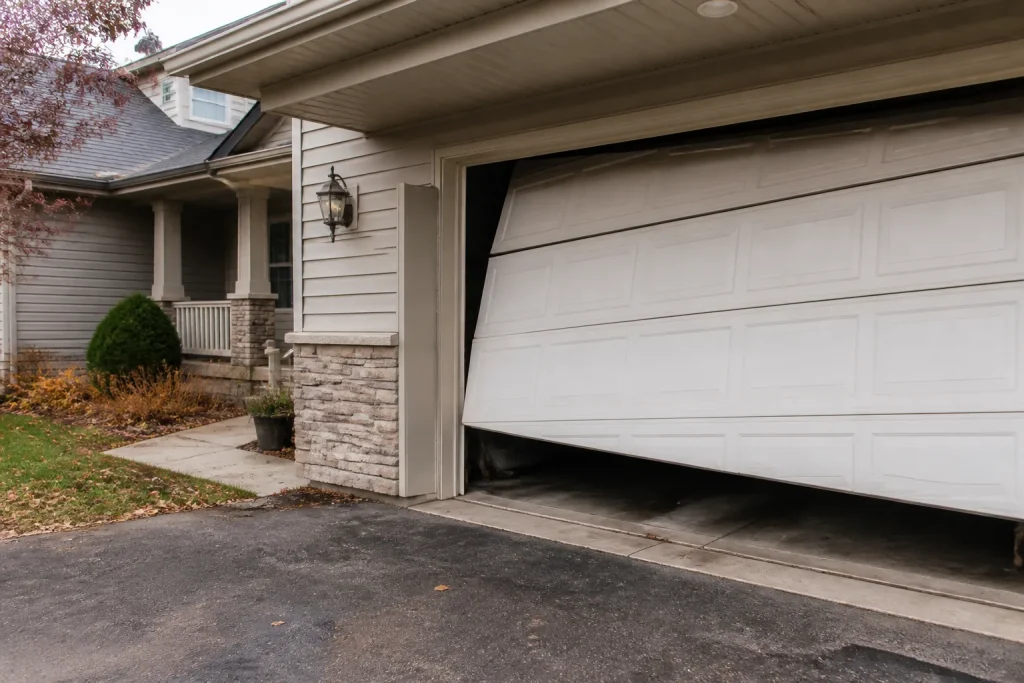
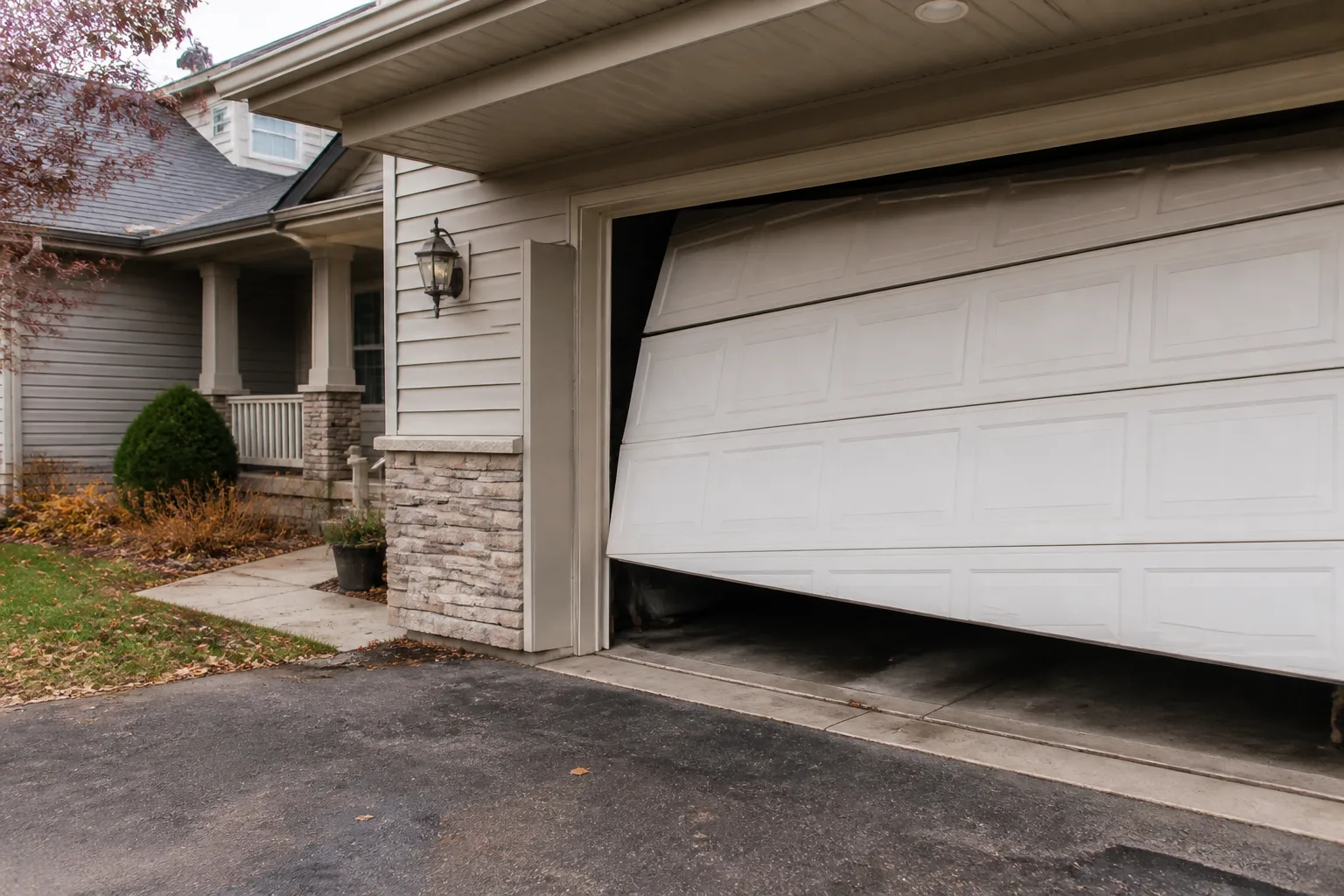
Asymmetrical movement means one side is carrying more load than the other, and it stresses the entire cable-and-drum system on both sides. When one side climbs ahead, the door is essentially twisting in its tracks. That misalignment pulls the cables unevenly, wears the rollers on the lagging side, and can eventually pop a cable off its drum.
The usual causes in a Maple Grove home:
- Uneven spring tension. If you have two springs, one has fatigued more than the other.
- A stretched or slipping cable. One cable has lost tension and is no longer holding its side square.
- A bent or misaligned track. Usually from a bump, a temperature shift, or loose hardware.
This one is easy to spot from inside the garage: watch the gap between the door and the floor as it comes down. If one corner touches down before the other, or the gap on one side closes early, the door isn’t level and something is wrong. Don’t keep running it. A door that’s binding on one side can come off its track, and that’s a repair bill several times the cost of an adjustment.
Which garage door noises are serious and which are fixable?
The sound your door makes tells you a lot about what’s failing. Grinding and squealing usually means worn rollers and is often a quick fix. Popping or snapping means a fatigued spring or a cable problem and warrants stopping use immediately. Learning the difference helps you decide how urgently to act.
Worn rollers (fixable, usually quick)
A high-pitched squeal, a rattle, or a grinding roll as the door travels. Rollers wear flat and dry out, and metal-on-metal contact gets louder. This is the most common noise we diagnose, and it’s the least urgent.
Cable fraying (urgent)
A twanging or snapping sound, or a sudden bang followed by a door that hangs crooked. A frayed cable is a safety hazard. Stop using the door and call.
Torsion spring fatigue (stop now)
A loud bang from inside the garage, followed by a door that suddenly feels extremely heavy or won’t stay up. That’s a spring letting go. Springs are dangerous, and this is exactly the job trained technicians exist for. Don’t run the opener trying to force it.
We work on doors from Clopay, Amarr, and Wayne Dalton, plus the openers that drive them, so a strange noise usually points to a familiar culprit fast. If the sound is coming from the motor rather than the door, garage door opener repair covers that side of the system, including Genie and LiftMaster units.
What should I actually look for on the hardware?
You don’t need tools to spot most early failures. A flashlight and two minutes in the garage will show you rust patterns, cable kinks, and roller flat spots that tell you what’s wearing out. Here’s where to point your eyes in a Maple Grove garage:
- Cables: look for kinks, fraying strands, or a cable that’s jumped its drum. A healthy cable is straight and evenly wound. A kinked one is on its way out.
- Rollers: check for flat spots, cracks, or missing bearings. A roller that doesn’t spin freely by hand is dragging the whole door.
- Rust patterns: surface rust on tracks and hinges is common with our freeze-thaw swings. Concentrated rust at a hinge or a cable point can mean moisture is trapped and the part is seizing.
- Springs: look for gaps, a visible break, or heavy rust. Never touch or adjust them. Just note what you see and call.
- Tracks: check for dents and loose brackets. A track that’s out of alignment forces everything else to work harder.
If you’re planning a bigger change rather than a fix, our garage door repair service handles the smaller jobs, and full replacement is an option when the panels themselves are past saving.
Why does my door reverse before it fully closes?
A door that reverses before closing is usually a force-limit miscalibration, not a bad safety sensor. The opener senses resistance it interprets as an obstruction and backs off. When the sensors are the problem, the door won’t start down at all, or the light on the sensor blinks. When the door moves most of the way then reverses, it’s often the force setting reacting to a door that’s binding somewhere.
Common causes:
- Something in the track. Debris, a bent section, or a loose bracket creating resistance.
- Dry or worn rollers. Friction the opener reads as an obstacle.
- A misaligned or dirty safety eye. Worth checking, but less likely if the door travels most of the way first.
Sometimes the reverse points to something more serious: a track out of alignment or a failing spring that’s making the door bind. A force setting that’s been turned up to compensate for a door that’s fighting itself is a door that’s about to fail in a worse way. That’s a good moment to have a trained technician look at it rather than dial the force higher.
When should you call a pro instead of waiting?
Call a professional when you see a broken or heavily rusted spring, a frayed or kinked cable, a door that’s come off its track, or any sudden loss of balance. These are genuine safety hazards. Springs and cables store serious energy, and a mistake with either can cause injury. We handle these as part of our emergency garage door service because a door stuck open or a door that won’t lift leaves a home exposed.
Our technicians have up to 8 years of experience and work on the leading residential brands. As a garage-door-only operation, every tool and part we bring is specific to this trade, so the fix happens on the first visit rather than the second. If your opener is the weak link, opener repair and replacement are part of the same call. We fix the root cause, not just get the door closed for now.
Related services in Maple Grove: you can explore everything we handle at Maple Grove Garage Door Repair Pros, from spring and opener work to full installations.
The Bottom Line
Those small annoyances are your door’s way of asking for attention before the real failure arrives. A slower cycle, uneven movement, a new noise, or a visible kink in the cable are all mechanical warnings you can act on while the fix is still simple. Ignore them and the same door tends to fail at the worst possible moment, usually on a cold morning when you’re already running late.
The best move is an honest look at the hardware, then a call if anything seems off. If you’re in Maple Grove and need help, Maple Grove Garage Door Repair Pros offers free estimates – call (833) 902-7220. A quick check now beats a tow-truck morning later.
Frequently Asked Questions
The first signs are a door that opens slower than usual, one side rising ahead of the other, new grinding or popping noises, and visible cable kinks or roller flat spots. Any of these means something is wearing out and worth a look before it becomes a breakdown.
If the door moves slowly but sounds normal, it’s usually the springs. If the opener whines, clicks, or stops partway, it’s more likely the motor. Springs control the pace and balance of the door; the opener provides the push. When in doubt, a trained technician can tell in minutes, and springs should never be adjusted by a homeowner.
It depends on the sound. Grinding or squealing from worn rollers is usually safe to run until you can get it serviced. Popping, snapping, or a loud bang points to a spring or cable, and you should stop using the door right away and call for help.
We service equipment from LiftMaster, Chamberlain, Genie, Clopay, Amarr, Wayne Dalton, Craftsman, and Raynor. That covers most residential doors and openers in the Maple Grove area. Call (833) 902-7220 and we’ll confirm parts and scheduling for your brand.
Written by the team at Maple Grove Garage Door Repair Pros.
Need Garage Door Help?
Call Maple Grove Garage Door Repair Pros - the local pro we connect you with is licensed and insured, here with fast after-hours help in Maple Grove.
(833) 902-7220