Last updated November 21, 2026
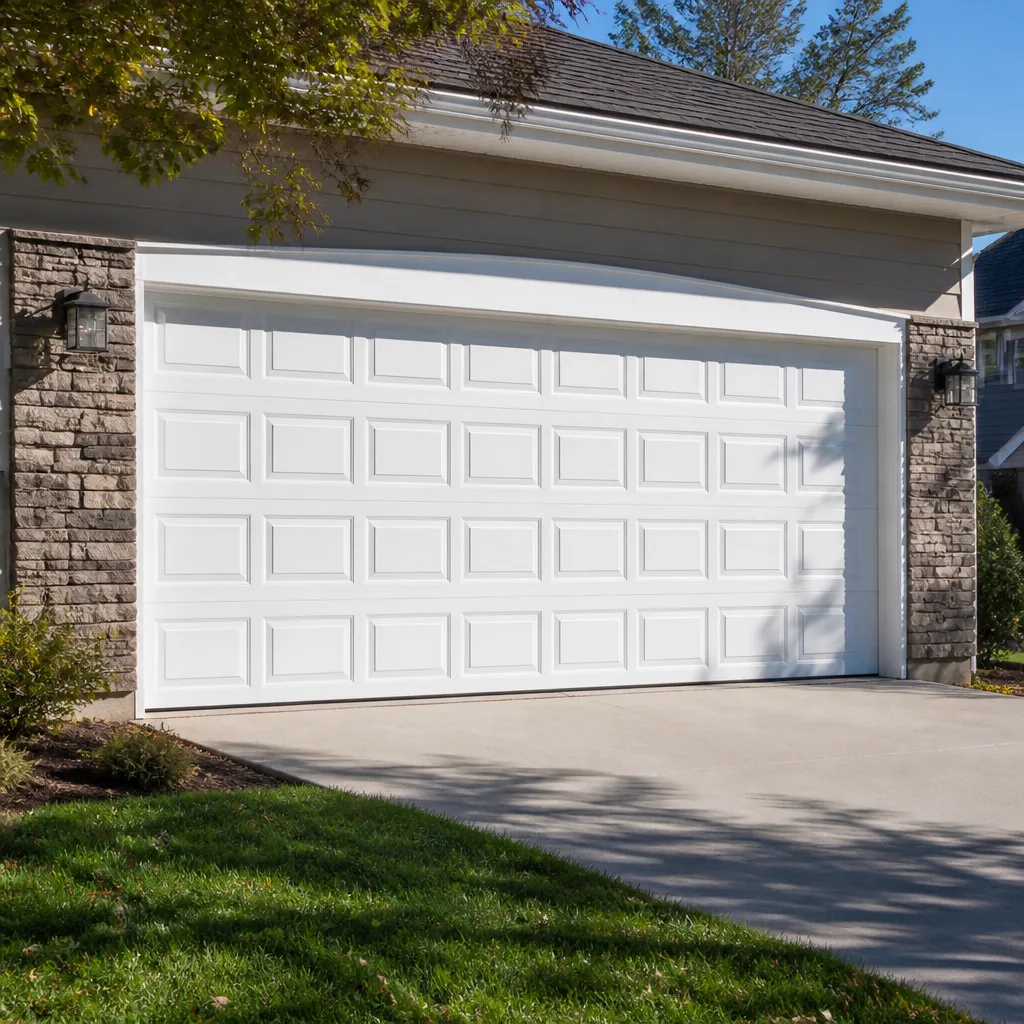 Raised-panel steel
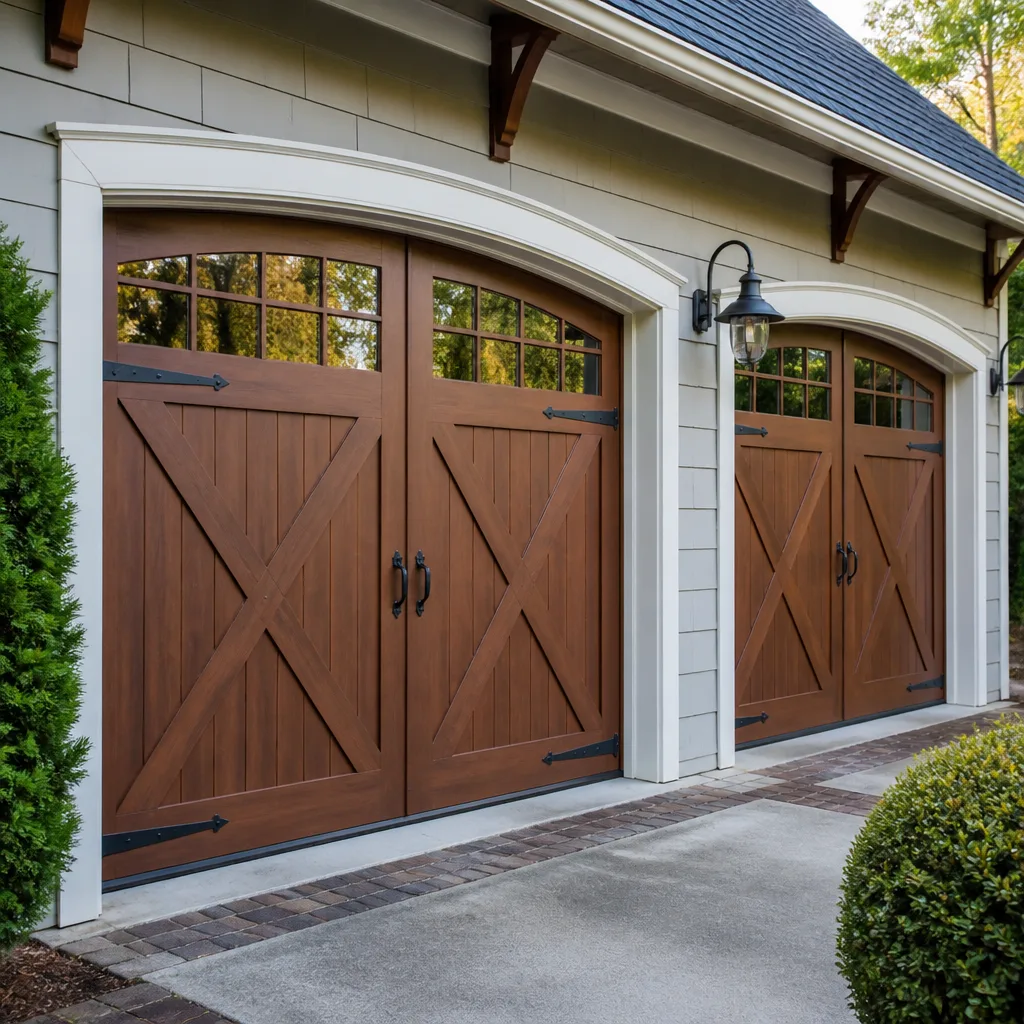 Carriage house
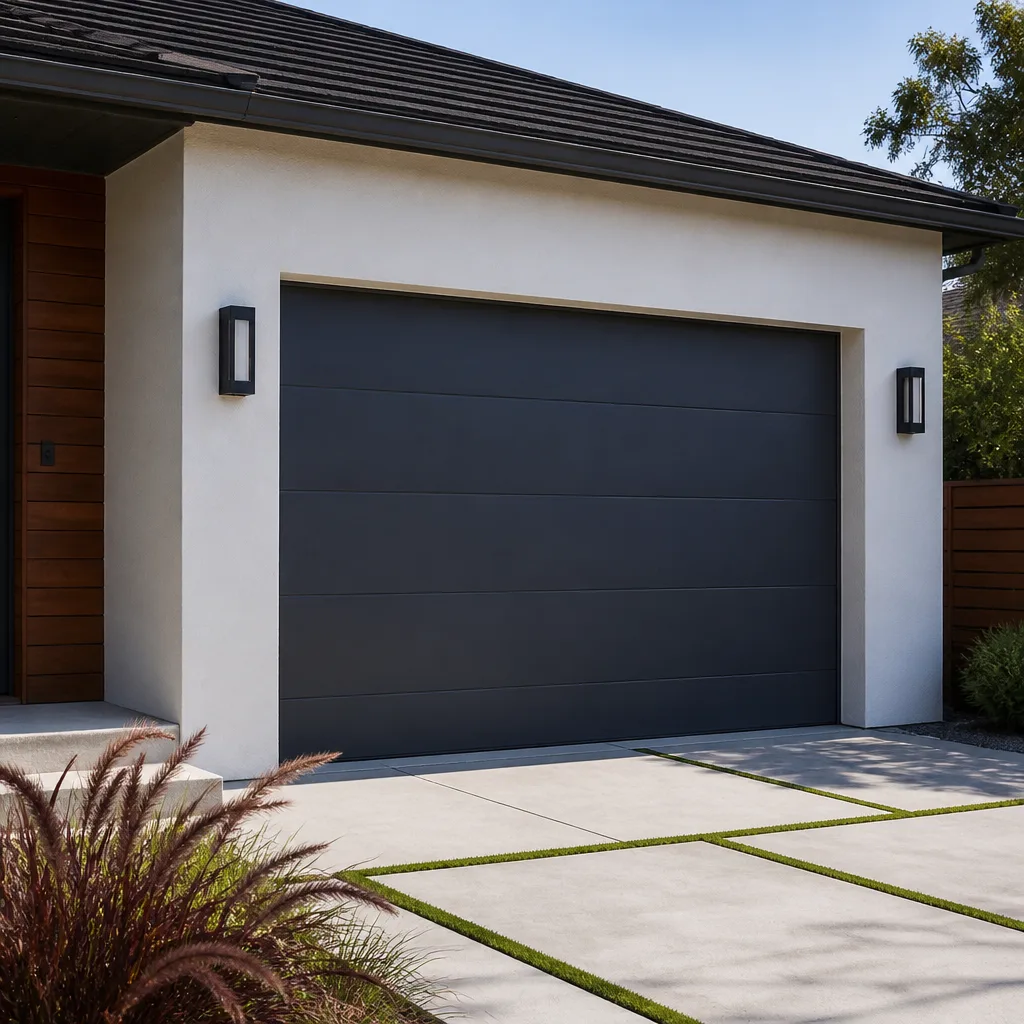 Modern flush
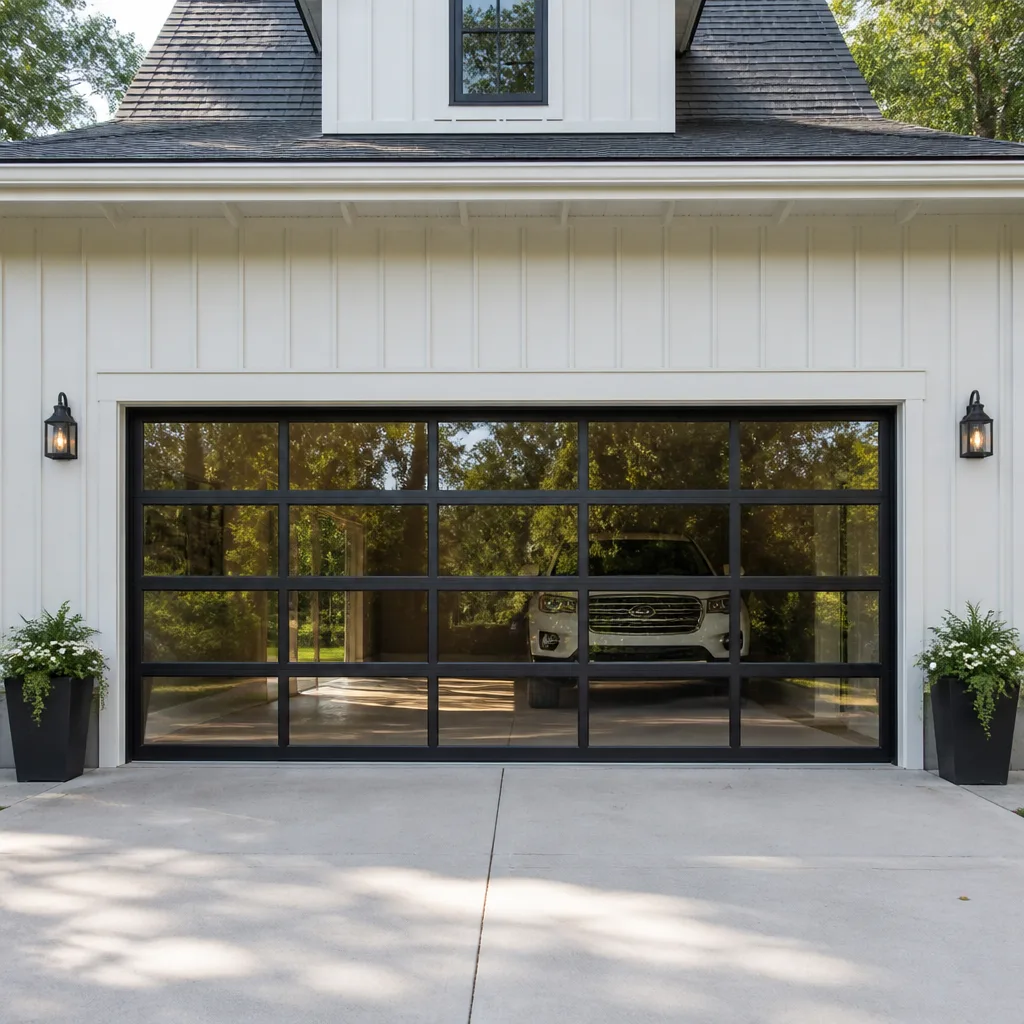 Full-view glass
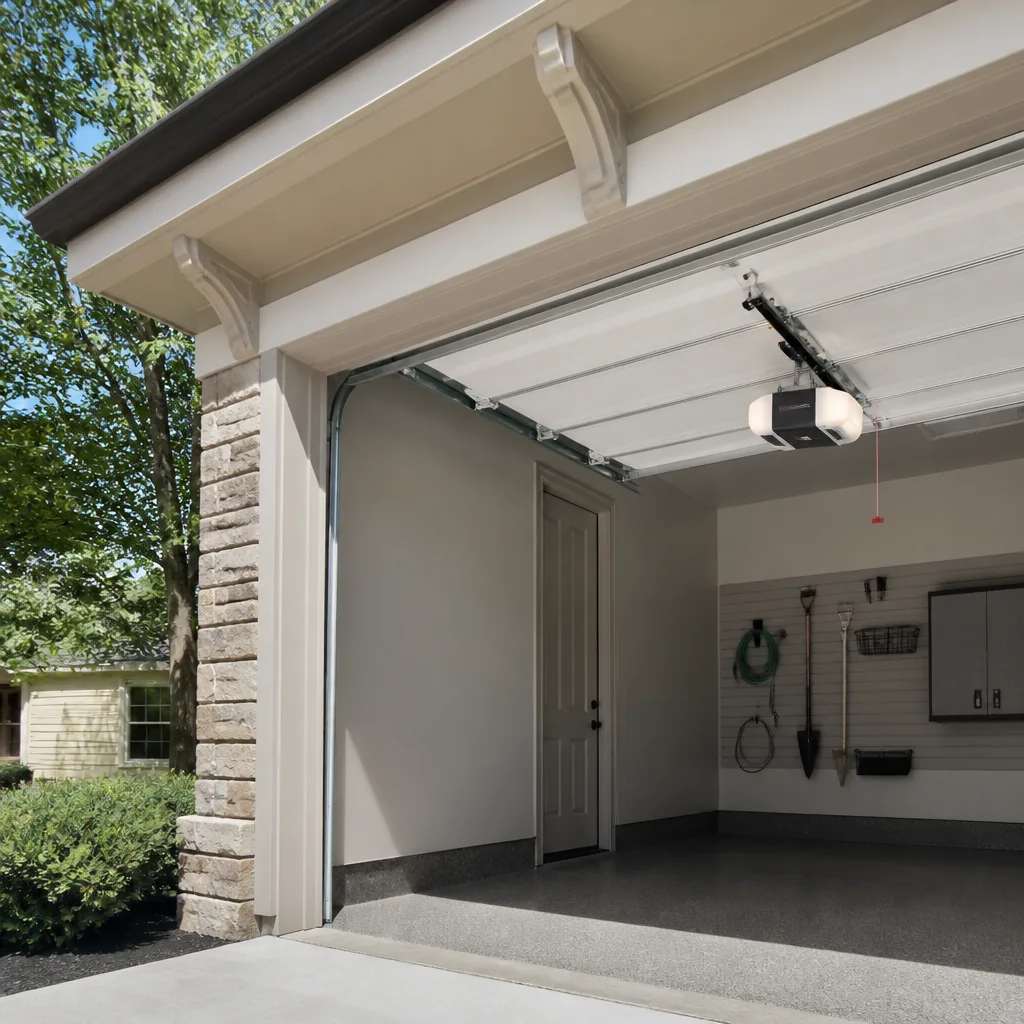 LiftMaster openers
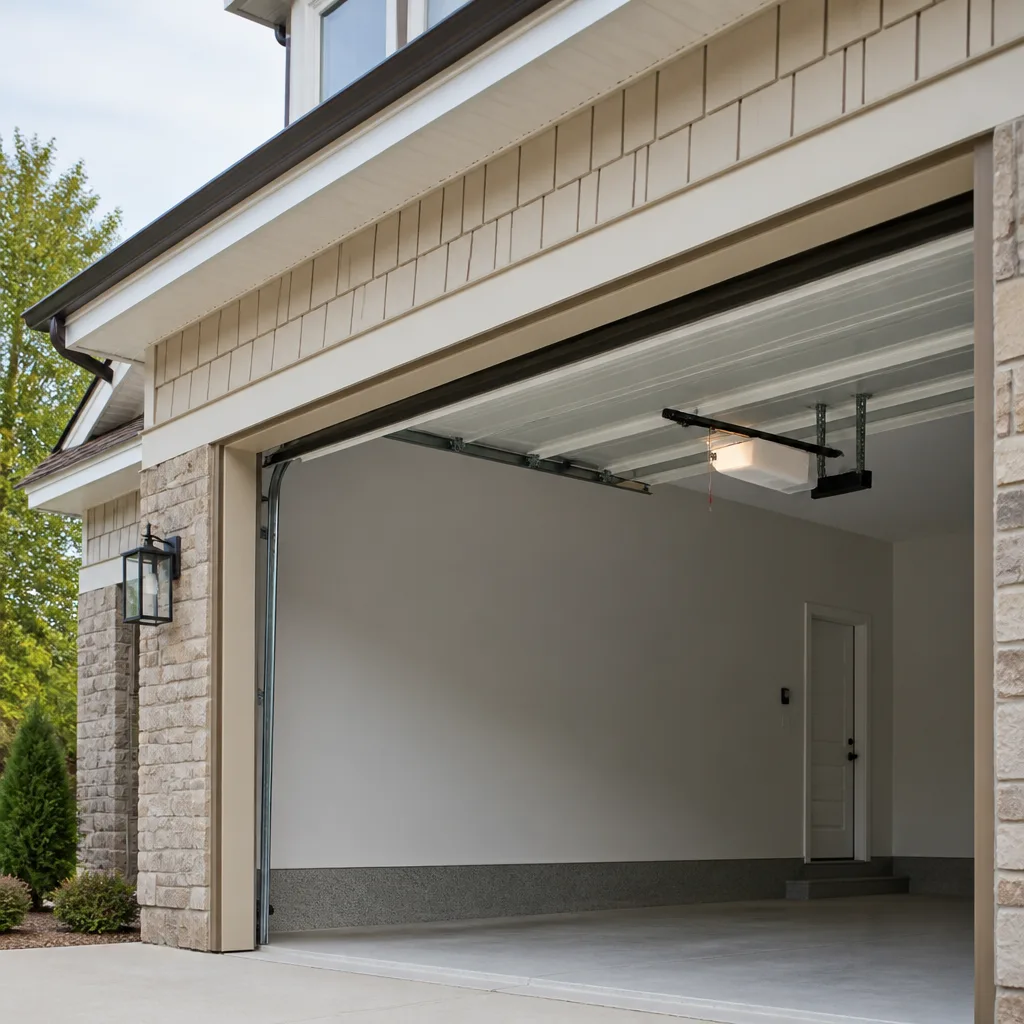 Chamberlain openers
Full 25-point door and opener safety check with every visit - springs, cables, rollers, tracks, and your LiftMaster or Chamberlain opener included
You get a price before we start. It does not change when the pro arrives.
Get your free estimateThe Complete Guide to Garage Doors in Maple Grove
Most Maple Grove homes have their garage door as the largest moving part of the entire structure, yet most homeowners know less about it than their dishwasher. The dishwasher gets a manual and a filter you clean. The door gets pressed into service four times a day, every day, through snow, ice melt, and summer humidity, and nobody thinks about it until a spring snaps. That gap is a problem, because a garage door in Maple Grove isn’t just a big panel on the front of the house. It’s a mechanical system with five interlocking parts, and the local climate puts stress on every one of them. This guide explains how that system works, what fails first here, how builder-grade doors differ from a real upgrade, and what to ask before anyone touches your door.
Quick Answer
A garage door in Maple Grove should be treated as a mechanical system, not three separate purchases. The opener, springs, tracks, panels, and seals wear at different rates, and in Minnesota’s freeze-thaw cycle the seals and springs go first. Understand how those components interact, match any replacement to your HOA’s rules, and choose insulation levels that suit a heated attached garage, and the door will last years longer than a generic national checklist suggests.
Styles & brands we work with
- Raised-panel steel
- Carriage house
- Modern flush
- Full-view glass
- LiftMaster openers
- Chamberlain openers
Table of Contents
- How to Read a Garage Door as a System
- How Maple Grove’s Freeze-Thaw Cycle Degrades Door Components
- HOA Restrictions in Maple Grove Subdivisions
- Builder-Grade Doors vs. a True Upgrade, Component by Component
- Insulation, R-Values, and Attached Garages in Minnesota
- What’s Actually Broken? A Diagnostic Walk-Through
- What Garage Door Work Costs in Maple Grove
- A Seasonal Maintenance Routine That Fits Minnesota
How to Read a Garage Door as a System
A garage door is often talked about as a single object, but it’s really five systems working in sequence. Understanding which part does what makes every future decision easier: whether to repair or replace, what to ask a technician, and why a fix on one component can affect another.
- Springs do the heavy lifting. Torsion springs, mounted on the shaft above the door, counterbalance the door’s weight so the opener only has to guide it, not haul it. When a spring weakens, the opener starts doing work it wasn’t designed for.
- Cables and drums spool the lifting force from the springs to the door’s bottom corners. They work as a matched pair and need to be adjusted to equal tension.
- Tracks and rollers define the door’s path. A slightly bent track or a flat-spotted roller creates drag that wears everything upstream of it.
- Panels and hinges carry the door’s structural load. Hinges at the panel joints take a beating, especially on doors that cycle heavily in cold weather.
- The opener is the control system: motor, drive, safety sensors, and force adjustments. When a homeowner says “the opener is broken,” it’s often actually a spring, track, or sensor problem upstream.
This is why we start every diagnostic by looking at the whole system rather than the part the homeowner called about. A door that “won’t close” often has a spring that’s failed, not an opener that’s died. And a door that shakes on the way up usually has a track problem, not a motor problem. In our experience, the fastest fix is the one that addresses the failure point instead of the symptom.
Once you read the door this way, the rest of this guide makes more sense. Every component has its own wear pattern, and in Maple Grove those patterns are shaped by the climate.
How Maple Grove’s Freeze-Thaw Cycle Degrades Door Components
Minnesota winters are hard on garage doors in ways national guides don’t quite capture. It’s not the deepest cold that wears a door out; it’s the number of freeze-thaw cycles. Maple Grove sees many of them across a typical winter, and each cycle puts the door’s moving parts through a small expansion and contraction.
Here’s how that plays out at the component level:
- Bottom seals go first. A rubber or vinyl bottom seal flexes against a concrete floor that swells and cracks through freeze-thaw. Over a few winters the seal hardens, cracks, and stops making contact, letting in cold air, meltwater, and the occasional field mouse.
- Torsion springs fatigue faster. Cold metal is less ductile. Springs that cycle through deep cold and then warm up repeatedly build fatigue differently than springs in milder climates. Torsion spring failure is the single most common emergency call we get in Maple Grove, and the pattern runs from late fall through early spring.
- Weatherstripping around the frame dries and splits. The stops and perimeter seals take direct sun in summer and hard freeze in winter, and that combination breaks down the material faster than a mild climate would.
- Rollers and hinges stiffen. Cold grease stops flowing. A door that ran quietly in October can start groaning by January, and the extra drag wears the opener faster.
There’s a second effect that’s easy to miss: meltwater. Snow pushed off the driveway or dropped off a car roof drains toward the door threshold. If the bottom seal is worn, that water gets inside and freezes against the bottom panel, and the next time the door opens, it pulls a chunk of seal with it. A bottom-seal replacement is one of the least expensive fixes on the door, and in Maple Grove it’s also one of the highest-value ones.
What we tell homeowners here is simple: check the seal and the rollers in October, before the first hard freeze. A five-minute inspection in fall can save a weekend in January.
HOA Restrictions in Maple Grove Subdivisions
Maple Grove’s residential character is heavily shaped by planned subdivisions, and many of them are governed by a homeowners association. That matters because a garage door is one of the most visible, most regulated features on the house. In areas like the Elm Creek and Bass Lake neighborhoods, it’s common for HOA rules to specify what a replacement door can and can’t look like, and the rules often go further than city code does.
Typical HOA language covers:
- Panel style – many associations require a specific look, often a raised-panel or carriage-house style, to keep the streetscape consistent.
- Color – the approved palette is usually tighter than what the manufacturer offers. Your door might come in a dozen colors, but your HOA may allow three.
- Window options – window inserts, grilles, and glass type are often restricted to match neighbors.
- Material and finish – some associations specify steel over wood, or require a certain factory finish.
- Visible hardware – decorative hinges and handles may be restricted, particularly in newer subdivisions.
Before you order anything, pull your HOA’s architectural guidelines and, if the rules aren’t clear, get written approval for the specific model and color. That single step prevents the situation every installer wants to avoid: a door that’s already on the house and now has to come back off. The installation team can’t see your HOA’s documents, and city permits don’t cover aesthetic rules. That check is on you, and it’s the most common place a Maple Grove door project slows down.
We’ve learned to ask about HOA approval before we finalize any order, because the right door is the one that passes your association and your city at the same time.
Builder-Grade Doors vs. a True Upgrade, Component by Component
Most homes built in Maple Grove’s newer subdivisions came with a builder-grade garage door. That’s not a criticism of the builder. It’s just how the economics of new construction work: the door is spec’d to meet code and hold up for a reasonable period, not to be the best door on the street. Understanding what’s different about an upgrade helps you decide whether it’s worth the money.
The differences usually come down to these components:
- Panel steel gauge and construction. Builder doors typically use a thinner steel skin with less structural reinforcement. An upgrade uses heavier gauge steel and often a sandwich construction (steel-insulation-steel) that resists dents and holds its shape.
- Insulation. Many builder doors are uninsulated or use a thin polystyrene layer. A true insulated door uses polyurethane or a dense polystyrene core bonded to both skins, which changes both the door’s thermal performance and its sound profile.
- Springs. Builder doors tend to come with the minimum spring rating for the door’s weight. Higher-cycle springs cost more up front and last significantly longer before needing replacement.
- Hardware. Hinges, rollers, and end brackets on builder doors are lighter duty. Upgraded hardware is often the first thing that changes how a door feels.
- Seals and weatherstripping. This is where the budget door shows most clearly. The bottom seal on many builder doors is thin vinyl that hardens quickly in a Minnesota winter.
Whether you’re replacing a builder door or just repairing one, the same logic applies. A door that’s mostly sound doesn’t need to be replaced; it needs the failing component addressed. That’s where garage door repair is often a better answer than a full replacement, and it’s worth asking the question before committing to a full new door.
If the door is failing structurally across multiple panels, or if the opener and springs are both well past their service life, replacement makes more sense. The honest answer usually comes from a component-by-component assessment, not a yes-or-no decision on the spot.
We work on equipment from Wayne Dalton, Clopay, Amarr, LiftMaster, Chamberlain, Genie, Craftsman, and Raynor, which means we’re familiar with the parts and platforms in most Maple Grove homes. That also means we can tell you whether your builder door is worth upgrading or worth replacing.
Insulation, R-Values, and Attached Garages in Minnesota
Almost every garage in Maple Grove is an attached garage, and an attached garage shares at least one wall with the living space. That makes its thermal performance part of the house’s overall energy picture, and it makes garage door insulation a locally relevant choice rather than a nice-to-have.
Here’s the practical picture:
- An uninsulated door is a thin steel shell. In winter it’s cold on the inside, and it radiates that cold toward any heated wall it faces. In summer it turns the garage into a heat box.
- An insulated door holds a temperature buffer. It reduces the temperature swing in the garage, which protects anything stored there and cuts the heat loss through the shared wall.
- R-value is a measure of resistance to heat flow. Higher R-value means more resistance. What matters for a garage door is that the R-value comes from a continuous, well-bonded core, not a thin air gap.
- Fit matters as much as the number. An insulated door with a worn bottom seal still leaks a lot of air. Seal and perimeter weatherstripping need to be part of the same job.
For most Maple Grove homeowners, an insulated door paired with a fresh bottom seal and perimeter stops is the practical upgrade. It’s a bigger investment than a builder door, and it’s the one that shows up on the energy bill and in how quiet the house feels when the door runs.
If your opener is old and the door is new, this is also the moment to think about the opener’s force settings. A heavier insulated door needs a properly rated opener and correct springs to match. That’s not a swap you do half-way, which is exactly why the next two sections walk through diagnosis and cost.
What’s Actually Broken? A Diagnostic Walk-Through
When something goes wrong with a garage door in Maple Grove, the symptom often points to a different component than the obvious one. Use this walk-through to narrow it down before you call. These steps help you describe the problem accurately; they are not instructions for repairing the door yourself.
- Look at the door before you touch the opener. Is it sitting crooked? Can you see a gap at one side? Does one panel look out of line with the others? A crooked door is usually a spring, cable, or track problem, not an opener problem.
- Test the balance by hand with the door in the middle position. With the door halfway up and the opener disconnected, a properly balanced door stays roughly where you leave it. If it drops hard or feels very heavy, the springs are the likely culprit.
- Listen. A rattle, a grinding sound, or a sharp pop from above the door is worth noting. A single loud bang that stops the door from opening is a classic torsion spring failure.
- Check the safety sensors. If the door opens but won’t close, or reverses immediately, look at the two sensors at the bottom of the tracks. A misaligned sensor, a cobweb, or a blocked lens will cause exactly this behavior.
- Look at the bottom seal and perimeter. Gaps, cracking, and water inside the garage point to worn weatherstripping, which is separate from the mechanical problem and worth fixing at the same time.
- Look at the opener lights and behavior. An opener that flashes or clicks but doesn’t move the door is often trying to tell you something is wrong upstream. Note exactly what it does, then stop.
One important safety note: garage door springs and cables are under very high tension. They can cause serious injury if adjusted or removed without the right training and tools. We don’t recommend homeowners attempt spring or cable work themselves, and no guide should suggest it. If you suspect a spring has failed, keep the door closed, don’t run the opener, and call a trained technician.
Once the problem is identified, the next question is almost always cost. That’s the subject of the next section.
What Garage Door Work Costs in Maple Grove
Cost is the question we get first, before anything else. Here’s how the typical numbers break down. These are estimates, not fixed prices, and the written estimate you receive is the final word. Your quote is agreed before any work starts.
- Torsion spring replacement (one spring): typically $180 to $340. A matched pair is usually replaced together, so budget roughly double for a pair.
- Extension spring replacement: typically similar or slightly lower per spring, but depends on the door’s weight and setup.
- Opener repair: typically $95 to $250, depending on the failure. A sensor alignment or force adjustment is at the low end; a motor or logic board replacement is at the high end.
- New opener installation: typically $250 to $650 for the unit and labor, depending on door weight and features.
- Bottom seal and weatherstripping replacement: typically $90 to $200 for a standard single door.
- Track and roller service: typically $80 to $180, depending on how much of the hardware is replaced.
- Panel repair or replacement: varies widely by door model, from $150 for a single panel on a common door to substantially more for discontinued styles.
- Full new door installation: varies by door style, insulation, size, and opener requirement. A free measure and a written quote is the right way to find the number for your specific door.
Two things drive the range more than anything else: the door’s weight and the brand. A door that came with a Raynor or Clopay system has known parts and predictable service; an older or discontinued door may need a custom fit. That’s where brand familiarity saves time.
We offer free estimates throughout Maple Grove, and the price is quoted and agreed before any work starts. Call us at (833) 902-7220 for an exact figure on your door.
A Seasonal Maintenance Routine That Fits Minnesota
Garage door maintenance in Maple Grove is less about frequent tinkering and more about hitting the right checkpoints at the right time of year. Here’s a routine that fits the local climate:
- Fall (before the first freeze): test the door’s balance by hand, look at the bottom seal and perimeter stops, and listen for new noises. This is the best window to catch a weak spring before it fails in the cold.
- Early winter: check the tracks for debris and confirm the safety sensors are clean and aligned. Road salt and grit get tracked in from the driveway and can cause sensor faults.
- Mid-winter: look at the bottom of the door after heavy snow or an ice storm. If the seal is torn or torn away, that’s a repair to schedule in milder weather.
- Spring: check hinges and rollers for stiffness, tighten any loose hardware on the door frame, and look at the springs for visible stretch or separation.
- Summer: this is the best window for larger work, like a new sealed bottom, fresh weatherstripping, or a full new door install. Measuring, ordering, and scheduling all work better when the ground isn’t frozen.
One thing to be careful about: don’t apply lubricant to the springs or the cables or attempt to adjust the tension. Leave that to a trained technician. Most of the other checks on this list are safe and visual. If the door has failed or you’re uncertain about its condition, that’s the time to call.
If you’re dealing with a problem now, you can read more about garage door spring repair for a fuller explanation of how springs fail and what replacement involves.
Common Mistakes to Avoid
- Treating a bent track like a cosmetic issue. A small bend in a track forces the rollers to fight the door’s path every cycle, which wears the springs and the opener faster. Fix it early and it stays small.
- Replacing the opener when the spring is the problem. A heavy, slow door usually points to a failed or weakened spring, not a dying motor. Replacing the opener first leaves the real problem in place.
- Skipping the HOA check before ordering. In Maple Grove subdivisions, an unapproved panel style or color can mean the door comes back off the house.
- Buying an insulated door without fixing the seals. The highest-R-value door still loses most of its benefit if the bottom seal and perimeter stops are worn. Fix the whole system in one job.
- Attempting spring or cable work yourself. Springs are under high tension and cause serious injuries when handled by untrained hands. This is not a DIY job.
- Ignoring the bottom seal through winter. Meltwater that gets past a worn seal can freeze against the bottom panel and tear the seal further with the next cycle.
- Choosing a door only on price. In Minnesota, a cheap door that isn’t suited to the climate will cost more to maintain over the life of the house than a door chosen for insulation and durability.
See the difference
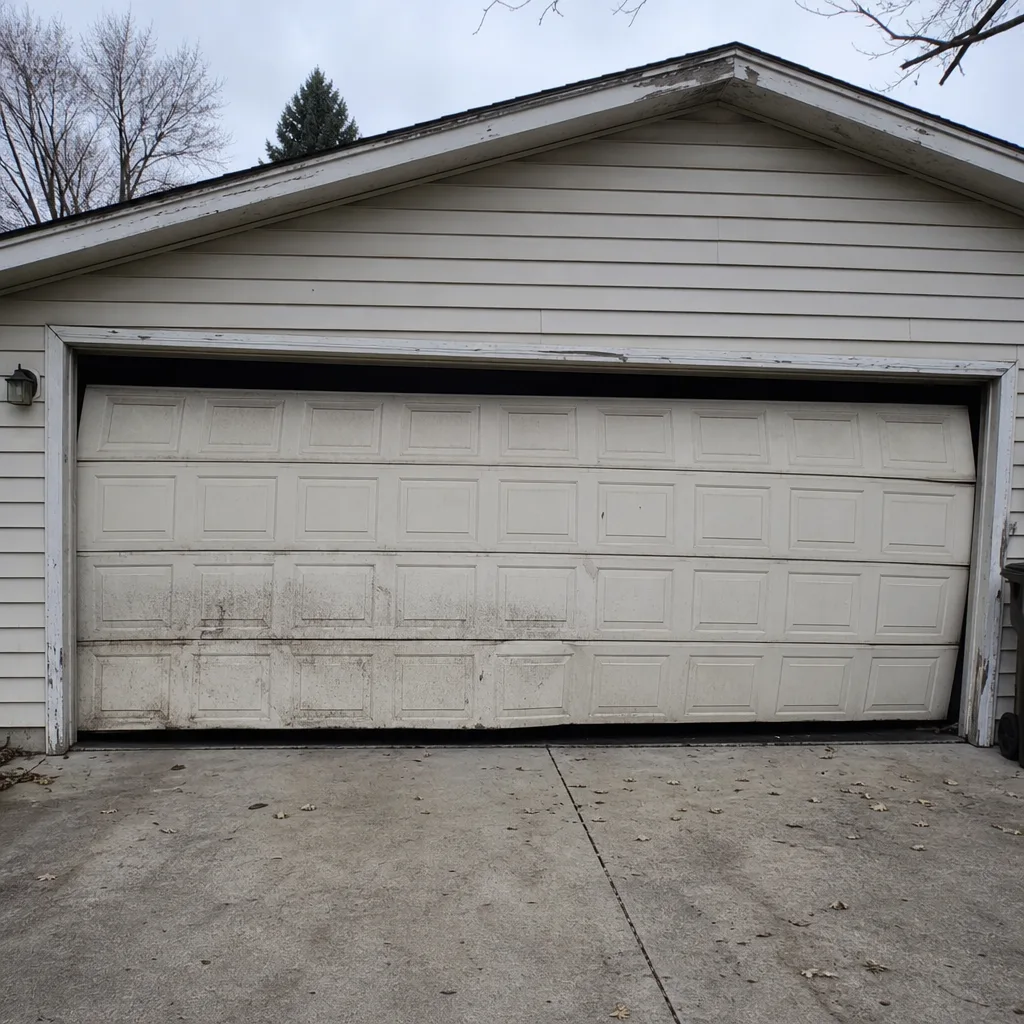 Before
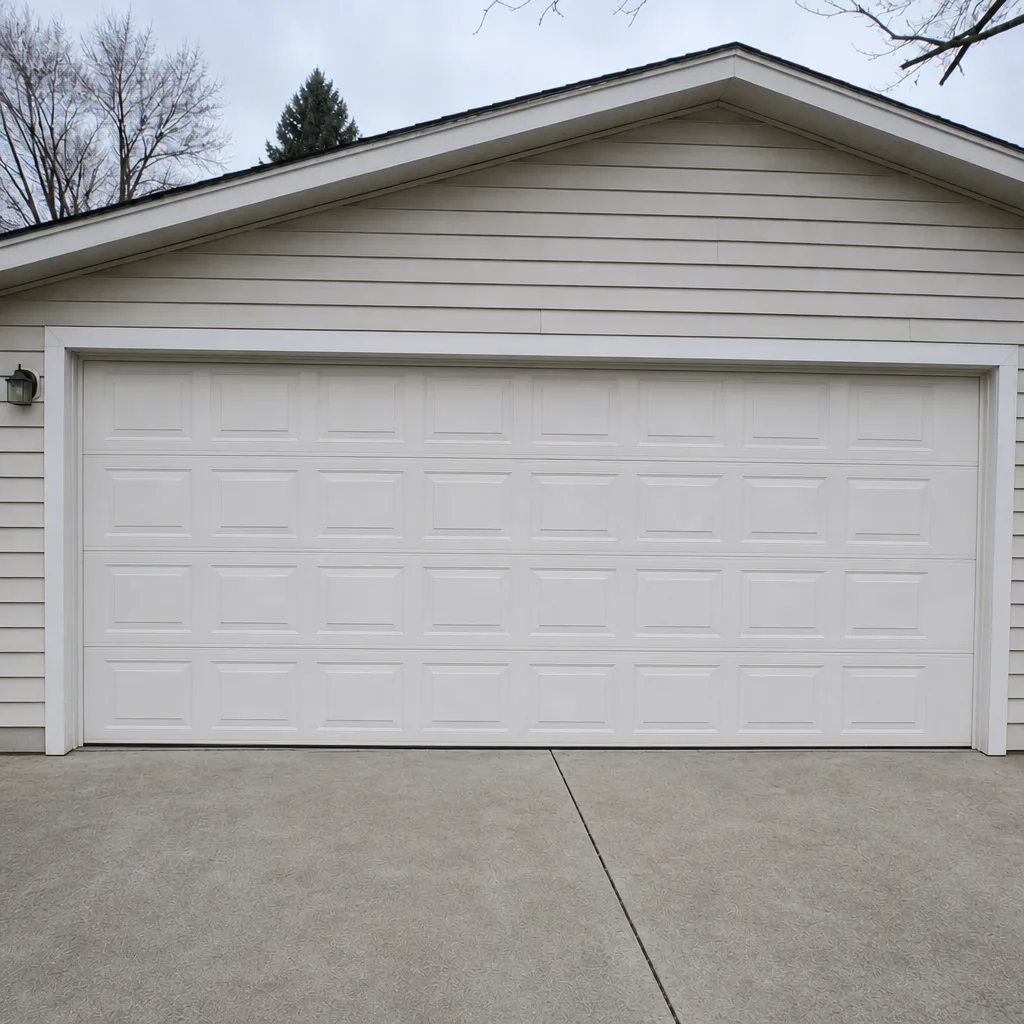 After
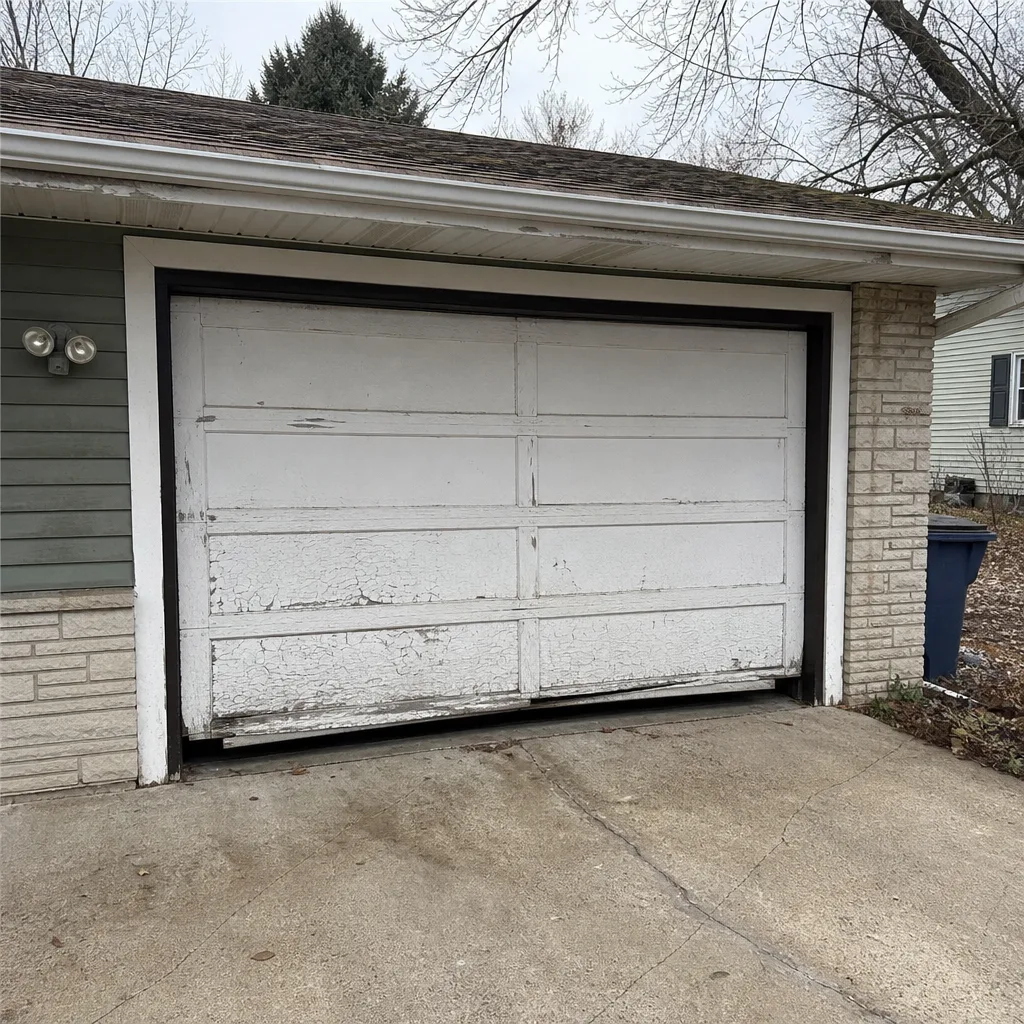 Before
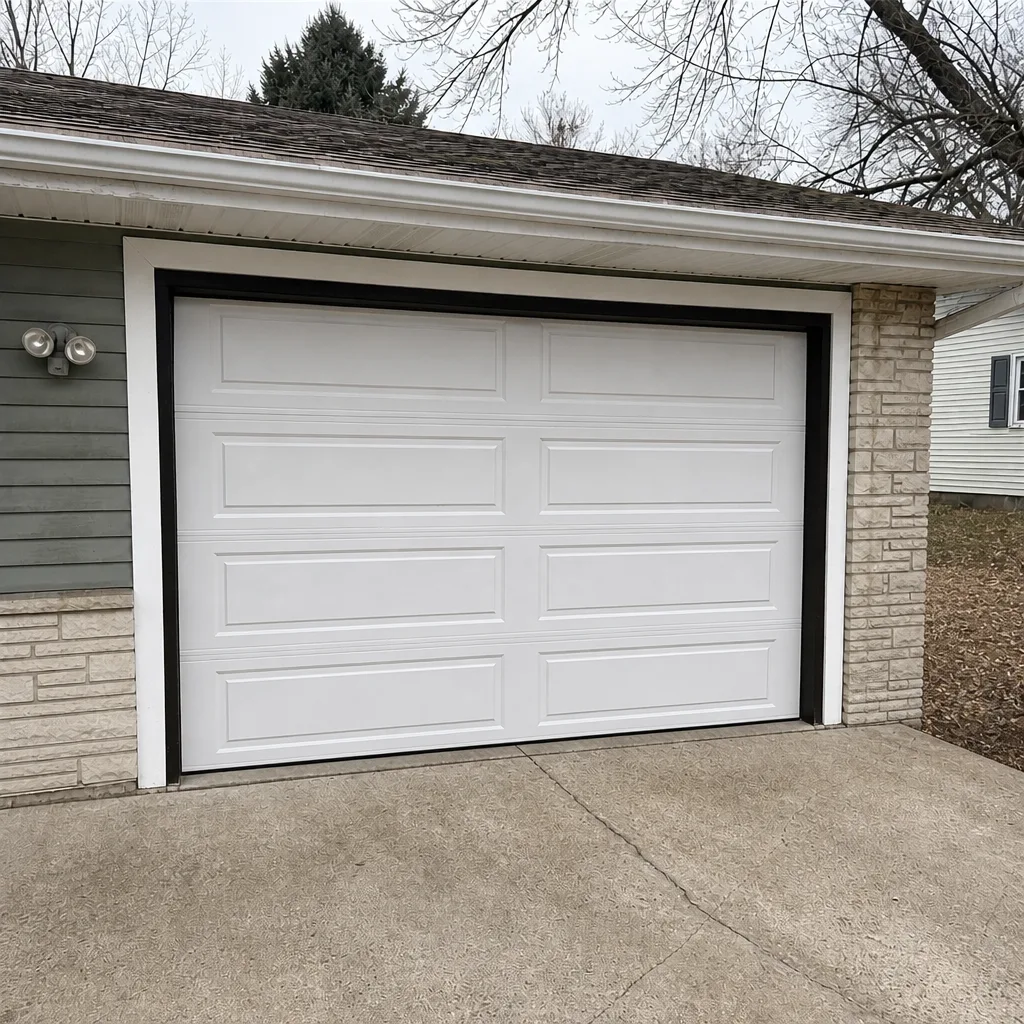 After
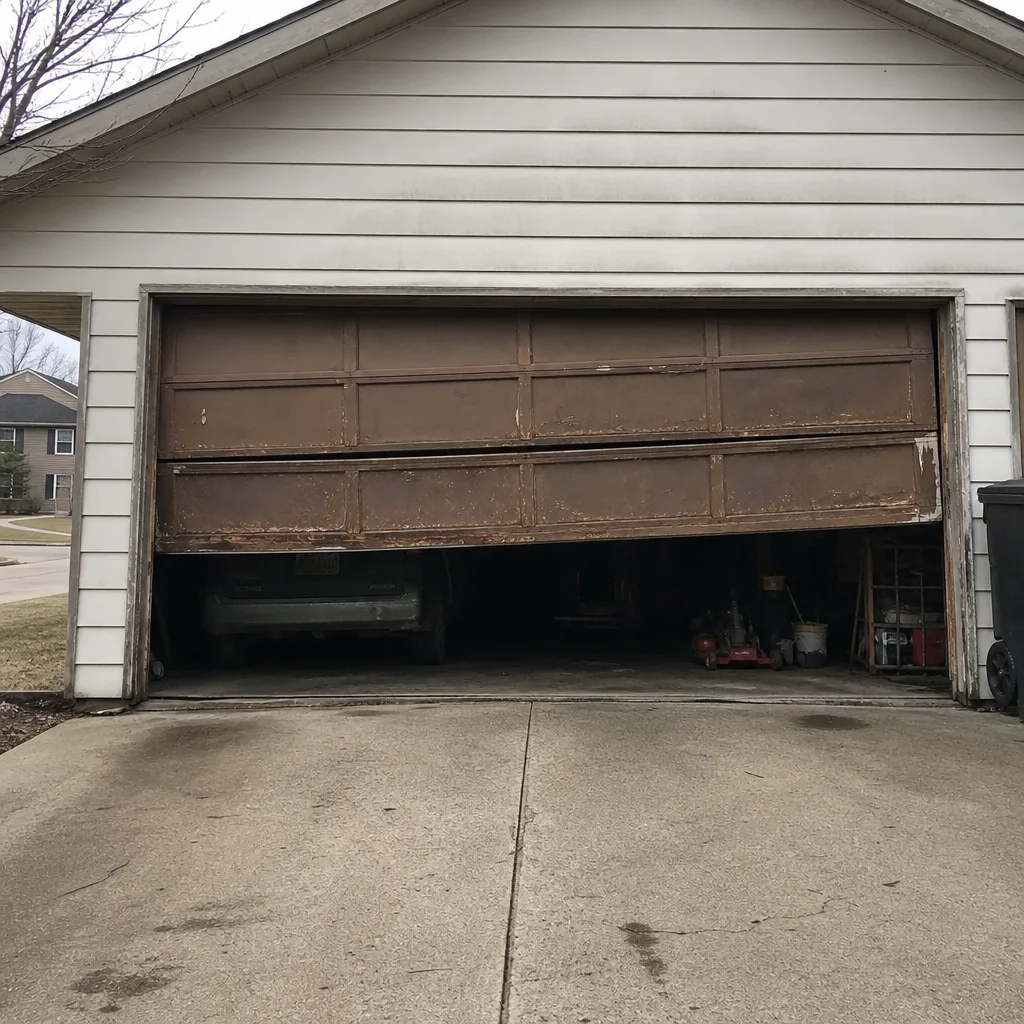 Before
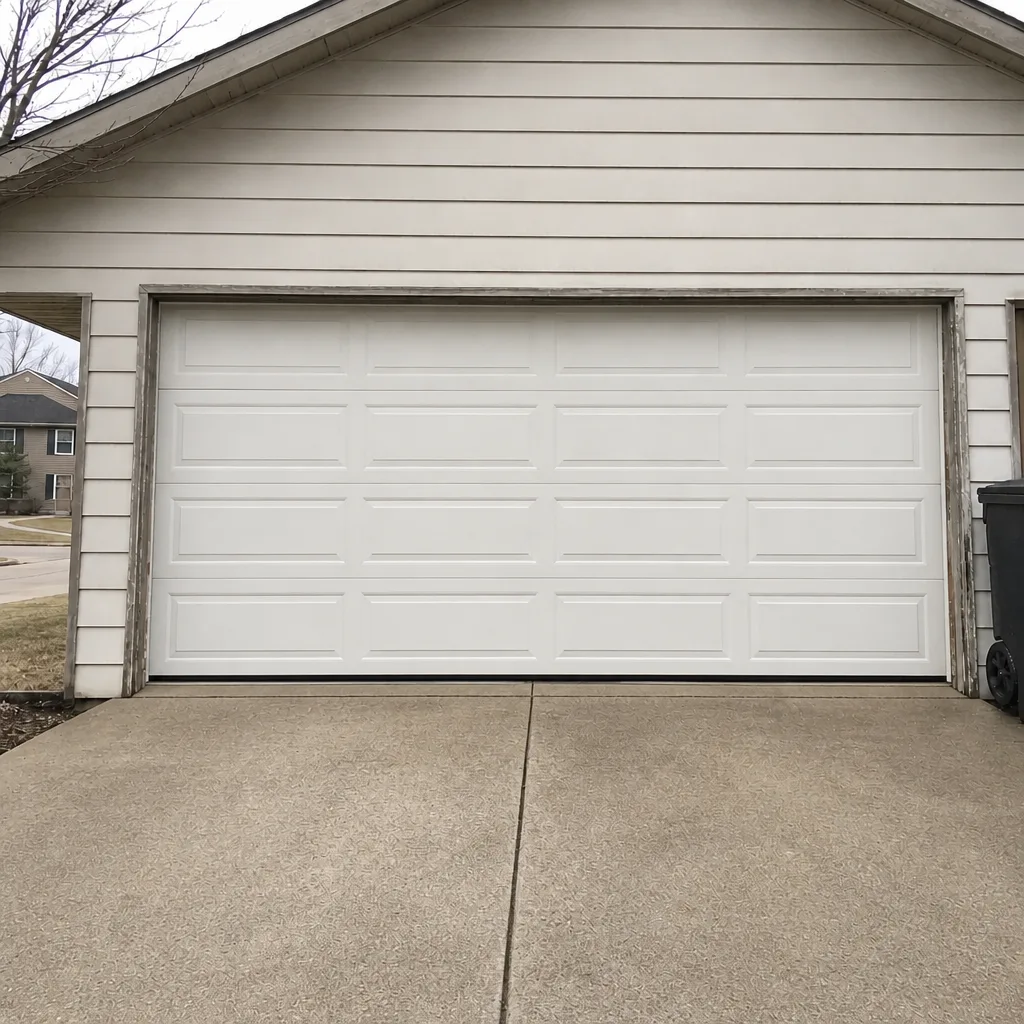 After
When to Call a Professional
Call a professional if the door is crooked, if you’ve heard a sharp bang from the spring area, if the door won’t stay in the middle position when tested by hand, or if the opener runs but the door doesn’t move. Call us first for any of these. Spring work and opener repair are both jobs where the wrong diagnosis costs more than the right one. If the bottom seal has failed or you’re seeing water or ice inside the garage, that’s a straightforward garage door opener repair or seal job to assess together. We work on Wayne Dalton, Clopay, Amarr, LiftMaster, Chamberlain, Genie, Craftsman, and Raynor doors and openers, and we’ve handled emergencies in Maple Grove where a door failed without warning. Maple Grove Garage Door Repair Pros offers free estimates in Maple Grove, and the quote is agreed before any work starts. Call (833) 902-7220.
Frequently Asked Questions
Check the safety sensors and the door’s balance before assuming the opener is bad. Look at the two sensors at the bottom of the tracks for debris or misalignment, then test the door by hand with the opener disconnected. If the door is very heavy or drops hard, the springs are the likely cause and you should call a technician. Call (833) 902-7220 for a free estimate.
Freeze-thaw cycles fatigue torsion springs faster than a mild climate does. Cold metal is less tolerant of cycling, and Maple Grove sees many hard freezes and thaws across a winter. Spring failure is our most common emergency call from late fall through early spring. If you’ve heard a sharp bang from above the door, call (833) 902-7220.
In many Maple Grove subdivisions, yes, especially in the Elm Creek and Bass Lake areas. HOA rules often restrict panel style, color, windows, and visible hardware, sometimes more tightly than the city does. Get written approval for the model and color before you order. Call (833) 902-7220 if you’d like help identifying what your door model options are.
Yes, for most Maple Grove homes with an attached garage. An insulated door reduces the temperature swing in the garage and cuts heat loss through the shared wall. The R-value matters, but the fit matters more, so pair the new door with a fresh bottom seal and perimeter stops. Call (833) 902-7220 for a free measure and written quote.
The differences come down to steel gauge, insulation type, spring rating, and hardware quality. A builder-grade door is spec’d to code and built to a reasonable standard. An upgrade uses heavier steel, a bonded insulation core, and higher-cycle springs. Call (833) 902-7220 and we’ll assess which one your house has and what makes sense to change.
No. Torsion springs and cables are under very high tension and can cause serious injury. This is exactly the job trained technicians exist for. If you suspect a spring has failed, keep the door closed, don’t run the opener, and call (833) 902-7220. Our technicians have up to 8 years of experience with spring repair.
The Bottom Line
A garage door in Maple Grove is a five-part mechanical system embedded in a local climate, an HOA structure, and an attached-garage energy picture. The bottom seal and the torsion springs wear first here because of freeze-thaw cycling. HOA rules shape your replacement options in subdivisions like Elm Creek and Bass Lake. Insulation is a real energy choice for an attached garage, not a luxury. And the fixes that last are the ones that address the whole system instead of the one part that made noise. The written quote is the price, and it’s agreed before any work starts. For a free estimate on repair, a new door, or a full assessment, call Maple Grove Garage Door Repair Pros at (833) 902-7220.
Written by the team at Maple Grove Garage Door Repair Pros.