Last updated November 21, 2026
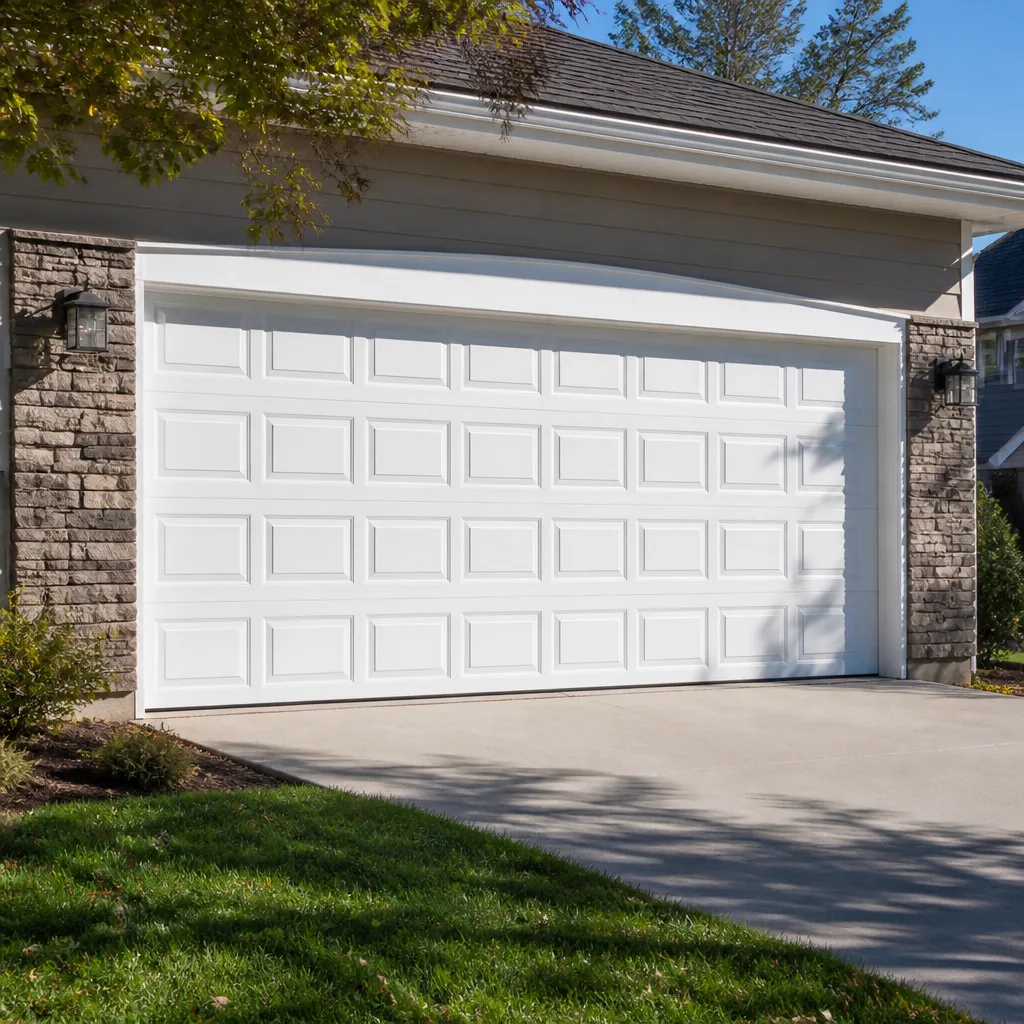 Raised-panel steel
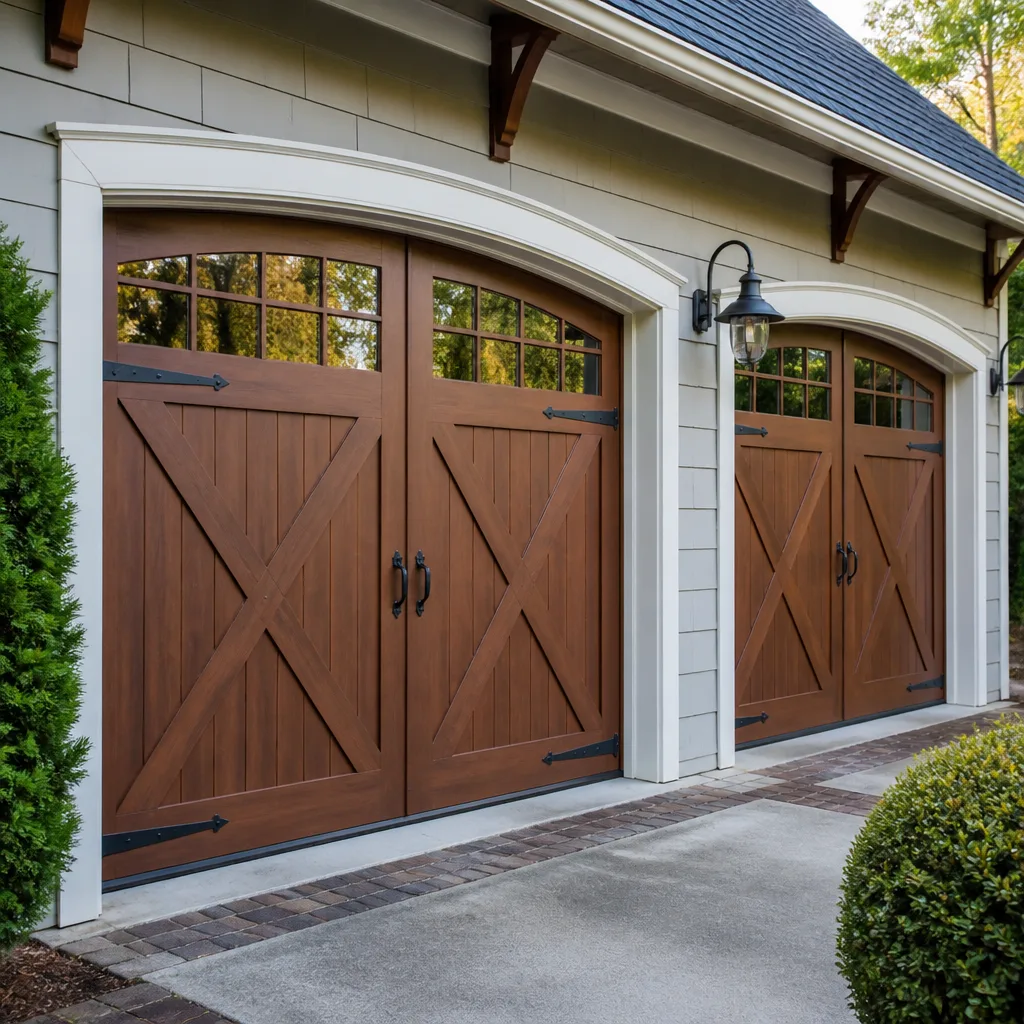 Carriage house
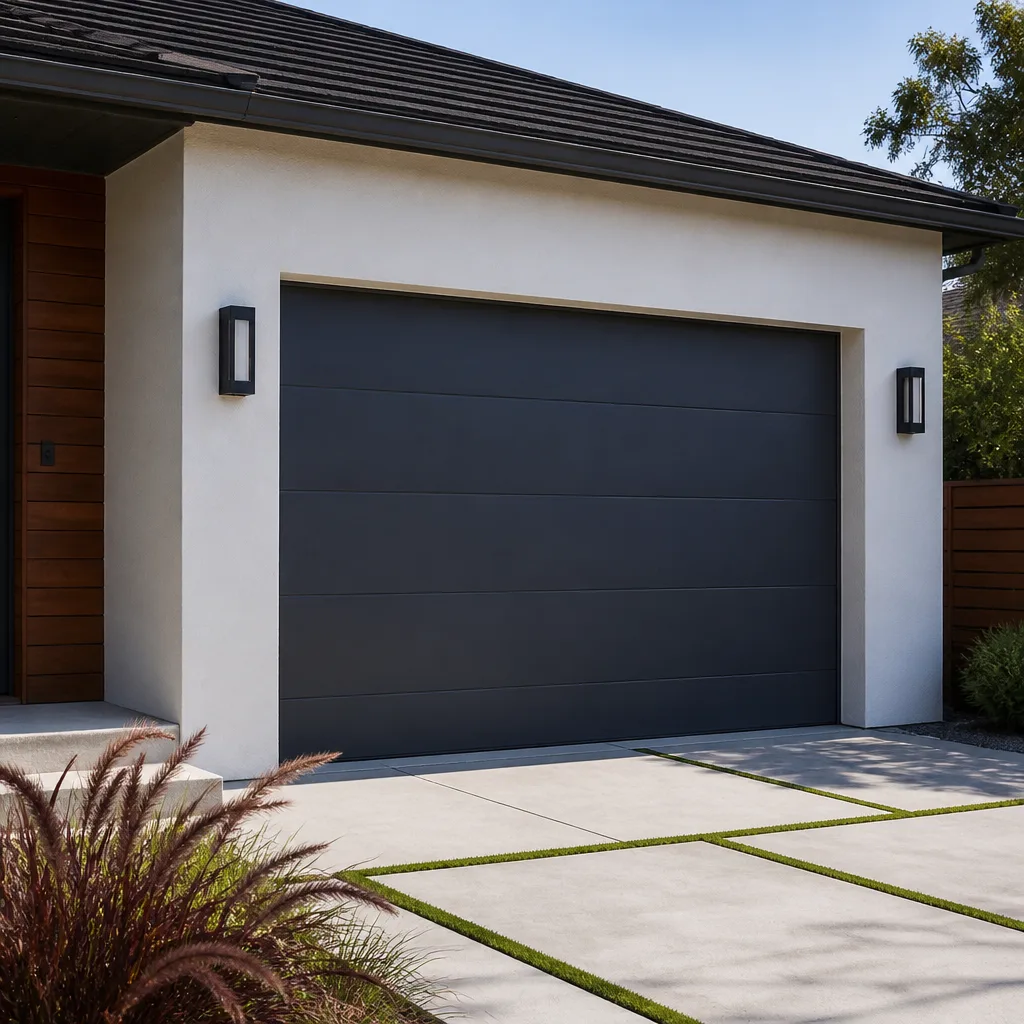 Modern flush
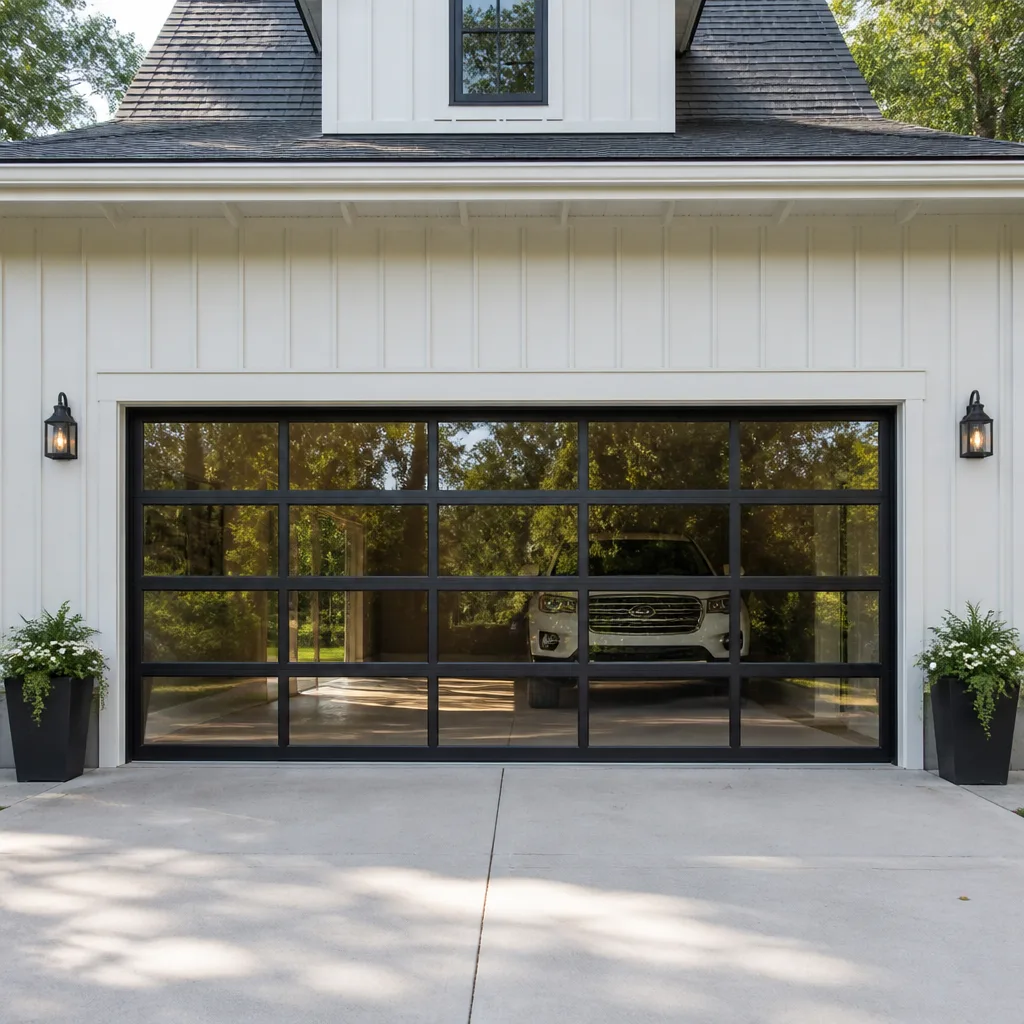 Full-view glass
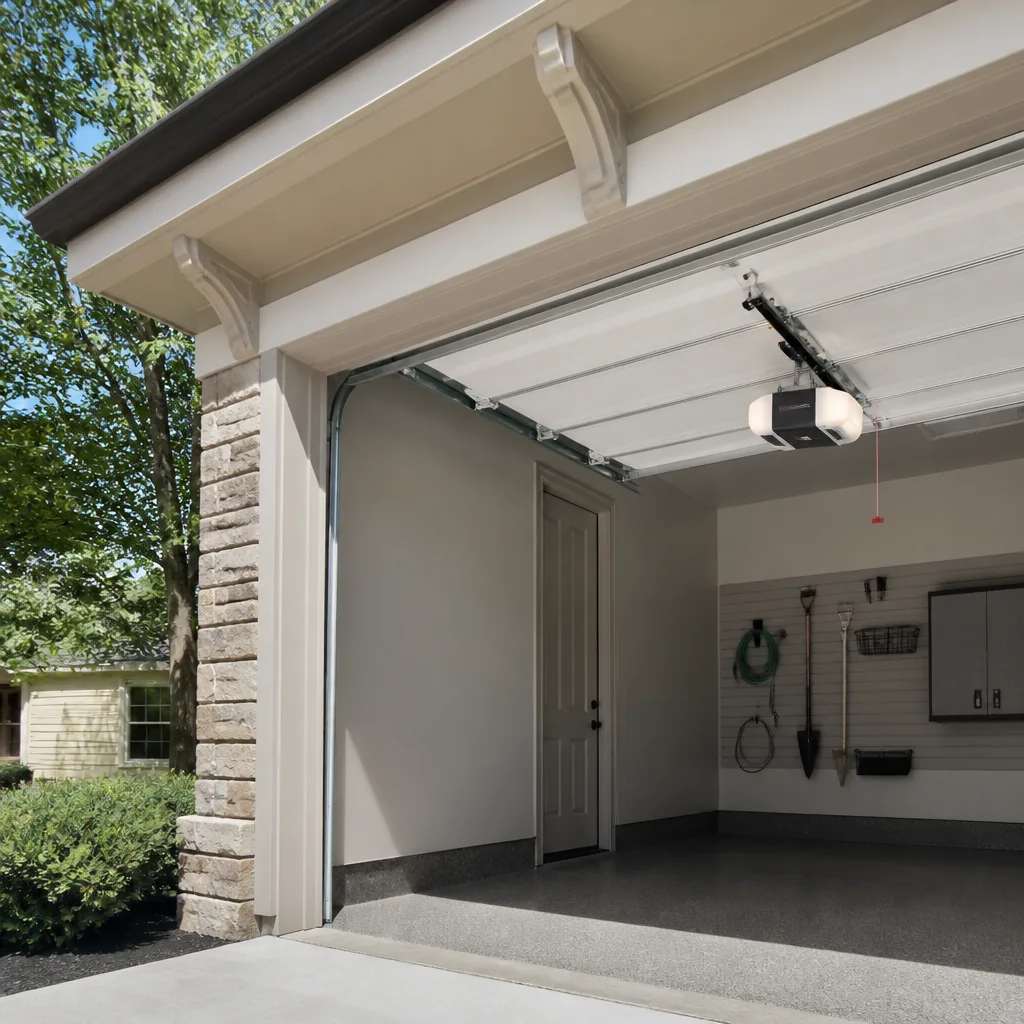 LiftMaster openers
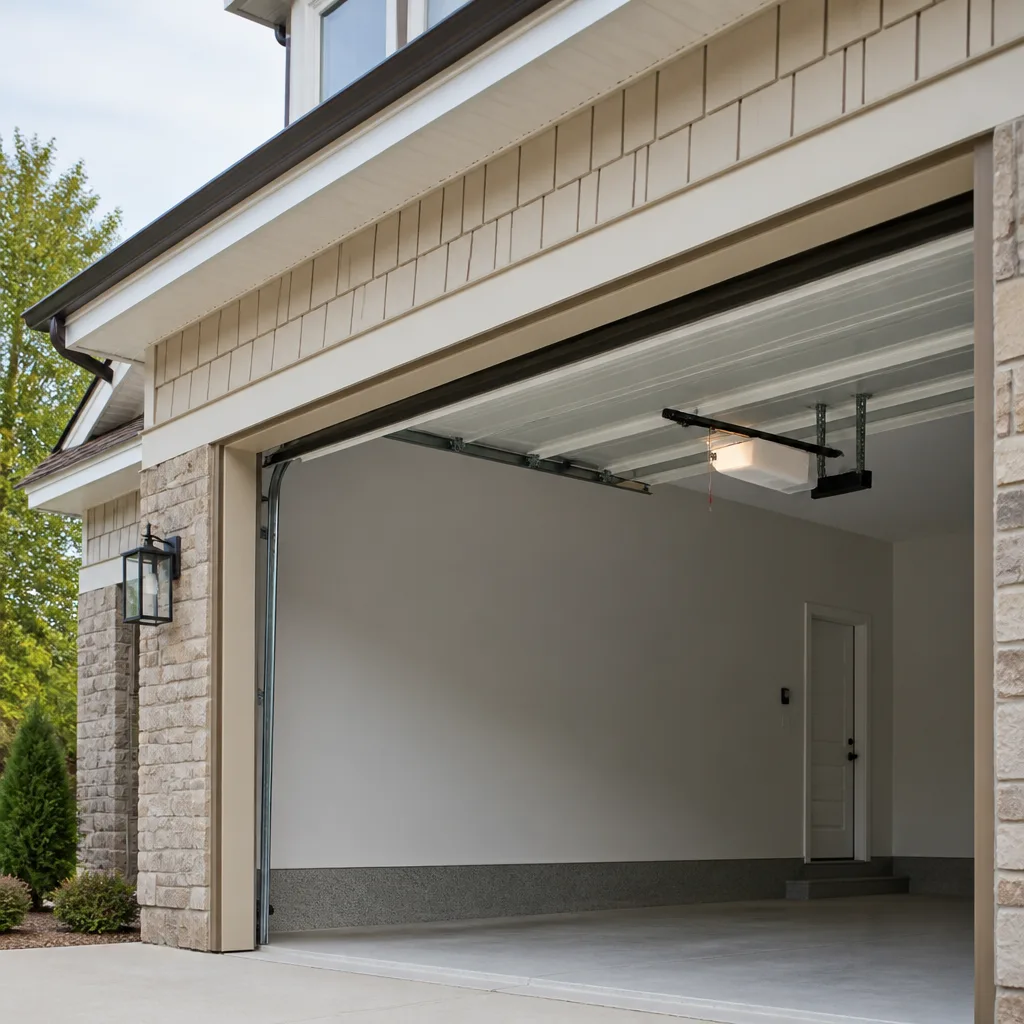 Chamberlain openers
Full 25-point door and opener safety check with every visit - springs, cables, rollers, tracks, and your LiftMaster or Chamberlain opener included
You get a price before we start. It does not change when the pro arrives.
Get your free estimateChoosing the Right Garage Door Brand: A Buyer’s Guide for Maple Grove
Most garage door buyers start with color. That’s the wrong end of the decision. A door rated R-9 looks fine on a spec sheet, but in Maple Grove‘s -20°F stretches it may underperform in ways an R-16 polyurethane-core door won’t, and the price gap between the two is smaller than the utility cost gap over five years. Brand matters for the same reason: the maker who specifies Minnesota-appropriate springs, seals and warranties as standard saves you money long after the install. This guide covers insulation core, steel gauge, brand strengths for cold climates, spring and hardware sourcing, and how to satisfy your HOA without buying a door that fights the weather.
Quick Answer
The best garage door brand for Maple Grove is the one whose insulation core, steel gauge and hardware spec fit Minnesota’s sustained cold and hail season – not the one with the prettiest showroom panel. For most Maple Grove homes, a polyurethane-core steel door from Clopay, Amarr or Raynor, paired with a LiftMaster or Chamberlain opener and springs rated for cold-climate cycles, delivers the best balance of thermal performance, dent resistance and parts availability. Brand labels on the door, the spring and the opener are often three different names; knowing why is what separates a smart buy from an expensive one.
Styles & brands we work with
- Raised-panel steel
- Carriage house
- Modern flush
- Full-view glass
- LiftMaster openers
- Chamberlain openers
Table of Contents
- Polystyrene vs. polyurethane: what actually holds heat in Minnesota
- Steel gauge reality check: 24-gauge vs. 25-gauge for hail country
- Brand-specific strengths for Minnesota conditions
- Why the door brand and the spring brand are often different
- Matching style to Maple Grove HOA standards without losing performance
- What garage door brands cost in Maple Grove
- A step-by-step brand selection process
- Service intervals by brand and climate
Polystyrene vs. polyurethane: what actually holds heat in Minnesota
Insulation core type is the single biggest driver of thermal performance in a garage door, and it’s the spec most homeowners skim past. Polystyrene (often called beadboard or Styrofoam) is a panel of foam beads bonded to the skin. Polyurethane is injected as a liquid and expands to fill every void, bonded directly to the steel, which makes the panel stiffer and dramatically better at blocking heat transfer.
In a mild climate, the difference may only show up on the coldest few nights of the year. In Maple Grove, where -20°F stretches are a recurring winter reality, that gap compounds. A polyurethane door rated in the R-16 range holds heat far better than an R-9 polystyrene door, and a garage attached to the house loses heat through that door all winter long. If your garage shares a wall with a bedroom or a water heater sits out there, the loss isn’t theoretical.
How to evaluate the core in a showroom
- Ask for the R-value in writing, not just a brochure line. The number should be stated per door, not per inch of foam.
- Press the panel faces together. A polyurethane core resists flex; a polystyrene panel feels hollow and yields under hand pressure.
- Look at the edge detail. Full-perimeter thermal breaks and a proper bottom seal matter as much as the core in sustained cold.
- Confirm whether the R-value covers the whole door assembly or just the center sections. End stiles and joints leak heat.
One honest caveat: a higher R-value door costs more up front. The question is whether the upgrade pays for itself against your heating load over the door’s life. In most Maple Grove attached garages, it does, and the door also feels stiffer and quieter every day in between. If you’re still weighing repair versus replacement, our garage door repair page walks through when a panel swap makes more sense than a new door.
Steel gauge reality check: 24-gauge vs. 25-gauge for hail country
Steel gauge is where marketing language gets slippery. Lower numbers mean thicker steel, so 24-gauge is heavier and more dent-resistant than 25-gauge. That single number separates a door that shrugs off a Hennepin County hailstorm from one that collects dings every June. A lot of entry-level doors are 25-gauge or thinner, and some manufacturers quote “26-gauge” on the cheapest panels.
Why it matters here specifically: Maple Grove sits in a hail belt that produces damaging storms most summers. A dented steel panel isn’t cosmetic only. Dents break the paint bond, moisture gets under the finish, and rust starts at the dent. Hail damage also tends to hit the same upper panels year after year, which is why the thinnest doors in the neighborhood age the worst.
What to check before you buy
- Gauge on the sections, not just the frame. Ask for the section gauge in writing. 24-gauge is the practical minimum for hail-exposed doors.
- Two-sided vs. three-sided steel. Three-layer (steel-foam-steel) construction resists dents better than a steel-back door with exposed foam.
- Finish warranty language. A finish warranty that excludes hail is normal; a finish warranty that’s short even without hail is a warning sign.
- Panel replaceability. Ask whether a single section can be ordered later. Doors with matching panels available for years are the ones worth buying.
If your current door already has hail dents and rust is starting, panel replacement may be the right call before the damage spreads. We see a lot of this across Maple Grove after storm season, and the fix is often cheaper than a full door. When the opener is also struggling, garage door opener repair can often be handled on the same visit.
Brand-specific strengths for Minnesota conditions
Every major residential brand builds a competent door. What differs is what each one includes as standard versus upgrade, and how those choices behave in cold. Here’s how a few of the brands we work on most often line up for Minnesota buyers.
Amarr
Amarr builds a strong mid-to-premium steel door lineup with polyurethane-core options and a solid reputation for panel fit in cold weather. Their insulated doors tend to specify cold-climate hardware and seals from the factory, which means fewer upgrades to negotiate. If you want a spec-appropriate door without chasing every option, Amarr is a frequent recommendation for Maple Grove homes.
Raynor
Raynor is a good fit for homeowners who care about the hardware under the skin. Their doors often ship with heavier-duty torsion systems and better-grade rollers than entry-level competitors, and those components are what fail first in a hard winter. A Raynor door paired with proper spring specification tends to need fewer mid-life service calls.
Wayne Dalton
Wayne Dalton’s Thermospan line is a genuine cold-climate workhorse with a continuous polyurethane core and strong thermal performance. Their 9000-series doors are also popular in neighborhoods with tighter aesthetic rules because the panel styles stay classic. The trade-off is that some Wayne Dalton models use proprietary spring and hardware designs, which matters for parts availability – see the next section.
Craftsman
Craftsman doors and openers are extremely common across older Maple Grove neighborhoods, which means parts are widely available and service technicians know the platform. If your home already has a Craftsman opener and door, repair is often straightforward. If the door is aging out, that’s a good moment to think about a polyurethane upgrade rather than another 25-gauge replacement.
We work on all eight of the dominant residential brands – LiftMaster, Chamberlain, Genie, Clopay, Amarr, Wayne Dalton, Craftsman and Raynor – which means we can diagnose and specify parts for your door the first visit rather than the second. That matters even more when the door fails hard. If you’re facing a snapped spring or a door stuck open, our garage door spring repair team handles the emergency side of the same problem.
Why the door brand and the spring brand are often different
A garage door is a system, not a single product. The door panel, the torsion spring, the rollers, the hinges, the cables and the opener are frequently made by five different companies. Spring manufacturers don’t make doors, and door manufacturers rarely make springs. That’s normal, and it isn’t a sign of a cheap install.
What matters is whether the hardware spec matches the door and the climate. A cold-climate door needs springs rated for the number of cycles the door will open and close – not a generic spring dropped in from a spec sheet built for Georgia. In Maple Grove, a door that opens twice a day through a -15°F week is working that spring harder than the same door in a milder climate, and a marginal spring fails early.
What to ask about the hardware package
- Spring cycle rating. Ask for the cycle life in writing. Higher-cycle springs are worth the upgrade on any door you plan to keep.
- Spring brand and spec. A cold-climate spring spec matters more than a brand name. Confirm the springs are rated for local temperature swings.
- Seal and weatherstrip system. The bottom seal and perimeter weatherstrip do most of the draft-blocking work. Cheap seals harden and crack in Minnesota cold.
- Parts availability. Ask whether the spring, rollers and hinges are standard or proprietary. Standard hardware is cheaper and faster to source.
This is also the honest answer to the question every homeowner asks after a spring snaps: springs are dangerous. That job is exactly what trained technicians exist for. There’s no safe DIY path through a loaded torsion spring, and no supply-house spring swap is worth the risk to your hands or your door. When a spring lets go, we move. One call and it’s fully handled, from diagnosis through the correct spring and rebalance.
Matching style to Maple Grove HOA standards without losing performance
Aesthetics sell doors; standards get them installed. Many Maple Grove neighborhoods have architectural review requirements that limit door color, panel style, window options and sometimes material. The trick is to satisfy the rules without dropping down to a padded or uninsulated door just because it matches the approved look.
A practical matching approach
- Get the written HOA or architectural committee guidelines before you shop, not after.
- Note the approved color palette and panel styles. Most requirements are broad – “white or neutral,” “raised panel” – rather than brand-specific.
- Cross-reference approved styles against polyurethane-core models from Clopay, Amarr or Raynor. Most popular styles exist in insulated versions.
- Check whether windows or decorative hardware are restricted. Window inserts are a common source of rejection.
- Submit the exact model number and color to the committee for approval in writing before ordering.
The most common mistake is choosing a style that meets the rules but has a polystyrene core or 25-gauge skin because that’s what the showroom floor had. The right answer is usually found by asking the manufacturer’s representative which insulated models share the approved profile. In our experience across Maple Grove, that request almost always lands on an answer. For full replacement projects, our Maple Grove Garage Door Repair Pros team coordinates measurement, specification and installation under one call.
What garage door brands cost in Maple Grove
Prices vary by model, size, insulation and hardware, so these are typical estimated ranges for a standard single or double door, not firm quotes. Your written estimate sets the final price, and we quote and agree on it before any work starts.
| Option | Typical estimated range |
|---|---|
| Basic steel door, polystyrene core, 25-gauge | $650 – $1,200 |
| Insulated steel door, polyurethane core, 24-gauge | $1,400 – $2,800 |
| Premium insulated door with windows and hardware | $2,800 – $5,500 |
| Opener replacement (LiftMaster, Chamberlain or Genie) | $350 – $800 |
| Torsion spring replacement, one spring | $180 – $340 |
| Torsion spring replacement, matched pair | $360 – $680 |
Two notes on reading that table. First, springs are almost always replaced as a matched pair because a new spring next to a tired one shortens both lives – so budget for the pair, not the single. Second, the insulation upgrade from polystyrene to polyurethane usually falls inside the range gap between the first two rows, and it’s the upgrade that pays back fastest in Maple Grove’s cold. If you want to compare this against repair costs, our related guide on garage door repair in Maple Grove is the right next read.
We don’t publish “affordable prices” as a slogan because it means nothing. What we do is quote the whole job in writing – door, hardware, springs, opener if needed, old door disposal – so there are no surprises after the truck pulls up.
A step-by-step brand selection process
Brand choice is a process, not a gut call. Work through these steps in order and the right door becomes obvious.
- Measure and confirm the opening. Standard sizes are cheaper. An odd opening narrows your brand options fast.
- Decide the core type. For any attached garage in Minnesota, start with polyurethane and move down only if the budget truly requires it.
- Set the steel gauge floor. 24-gauge minimum for hail exposure. Confirm in writing.
- Check HOA or architectural requirements. Get the written approved palette and styles before you pick panels.
- Shortlist two or three brands whose insulated models fit the approved style. Clopay, Amarr and Raynor are the frequent top three in this climate.
- Ask about cold-climate hardware. Spring cycle rating, seal grade and weatherstrip quality should be specified, not left to chance.
- Match the opener. If your existing opener is a LiftMaster or Chamberlain in good shape, it can often stay. If it’s aging, Genie or LiftMaster replacements are the common picks.
- Get a written quote covering the door, hardware, springs, opener, install and disposal. Compare quotes line by line, not in total.
This is the process we run for Maple Grove homeowners on every new-door estimate. It takes about 30 minutes and prevents the most expensive mistake in the whole project: buying a door that needs to be redone.
Service intervals by brand and climate
No brand is maintenance-free in Minnesota, but the intervals differ. A cold-climate door with a proper cycle-rated spring and a quality seal will typically need tuning less often than an entry-level door with marginal hardware. Here’s how to think about it.
- Annual: Balance check, roller inspection, hinge lubrication, seal condition. This is the single best way to catch a tired spring before it snaps.
- Every two to three years: Full tune-up with spring tension check and weatherstrip replacement as needed, especially on doors facing west or northwest where wind-driven snow loads seals harder.
- By brand: Doors with standard hardware (Craftsman-compatible, Amarr, Raynor) are the easiest to service and the cheapest to keep. Proprietary hardware models can need longer lead times for parts.
- Before winter: A pre-cold-season check is worth doing in October. A door that hesitates in September will be worse in January.
Service intervals are an estimate, not a schedule. If your door is noisy, uneven or slow, get it looked at regardless of the calendar. For opener-related issues, our guide on garage door opener repair covers the common failure points.
Common Mistakes to Avoid
- Buying on color and style first. Panels can be repainted; a polystyrene core can’t be upgraded later. Pick the core and gauge first, then the look.
- Skipping the HOA paperwork. Installing a door the architectural committee later rejects means paying twice. Get written approval before ordering.
- Assuming one brand built the whole system. The door, spring, rollers and opener are usually four different manufacturers. Buy the door, then spec the hardware.
- Replacing one spring instead of the pair. A new spring against a tired one shortens both lives and often fails again within a season.
- Choosing 25-gauge to save a few hundred dollars in hail country. In a Hennepin County hail belt, the first storm usually erases the savings in dent repairs or premature replacement.
- Ignoring the opener on a new install. A new insulated door is heavier than the old one. An aging opener may struggle or fail within months.
- Letting a DIY spring repair happen. Torsion springs store enormous energy. An untrained repair attempt is the most common way homeowners get seriously hurt in this trade.
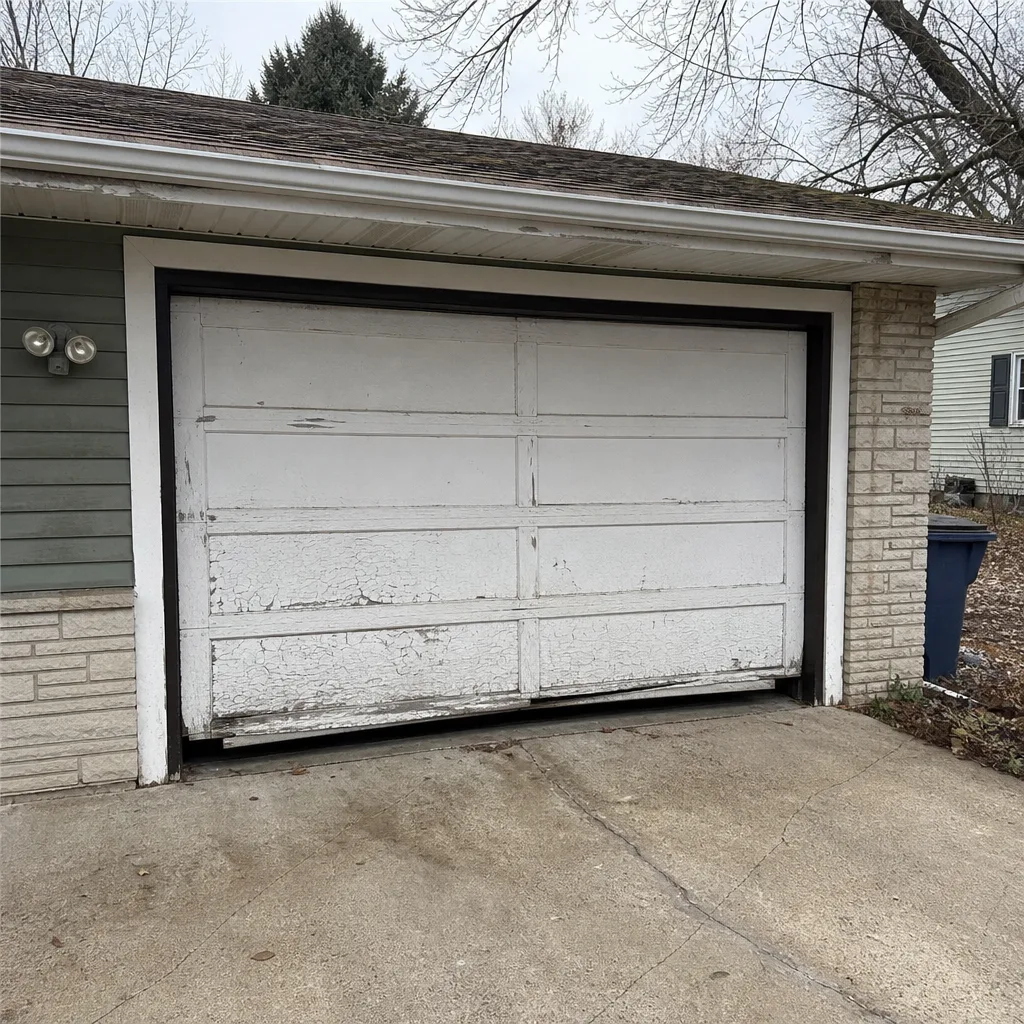
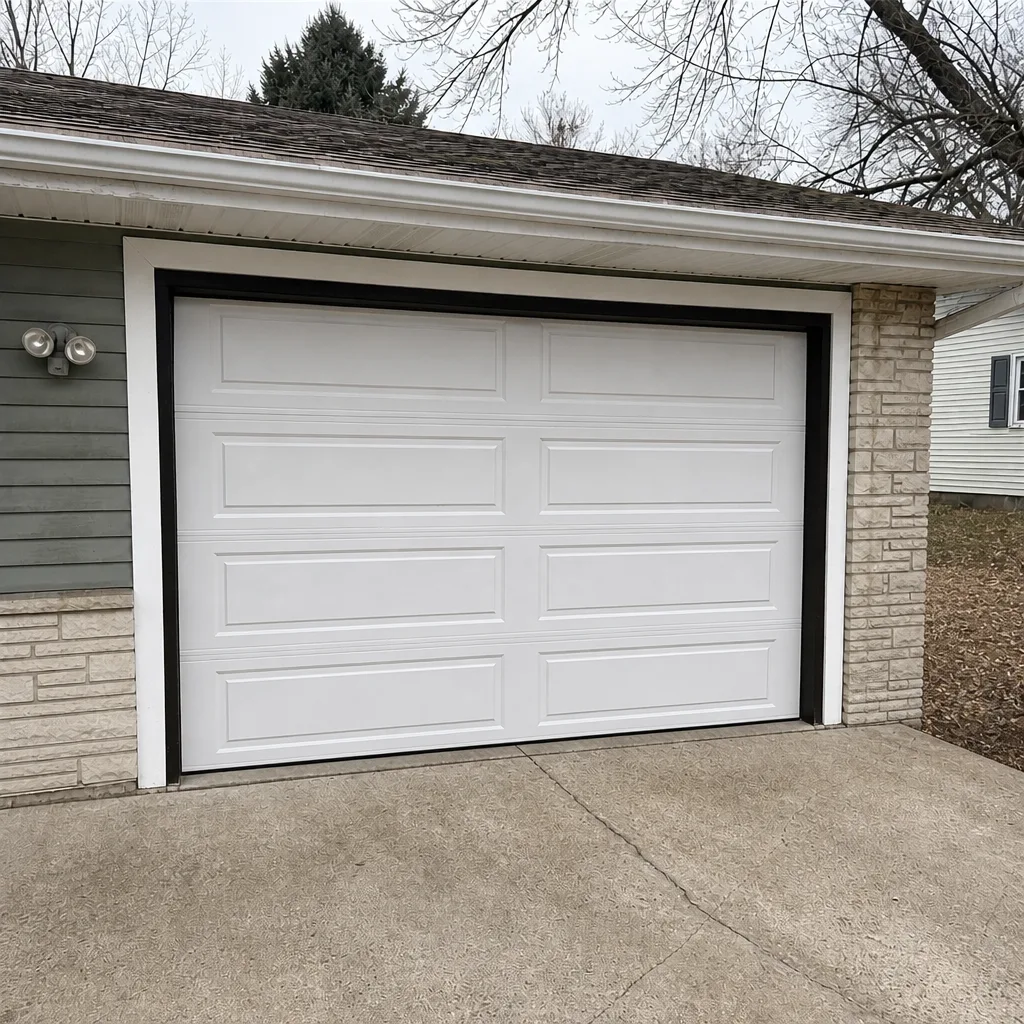
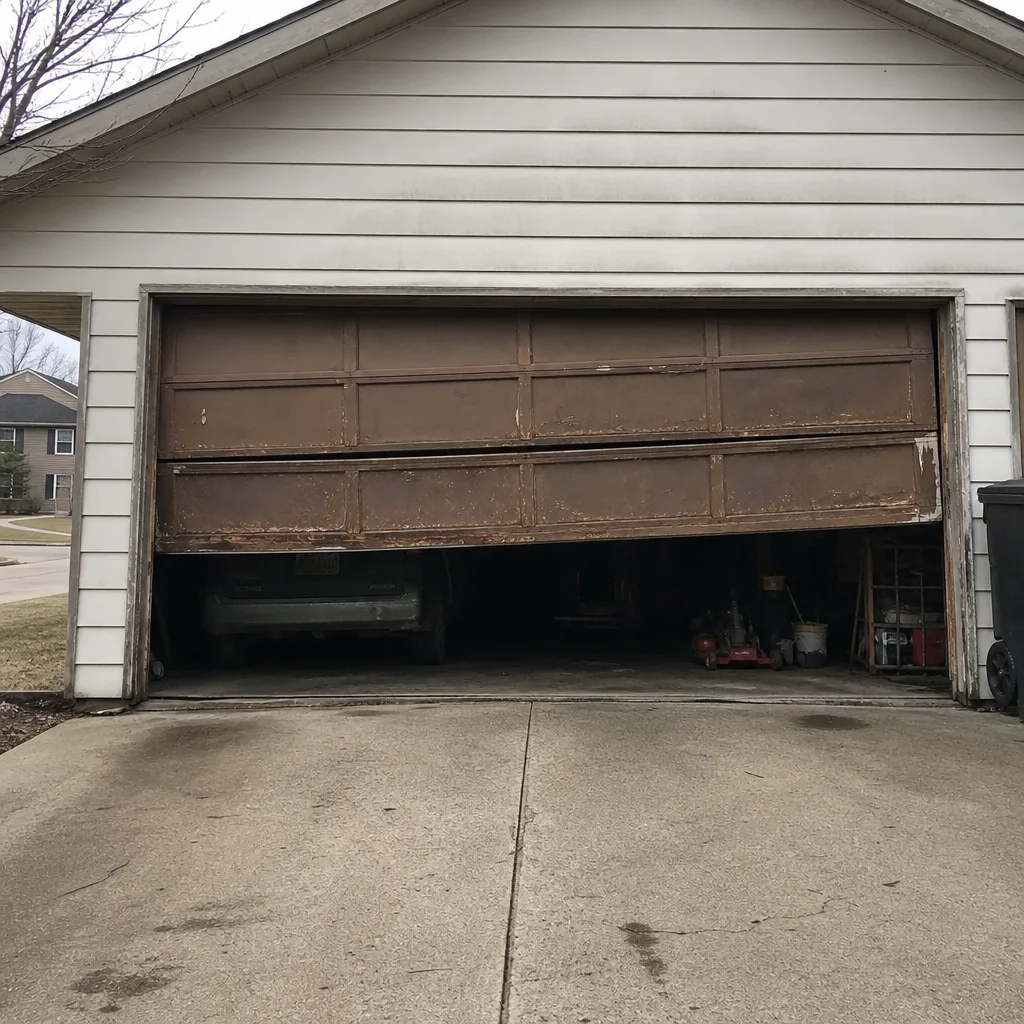
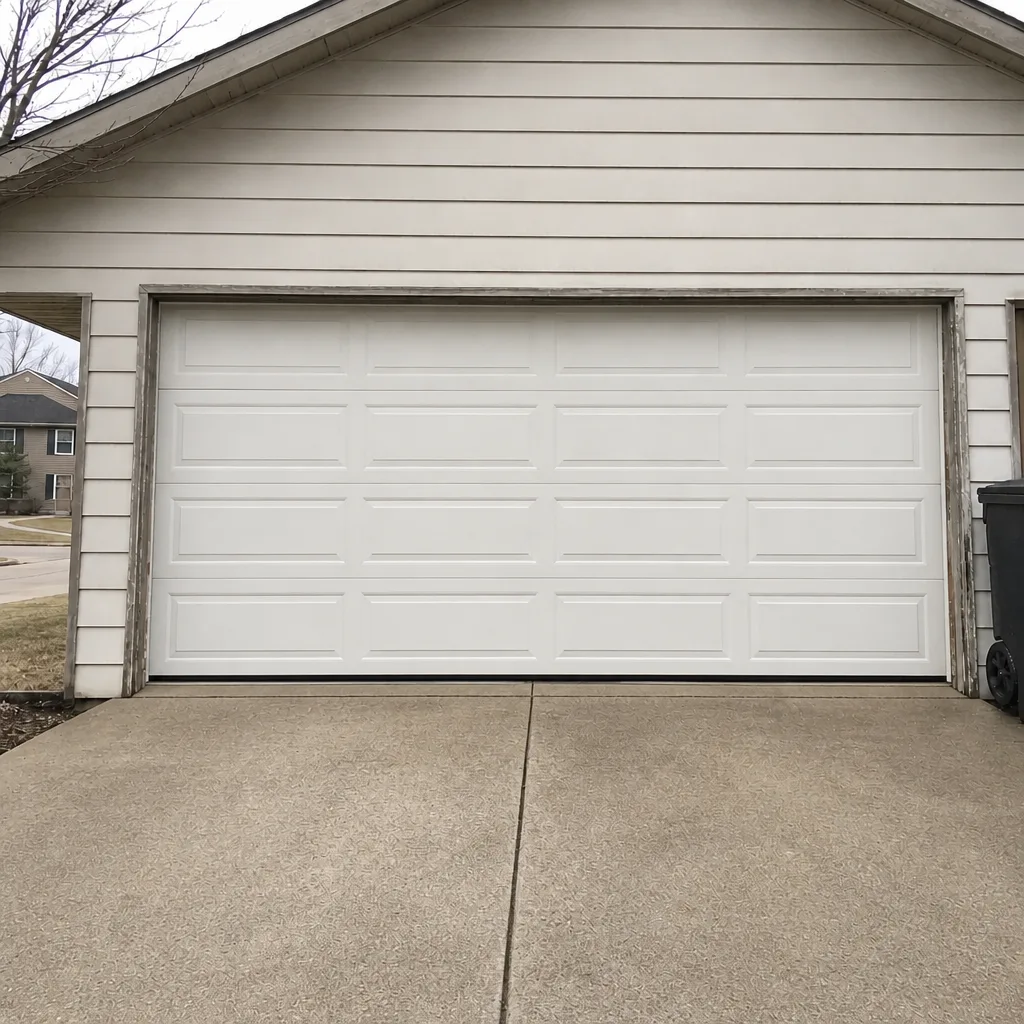
See the difference
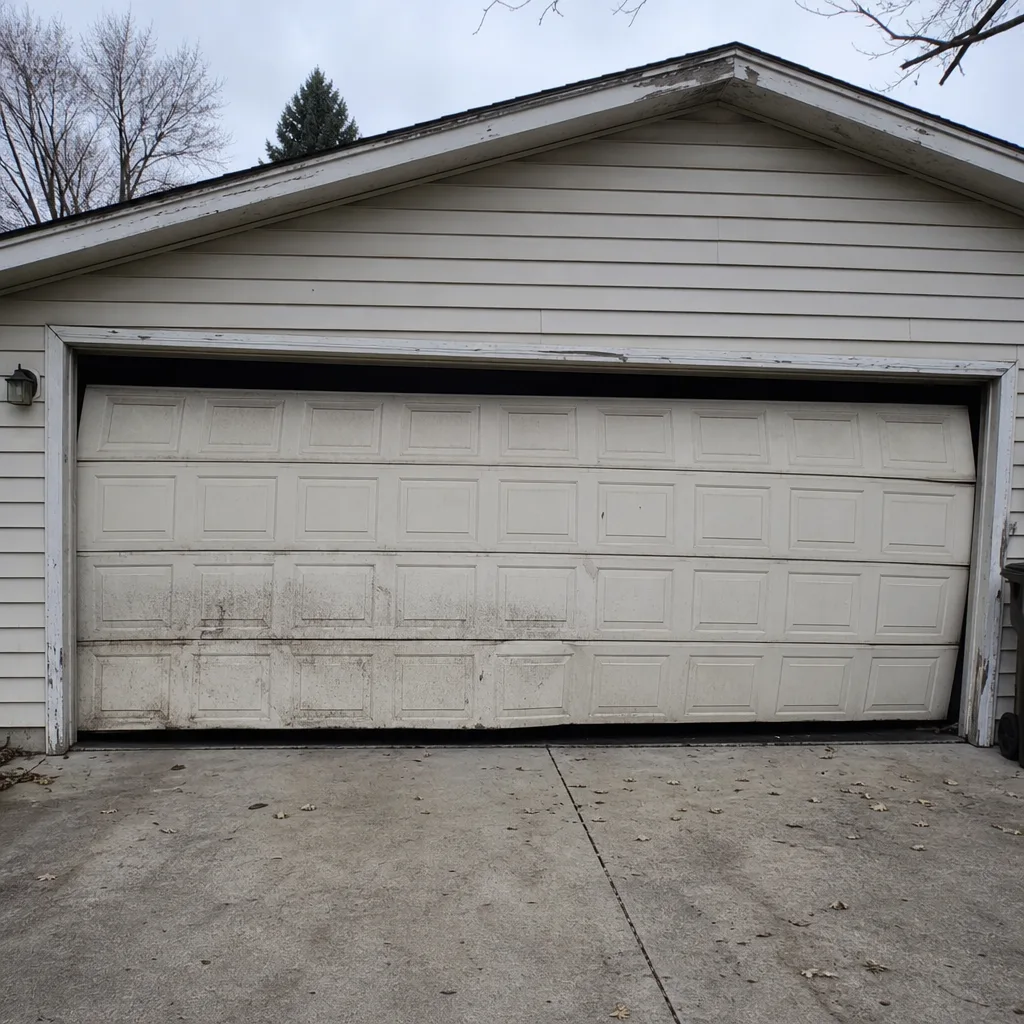 Before
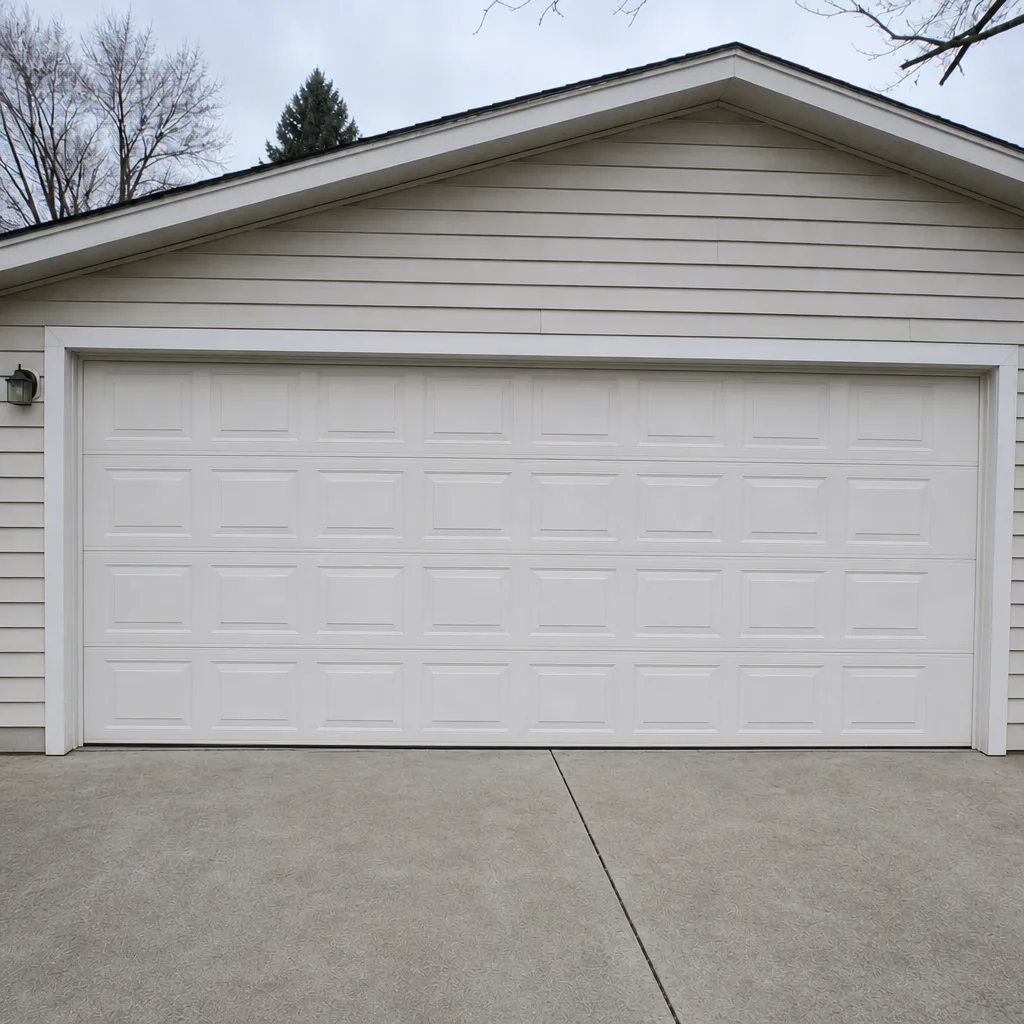 After
 Before
 After
 Before
 After
When to Call a Professional
Some decisions here are yours – brand, style, insulation. Others shouldn’t be DIY. Call a professional when a torsion spring has snapped or is visibly relaxed, when the door is off its track or hanging unevenly, when the opener runs but the door doesn’t move, when the door reverses unexpectedly, or when you’re specifying a new door and want the hardware, springs and opener matched correctly to a Minnesota climate. Springs and heavy door panels are the two jobs where the risk to hands and the door itself is highest. Our technicians have up to 8 years of experience, work on all eight major residential brands, and handle repair-to-install under one call. Maple Grove Garage Door Repair Pros offers free estimates in Maple Grove – call (833) 902-7220. We quote and agree the price before any work starts.
Frequently Asked Questions
For most Maple Grove homes, a polyurethane-core door from Clopay, Amarr or Raynor is the strongest match for Minnesota’s cold and hail season, paired with a LiftMaster or Chamberlain opener and cold-climate springs. The “best” brand is the one whose core, gauge and hardware spec fit your specific opening and HOA standards, not the brand with the most advertising. Call (833) 902-7220 for an exact quote on your door – estimates are free.
Typical estimated ranges run from $650-$1,200 for a basic 25-gauge polystyrene door up to $2,800-$5,500 for a premium insulated door with windows and hardware. A polyurethane-core, 24-gauge insulated door usually falls between $1,400 and $2,800. The written estimate sets the final price, and we quote and agree before any work starts. Call (833) 902-7220 for your free estimate.
For an attached garage in the Maple Grove climate, yes. Polyurethane’s higher R-value and bonded construction hold heat better through -20°F stretches, and the panel stiffness resists denting. The up-front gap is smaller than most homeowners expect, and it usually pays back against winter heat loss over the door’s life. Call (833) 902-7220 to compare doors side by side.
Because door manufacturers rarely make springs. Springs, rollers, hinges and openers are usually made by specialty manufacturers even when the door carries a Clopay, Amarr, Raynor or Wayne Dalton label. That’s normal; what matters is that the spring spec is rated for cold-climate cycles and the correct part is available. Call (833) 902-7220 and we’ll identify what’s actually on your door.
It depends on panel availability and how deep the dents are. Single-panel replacement is often possible if the same section is still in production, especially on 24-gauge or thicker doors. Thinner 25-gauge doors in our hail belt often don’t survive the first good storm. Call (833) 902-7220 and we’ll inspect and tell you honestly which route costs less.
We work on LiftMaster, Chamberlain, Genie, Clopay, Amarr, Wayne Dalton, Craftsman and Raynor – the eight dominant residential brands. That coverage means faster diagnosis and correct parts the first visit, rather than a second trip for the right spring or opener part. Call (833) 902-7220 for a free estimate on any brand.
The Bottom Line
Brand choice in Maple Grove is really a spec choice. Polyurethane core over polystyrene, 24-gauge over 25-gauge, cold-climate springs over generic ones, and approved styles that still meet your HOA rules – those four decisions do more for your door’s life and your heating bill than any logo. Springs and hardware often come from a different manufacturer than the door, which is normal, so ask about cycle rating and parts availability before you sign. When the door stops, springs are the one job that needs a trained technician, not a weekend project. Pick the spec that fits the climate, and the brand question answers itself.
Written by the team at Maple Grove Garage Door Repair Pros.