Last updated November 21, 2026
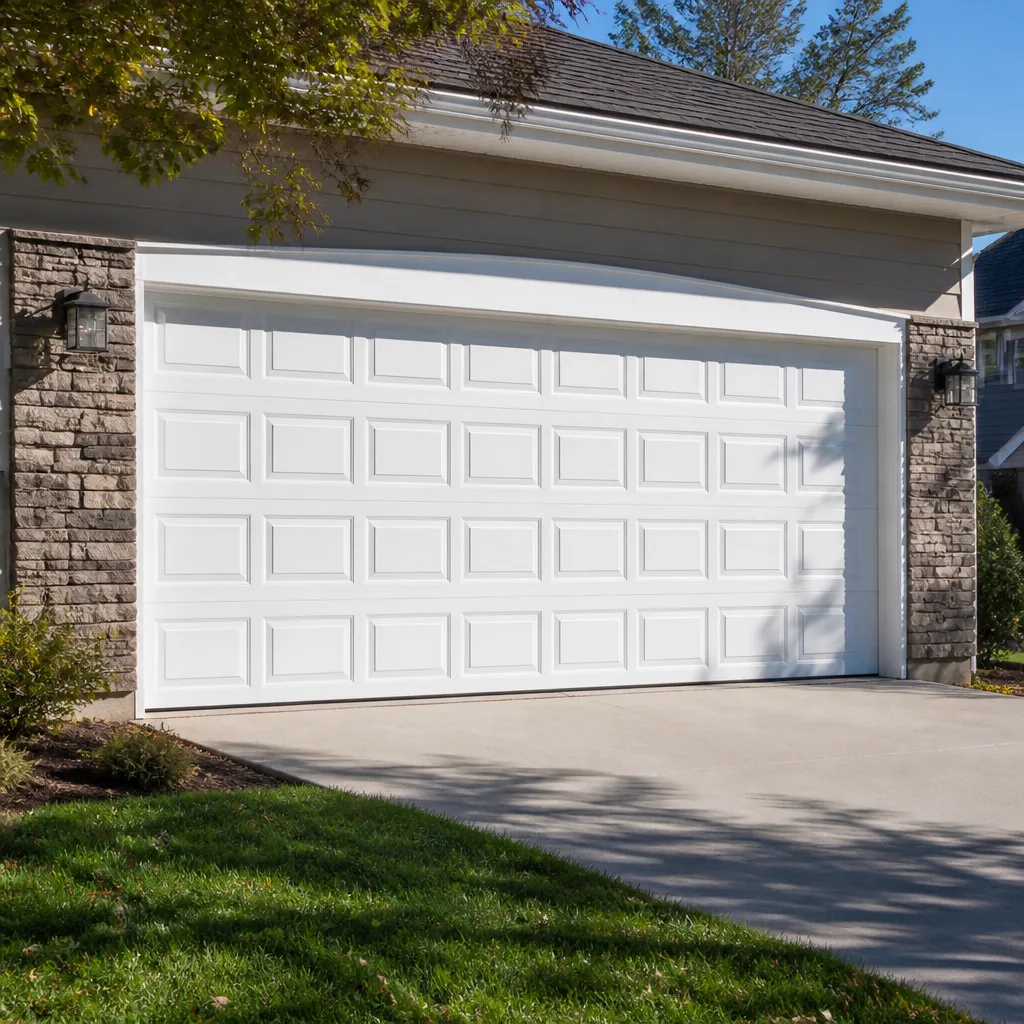 Raised-panel steel
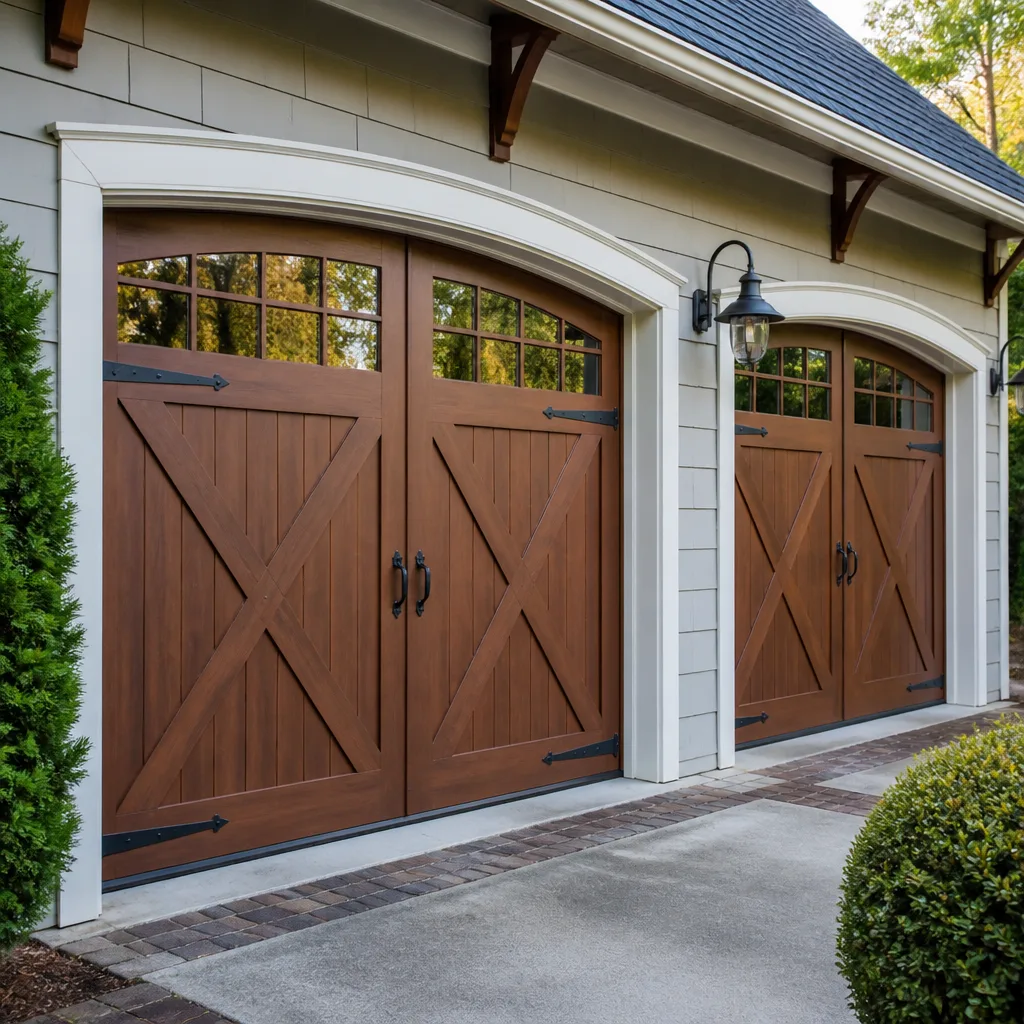 Carriage house
 Modern flush
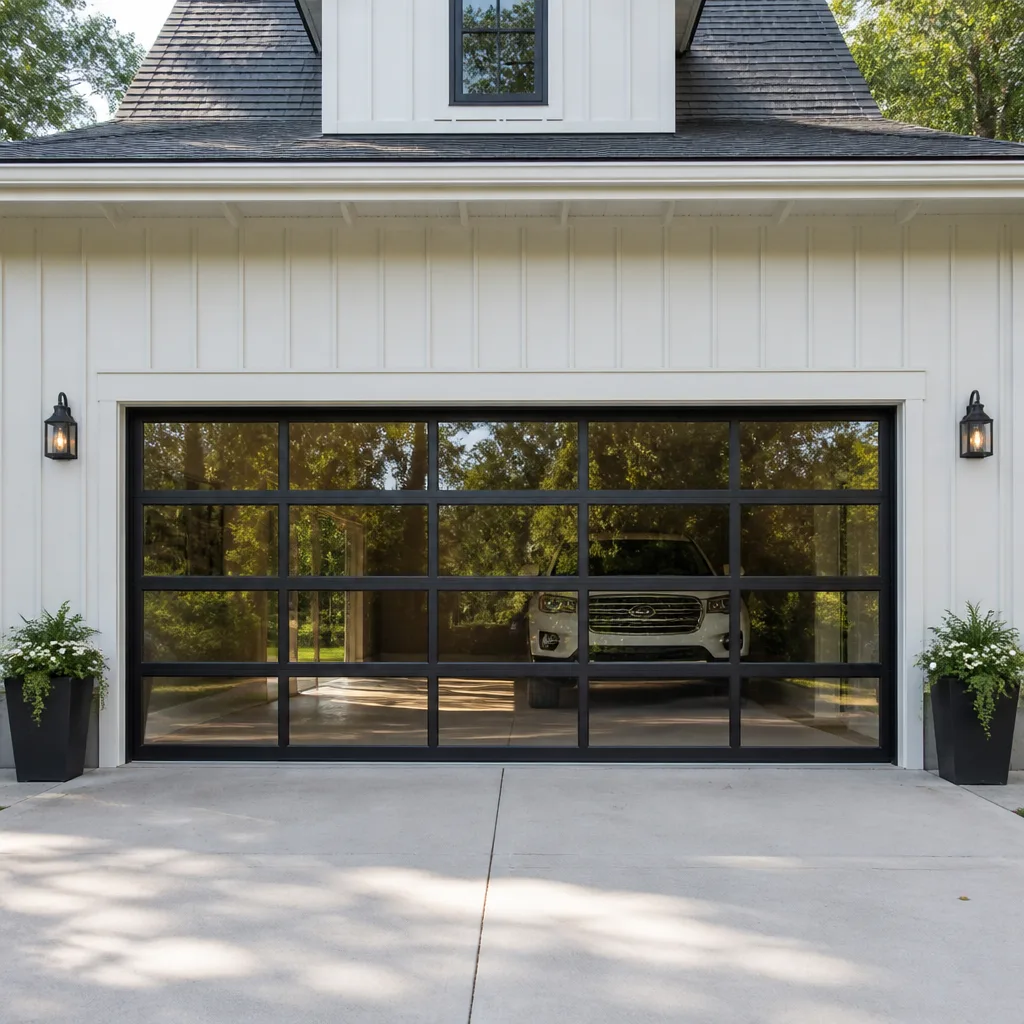 Full-view glass
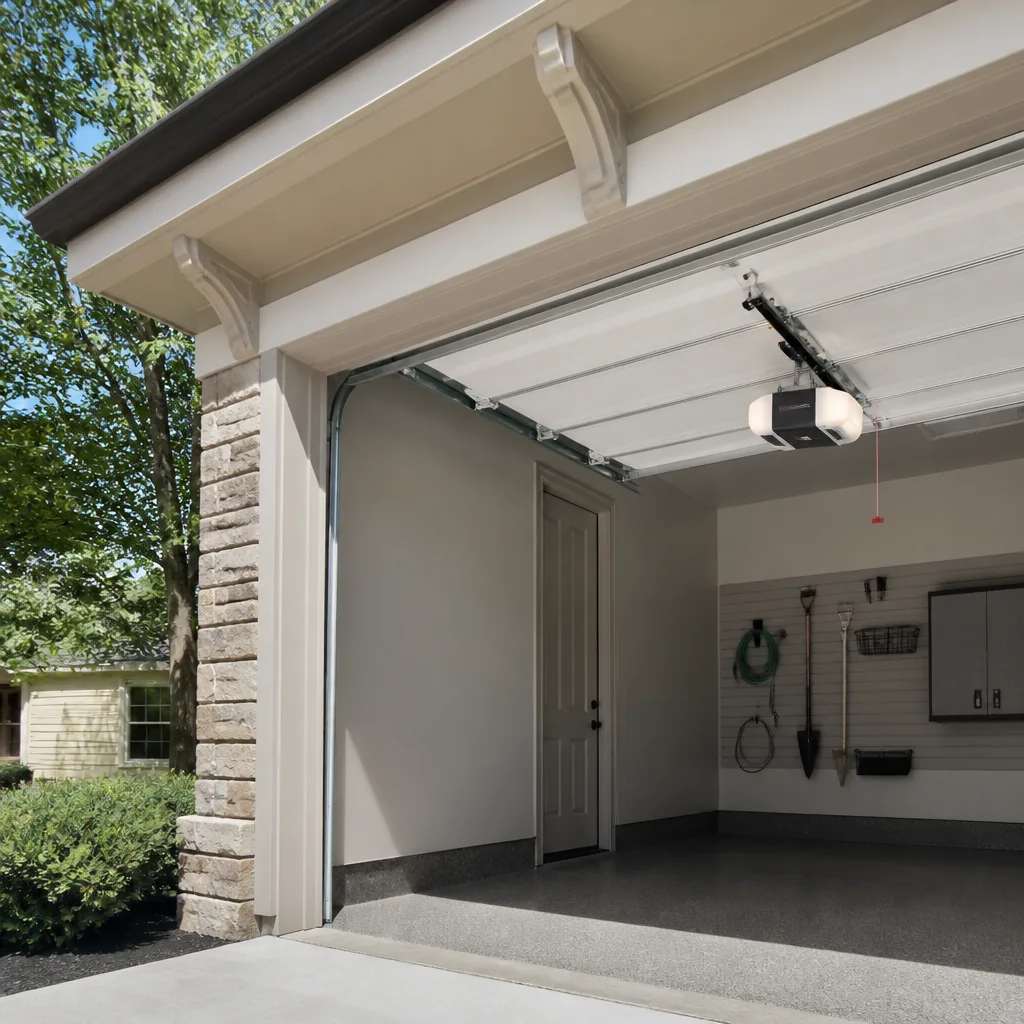 LiftMaster openers
 Chamberlain openers
Full 25-point door and opener safety check with every visit - springs, cables, rollers, tracks, and your LiftMaster or Chamberlain opener included
You get a price before we start. It does not change when the pro arrives.
Get your free estimateHow to Hire a Garage Door Contractor in Maple Grove: A Step-by-Step Guide
Minnesota does not require a specific state license to replace a garage door spring. Read that again. The person quoting your job could have learned the trade on video tutorials last month, and nothing in the law stops them from showing up at your Maple Grove driveway tomorrow. That’s the part most homeowners never hear until something goes wrong. Garage doors are the heaviest moving assembly on a house, and the springs under tension are genuinely dangerous. So the vetting falls on you, and it comes down to knowing which credentials actually mean something. This guide walks through what matters, the exact questions to ask, and how to compare bids fairly in Maple Grove.
Quick Answer
To hire a garage door contractor in Maple Grove, verify three things before anyone touches the door: proof of general liability insurance, brand-specific training on your door or opener (LiftMaster, Chamberlain, Genie, Raynor and the rest), and a written quote that names the spring wire size, inside diameter, and cycle rating rather than saying “replace spring.” Ask those questions up front, and the guesses get filtered out fast. A contractor who can’t answer them clearly is the one to skip.
Styles & brands we work with
- Raised-panel steel
- Carriage house
- Modern flush
- Full-view glass
- LiftMaster openers
- Chamberlain openers
Table of Contents
- What Credentials Actually Matter in Minnesota?
- The Five Questions to Ask Before Anyone Touches Your Door
- Red Flags Specific to Garage Door Bids
- How to Compare Quotes When the Specs Don’t Match
- Why Spring Work Deserves Extra Scrutiny
- Brand Training and Parts Sourcing: The Signals That Hold Up
- Why “Family Owned Since” and Star Counts Are Weaker Signals Than You Think
- A Step-by-Step Hiring Process for Maple Grove Homeowners
What Credentials Actually Matter in Minnesota?
The short answer: liability insurance and real trade training matter. Most of the badges and titles you’ll see on a contractor’s website do not. Minnesota doesn’t issue a garage door contractor license, so there’s no state credential to check. That changes what “qualified” means. It means you’re looking at the contractor’s business practices and technical knowledge directly, not a piece of paper from the state.
Here’s what we tell homeowners to verify, in order of importance:
- General liability insurance. Ask for a certificate of insurance and read the coverage amount. If a door panel comes down wrong or a spring lets go and damages your vehicle or your siding, insurance is what stands between you and the bill. A contractor who hesitates to provide a certificate is telling you something.
- Workers’ compensation coverage. If someone gets hurt on your property and the contractor has no coverage, the problem can follow you. Ask.
- IDEA certification. The Institute of Door Dealer Education and Accreditation runs a voluntary certification program for garage door technicians. It isn’t required in Minnesota, which is exactly why it’s worth noting when a contractor has it. It signals someone chose to be tested on the trade.
- Brand-specific training. Opener and door manufacturers run their own training and dealer programs. Training on LiftMaster, Chamberlain, Genie, Raynor, Clopay, Amarr, Wayne Dalton and Craftsman equipment means the technician has worked on your exact hardware, not just something similar.
What doesn’t matter much: a fancy truck wrap, a pile of five-star badges on the homepage, or a claim of being “licensed and insured” with no certificate to back it. In a state with no licensing requirement for this trade, that phrase can mean almost anything. In our experience around Maple Grove, the contractors worth hiring are the ones who volunteer the insurance certificate before you ask.
The Five Questions to Ask Before Anyone Touches Your Door
These five questions take about two minutes to ask and they separate a trained technician from a guesser. Any competent garage door contractor in Maple Grove should answer all of them without hesitation. If you get a vague answer or a redirect on any one of them, you’ve learned what you need to know.
- “What’s the wire size and inside diameter of my spring, and how many turns will the new one get?” This is the question that matters most. A torsion spring is sized by wire gauge, coil count, and inside diameter, and it’s wound a specific number of turns to balance the door’s weight. A technician who calculates the spring can tell you all three. One who guesses says “we’ll match it up.” Those are very different answers, and only one of them leads to a door that works correctly and lasts.
- “What cycle rating are you quoting?” Springs are rated by cycles, meaning one open-and-close. Standard springs fall in a lower range and high-cycle springs handle more. A quote that names the cycle rating tells you what you’re buying. A quote that just says “spring” does not.
- “Can I see your certificate of insurance?” Already covered above, but ask it again in person if you didn’t get it in writing. It’s a fair question and a professional expects it.
- “What brand is my opener, and have you worked on this model?” LiftMaster and Chamberlain share engineering lineage; Genie and Raynor have their own logic boards and programming sequences. A technician trained across the major brands diagnoses faster and carries the right parts knowledge the first time. A generalist may need a second visit to figure out what’s wrong.
- “Is the price I’m quoted the price I’ll pay?” Get it in writing before work starts. A quote that’s agreed and signed before anyone starts is the price. A verbal estimate that grows once the door is apart is a different arrangement entirely.
Ask the spring question first. It’s the fastest filter in the trade. A technician who can name your wire size and inside diameter is working from calculation. A technician who can’t is working from hope.
Red Flags Specific to Garage Door Bids
Garage door scams and sloppy work share patterns. Once you know them, they’re easy to spot in a bid. These are the ones we see most often in Maple Grove, and each one is a reason to slow down and ask more questions.
- “Replace spring” with no specs. A real quote lists wire size, inside diameter, cycle rating and the number of springs. If the bid just says “replace spring,” you don’t know what you’re buying, and you have no way to compare it to another bid.
- The opener upsell on a door that just needs adjustment. A door that’s sticking, noisy, or uneven is often a track, roller or balance problem. A contractor who jumps straight to “you need a new opener” without checking the door’s mechanical balance is selling instead of diagnosing.
- No written estimate before the work starts. Wait for the paperwork. If the technician wants to start before you’ve seen a price in writing, that’s the moment to say no.
- Pressure to decide immediately. Garage door repairs are rarely life-or-death decisions in the next five minutes, unless an oversized door is genuinely falling or a spring has let go and left the door hanging. Those are real emergencies. A discount that expires when the technician leaves the driveway is not.
- One price quoted for “both springs.” Springs are bought and sold one at a time. If both springs on your door are the same age and one has failed, a matched pair is usually the right call, but the quote should show what each one costs. A single lump number hides the math.
- No questions about your door. A qualified technician asks about the door’s weight, age, and how it’s been behaving before quoting. A contractor who quotes from the curb without looking at the door is guessing.
None of these red flags on their own is fatal, but two or more together should end the conversation. There are plenty of contractors in Maple Grove who do this work well. You don’t have to settle for one who doesn’t.
How to Compare Quotes When the Specs Don’t Match
You can’t compare two garage door quotes line by line if one is quoting a standard spring and the other is quoting a high-cycle spring, or one is specifying a LiftMaster opener and the other a Genie. That’s why a proper comparison starts with normalizing the specs. Do that first, then compare prices.
Here’s the approach we recommend:
- Put the quotes side by side and match the specs. For spring work, list wire size, inside diameter, cycle rating, and number of springs on each quote. If one bid lacks any of those, ask for them in writing before you go further.
- Decide what you’re buying. Standard cycle springs are the right choice for many homes. High-cycle springs cost more and last longer, and they’re worth it for busier households. Decide which you want before comparing prices, so you’re not comparing a basic spring to a premium one and calling it a price gap.
- Compare like-for-like on openers. Opener horsepower should match the door. A heavy, insulated door needs more pulling power than a lighter single-panel door. A higher horsepower unit quoted against a lower one isn’t automatically a better deal; it’s a different spec.
- Check whether both bids include the same labor. Some quotes include hauling the old door away, balancing the door after the work, and testing the safety reverse. Others don’t. That’s a real difference in what you’re getting.
- Confirm the final price is the quoted price. Ask each contractor to confirm that their written quote is the price you’ll pay, barring something unexpected they can show you. Get that in writing.
A note specific to Maple Grove: the temperature swings between winter and summer here work the door’s metal and springs hard over time. Doors on west-facing garages take more direct afternoon heat in summer. None of that changes what a spring costs, but it can change how often a door needs adjusting. When a contractor quotes, ask whether they’re accounting for how the door actually behaves in the local climate. A good one will have an answer.
Why Spring Work Deserves Extra Scrutiny
Torsion springs store enough energy to break bones or worse if they fail while someone’s hands are inside the mechanism. That’s not a scare tactic; it’s the reason trained technicians exist. Anyone offering to replace a spring on the cheap is offering to do one of the most dangerous jobs in the home at a discount, and that should make you pause.
What to look for in a spring quote:
- The spring is sized to the door. Weight, height and track layout all feed into the calculation. A “one size fits all” spring on the shelf is a red flag.
- The cycle rating is named. Ask for it. Write it down.
- The wire size and inside diameter are printed on the quote. No exceptions.
- Both springs are evaluated together. If your door has a pair and one has failed, the other is the same age and under the same tension. Replacing just one leaves the door out of balance in a few months.
- The technician understands the danger. Ask how they’ll make the door safe during the work. That’s the question a real professional answers without blinking.
Our technicians have up to 8 years of experience, and most of that time has been spent on exactly this kind of work. When we talk about garage door spring repair, we’re not describing a DIY weekend project with a YouTube tutorial. We’re describing a job that requires the right tools, the right spring, and someone who has done it enough times to know what a door is telling them before anything comes apart. That’s the standard to hold any contractor to in Maple Grove, not just us.
Brand Training and Parts Sourcing: The Signals That Hold Up
If a contractor can name your opener’s brand and model before you do, that’s a good sign. It means they’ve been in enough garages to recognize the equipment. The stronger signal is whether they’ve been trained on that specific brand’s hardware and can source the right parts without a special order that takes two weeks.
The residential garage door market is dominated by a handful of manufacturers. On the opener side, that includes LiftMaster, Chamberlain, Genie and Raynor. On the door and panel side, Clopay, Amarr, Wayne Dalton and Craftsman are all common in Maple Grove homes. A contractor trained across all of these can tell you whether your stuck door is a Chamberlain travel-limit problem, a Genie logic board, or a LiftMaster force-setting issue, and that matters because the fix is different in each case.
Ask the contractor:
- Which brands they’re trained on.
- Whether they keep common replacement parts in stock, or how long parts take to arrive for your specific model.
- Whether they can service both the door and the opener, or whether they’ll have to bring in another shop for half the job.
That last question is worth extra attention. Many contractors handle springs and openers but refer new installations to another shop, or vice versa. A specialist who covers repair-to-install means one call, one contractor, and one point of accountability for the whole job. When parts sourcing is transparent and the brand training is specific, you’re working with a contractor whose diagnosis will be right the first time.
Why “Family Owned Since” and Star Counts Are Weaker Signals Than You Think
It’s tempting to go with the contractor with the most five-star reviews or the “family owned since 1998” badge. Those signals aren’t worthless, but they tell you less about the quality of the work than the signals that are verifiable.
A review count is a marketing number. It can be bought, gamed, or just reflect how long someone’s been collecting reviews. Star counts vary with how the reviews are solicited and who’s leaving them. And “family owned since” is a timeline, not a qualification; a business can be family owned and still be bad at springs. None of those are reasons to distrust a contractor. They’re reasons to look for stronger signals alongside them.
What holds up under scrutiny:
- Manufacturer authorizations and training records. If a contractor has been trained by LiftMaster, Chamberlain or Genie, they can tell you what that training covered.
- Parts sourcing transparency. They can name where the spring, rollers or opener comes from and how long the part takes to arrive.
- A written quote with the specs. Wire size, cycle rating, model numbers, labor included.
- Insurance certificate on request. Unwillingness to provide it is a hard stop.
- Warranty in writing. Ask how long the spring or opener is warranted and get it in the estimate.
Any contractor worth hiring in Maple Grove will welcome those questions. The ones who get defensive are usually defensive because they can’t answer them. “Family owned” and star count are fine tiebreakers when everything else is equal. They’re not the thing to lead with.
A Step-by-Step Hiring Process for Maple Grove Homeowners
Here’s the process we recommend from the homeowner’s side, start to finish. It works for a snapped spring, a failing opener, and a full replacement in a Maple Grove home. Each step takes a few minutes, and together they eliminate most of the risk of a bad hire.
- Identify the job. Is the door failing to open or close, is a spring visibly broken, is the opener making noise or not responding, or are you replacing the door entirely? Knowing the job category helps you ask the right questions.
- Call two or three contractors who specialize in garage doors. Not a handyman service that also advertises doors. The specialist’s tools and parts are specific to this trade.
- Ask the five questions from this guide on the phone. A contractor who can’t or won’t answer them on the phone won’t answer them better in your driveway.
- Get the quote in writing with the specs. Spring wire size, inside diameter, cycle rating, opener model and horsepower, labor included, warranty. If any of those are missing, ask for them.
- Compare quotes on the same specs. Normalize the spring cycle rating and opener model number before comparing prices.
- Confirm the written quote is the price. Ask explicitly whether anything could change the price after work starts, and what could cause it.
- Book the job, and don’t let anyone start work before the paperwork is in your hands. That’s the last line of defense.
One thing worth saying plainly: on repair work, speed matters, and on installations, patience matters more. If a spring has failed and your door is stuck open, an emergency callout is the right move, and emergency garage door service is a real service line for a reason. If you’re replacing the door, the process is a measure, a written quote, and a scheduled install. It shouldn’t be rushed, and you shouldn’t let anyone tell you it should be.
Common Mistakes to Avoid
- Hiring on price alone. The lowest bid is often low because it specs a standard spring for a door that needs a high-cycle one. Two bids at very different numbers are rarely quotes for the same job.
- Letting a generalist handle spring work. Handymen are useful for plenty of jobs. The inside of a torsion spring assembly is not one of them. A single-trade specialist has the tools and the training; a generalist has neither.
- Accepting a verbal estimate. In Minnesota’s unlicensed garage door market, a handshake and a verbal number is how a $300 job becomes a $700 invoice. Get it in writing before work starts.
- Skipping the insurance check. Ask for the certificate. It takes the contractor two minutes to email it, and it’s the difference between a repaired door and a repaired door plus a small-claims case.
- Replacing one spring on a pair. Matched springs wear together. Replacing one leaves the door unbalanced and the other spring likely to fail next. Replace both, and ask why each one costs what it does.
- Accepting an opener replacement on a door that just needs adjustment. Ask the technician to check the door’s balance and travel first. Many of the “my opener is dying” calls we handle in Maple Grove turn out to be a door problem, not an opener problem.
- Assuming a brand logo on a website means brand training. Plenty of contractors list every brand without being trained on any of them. Ask what the training actually covered, and on which equipment.
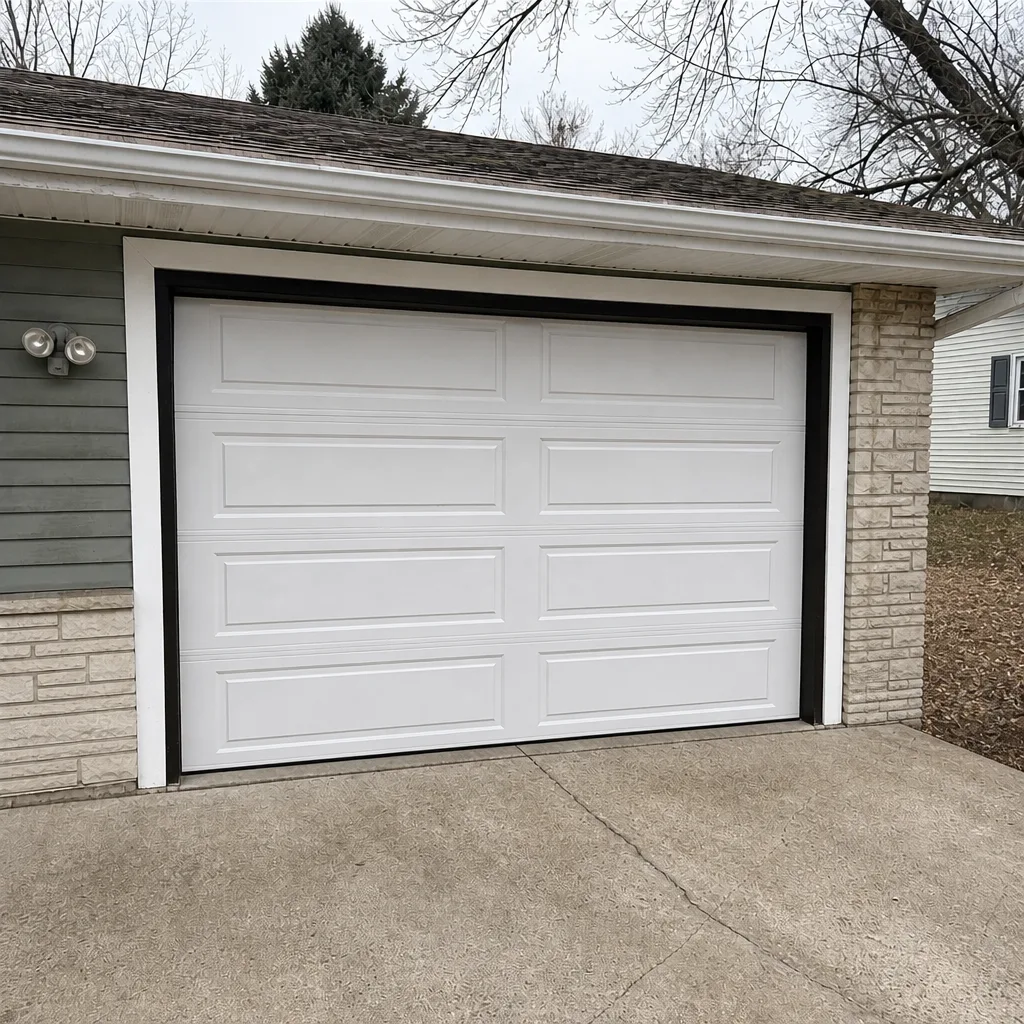
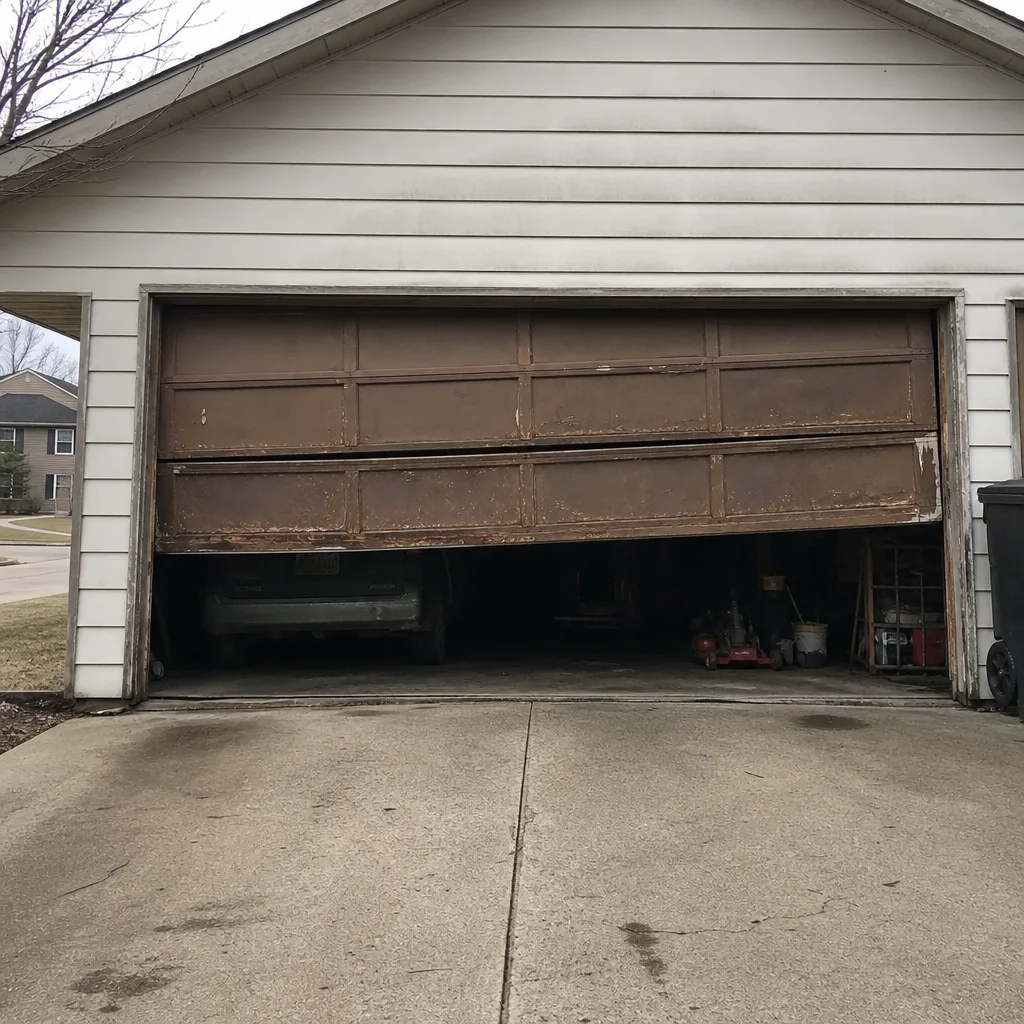
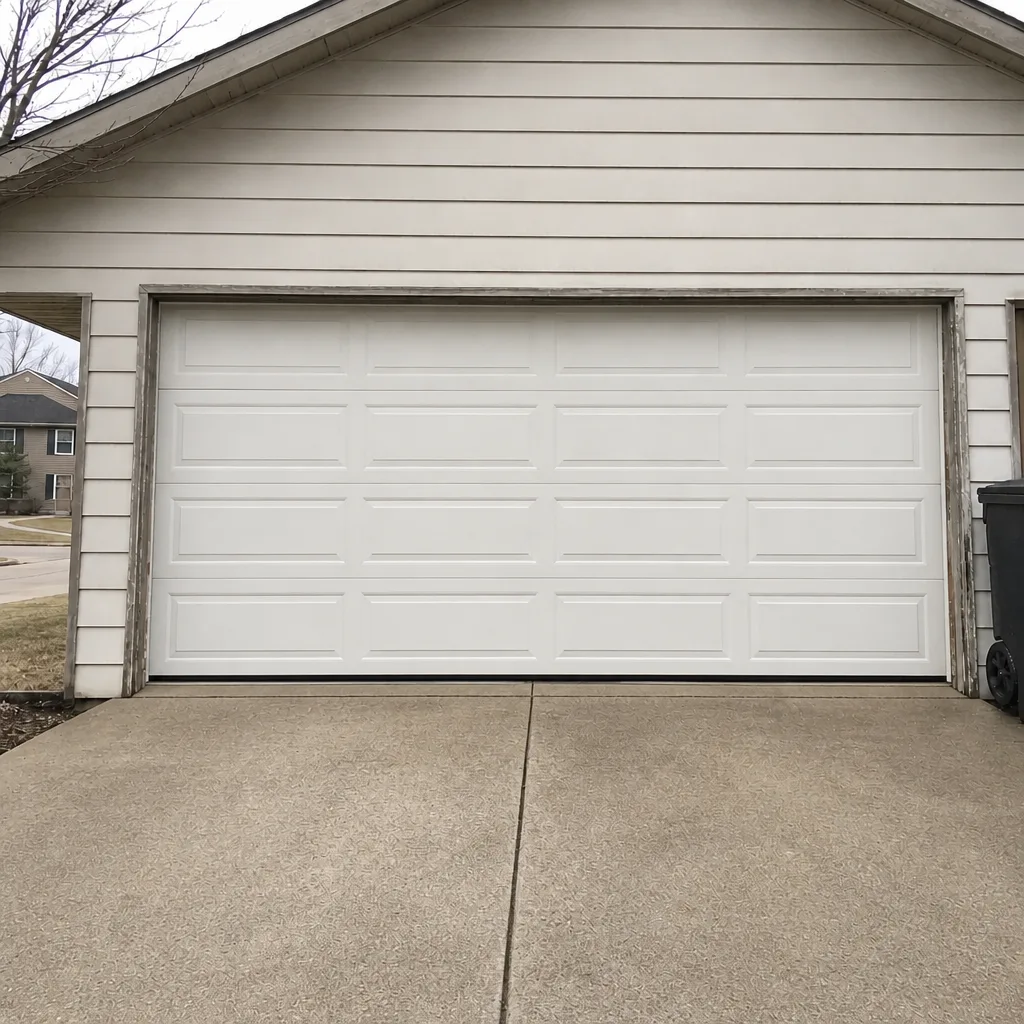
See the difference
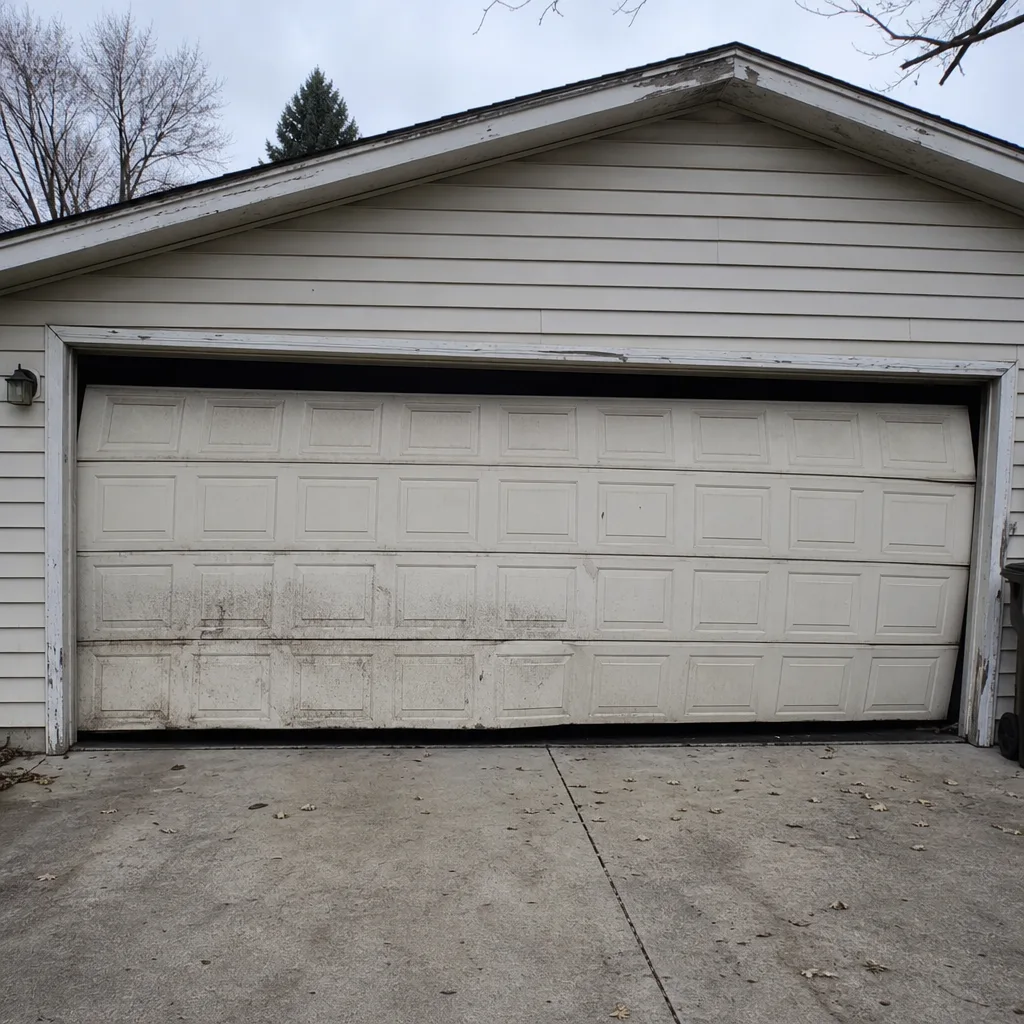 Before
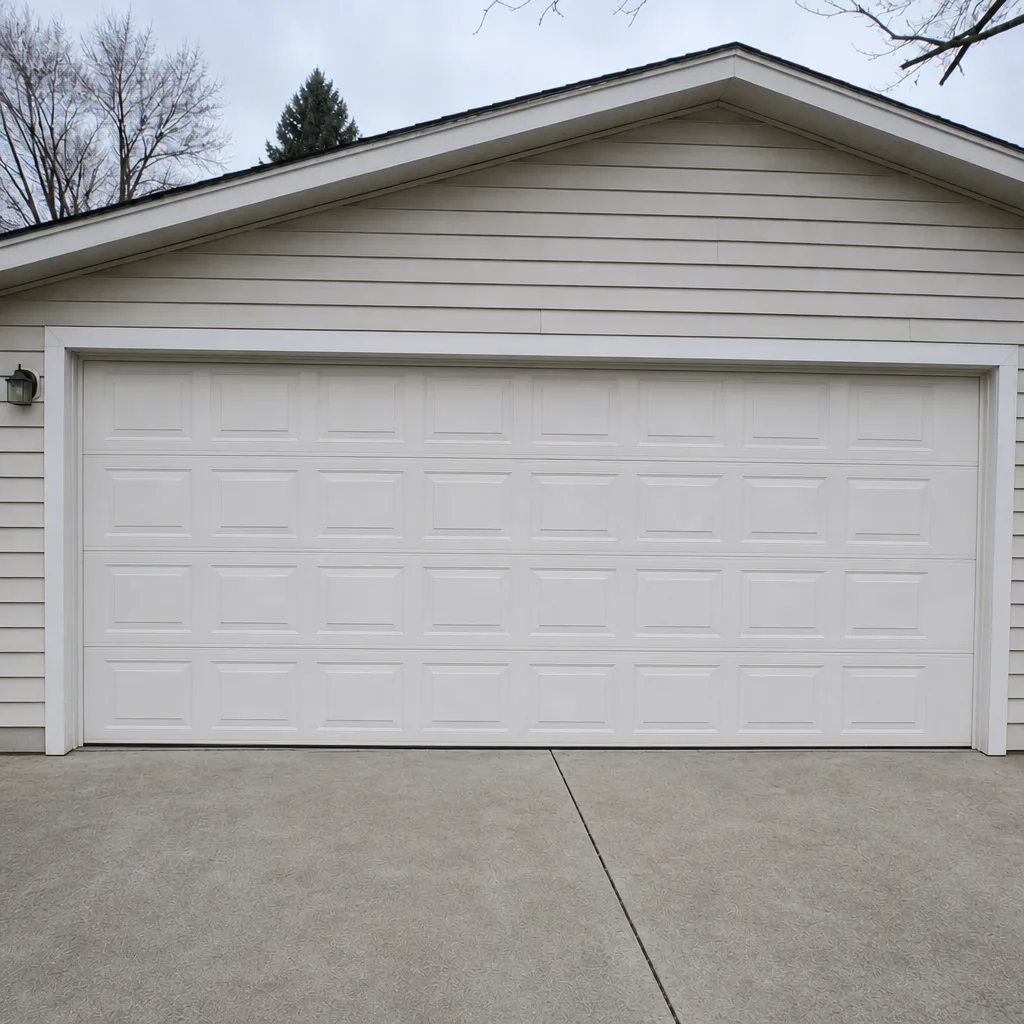 After
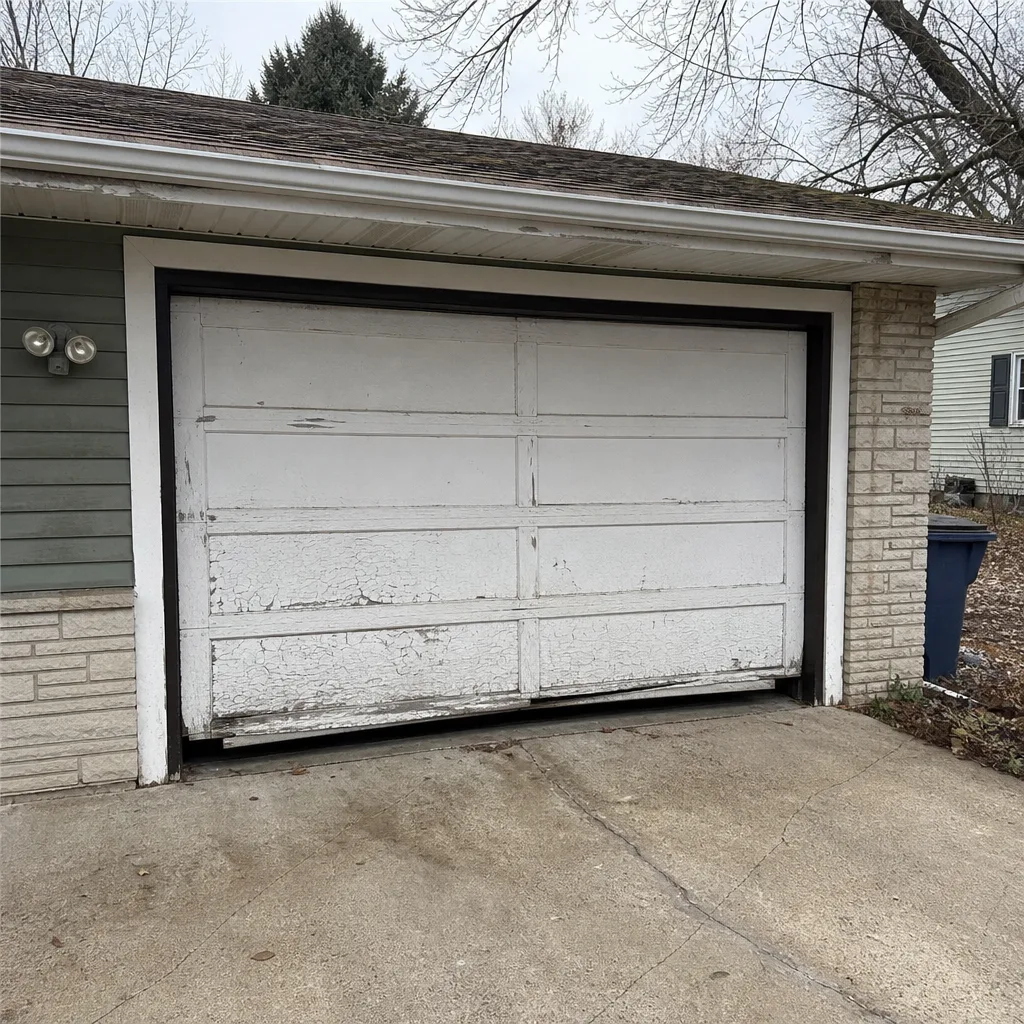 Before
 After
 Before
 After
When to Call a Professional
Some garage door problems are genuinely worth a call. A snapped torsion spring is at the top of the list. So is a door that’s hanging by one cable, a door that’s come off its track and is sitting crooked, and an opener that runs but won’t lift the door. Any of those is a job for a trained technician with the right tools, not a homeowner with a ladder. If the door is safe and just noisy or slightly off, it’s less urgent, but a professional can still diagnose it faster than you can. The same goes for identifying what brand your hardware is and whether it needs a part or a replacement.
Maple Grove Garage Door Repair Pros offers free estimates in Maple Grove – call (833) 902-7220. We work on your brand, from LiftMaster and Chamberlain openers to Clopay and Amarr doors, and we’ll give you a written quote with the specs before anything is touched. If it’s an emergency, say so; emergency service is a real service line, not an upcharge we pull out when it suits us. When your garage door stops, we move.
Frequently Asked Questions
Spring repair pricing depends on the spring’s size, the cycle rating, and whether you’re replacing one or a matched pair. We don’t publish a flat number because the right quote is specific to your door’s weight and hardware. Call (833) 902-7220 for a free written estimate. The quote is agreed before any work starts, and that price is the price.
Minnesota does not issue a specific license for garage door contractors, which means the state doesn’t vet the trade the way it does electricians or plumbers. Ask for a certificate of liability insurance, ask about brand training, and ask the spring sizing questions in this guide. Those are the credentials that actually mean something here.
For repair work, yes in most cases, and that’s why emergency service is a core offering rather than an upsell. For installations, the process is different: we measure, quote, order the parts, and schedule the install. Both are handled correctly, they just move at different speeds. Call (833) 902-7220 to book a repair or a free measure for a new door.
No, the written quote you agree to before work starts is the price. If we find something unexpected once the door is apart, we’ll show you and re-quote before anything changes. No surprises on the invoice.
Yes. We work on LiftMaster, Chamberlain, Genie, Raynor, Clopay, Amarr, Wayne Dalton and Craftsman equipment. That means faster diagnosis and the right parts the first visit. Call (833) 902-7220 and tell us the model, or let us identify it when we arrive.
We don’t recommend it, and we won’t walk you through it. Torsion springs store enough energy to injure or kill someone if they let go at the wrong moment. This is exactly the kind of work trained technicians exist for. Call (833) 902-7220 to have it done safely, and keep your hands away from the spring assembly until then.
The Bottom Line
Minnesota doesn’t license garage door contractors, so the state won’t do your vetting for you. That means you do it, and the process is simple enough to fit into a phone call: ask for the insurance certificate, ask the spring sizing question, ask for the cycle rating, ask whether the quote is the price. Then get everything in writing. Any contractor worth hiring in Maple Grove will answer all four without hesitation, and the ones who can’t will answer the question for you. That’s the whole test. A door repaired correctly the first time is cheaper than a door repaired twice.
If you’d rather skip the vetting and get a straight answer on your door, we’re happy to be the ones you call. For a free estimate in Maple Grove, reach us at (833) 902-7220. We’ll bring the questions we’d ask ourselves if we were standing in your driveway.
Written by the team at Maple Grove Garage Door Repair Pros.